
Key Highlights
- Nearly half of Australians believe a military attack is likely within five years.
- Australia’s geographic isolation is perceived as less secure amid global tensions.
- Government defense strategies are evolving to address new security challenges.
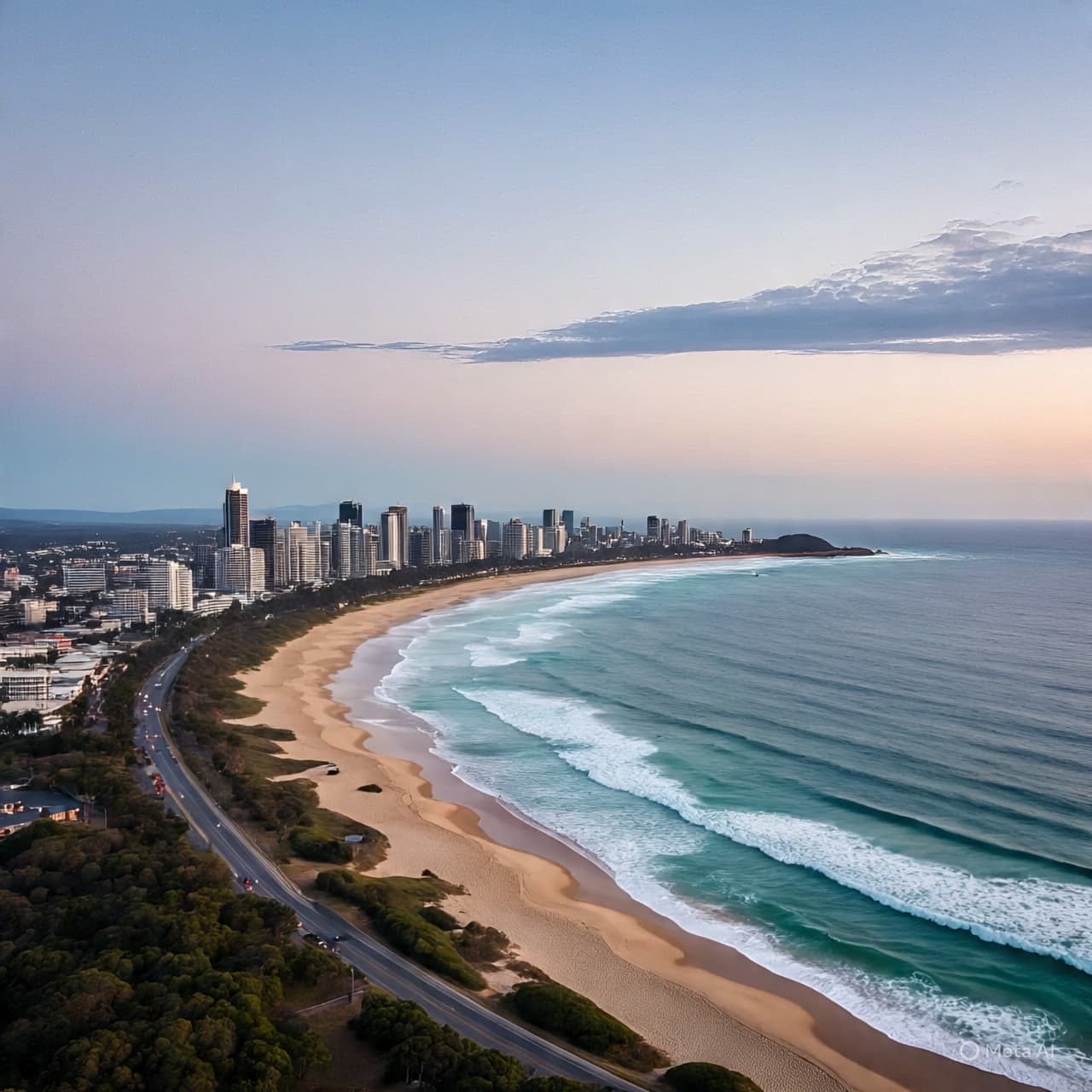
In the early hours before cities wake, a profound stillness envelops Australia—suburban streets quiet, harbor waters undisturbed, and horizons stretching far and wide. This tranquility, shaped by geography and distance, has long fostered a sense of security. However, recent survey findings indicate a significant shift in this perception, as nearly half of Australians now believe that a military attack on their country is probable within the next five years.
This statistic does not arrive with immediate urgency but rather reflects a broader change in public sentiment. The notion of conflict, once perceived as a distant concern, is now increasingly viewed as a tangible possibility. Factors such as rising geopolitical tensions in the Indo-Pacific, evolving military technologies, and shifting alliances have contributed to this evolving landscape, suggesting that Australia’s geographic isolation may no longer serve as a reliable shield against external threats.
Historically, Australia has viewed its security through the lens of distance, often considering conflicts as unfolding elsewhere. However, the recent survey results indicate that this perspective is changing. Public sentiment is increasingly influenced by regional instability and the competitive dynamics among global powers. The idea of conflict is no longer abstract; it has taken on a more concrete form, shaped by media narratives and ongoing defense discussions.
In response to these shifting perceptions, the Australian government has begun to recalibrate its defense strategies. Investments in modernization, long-range capabilities, and cyber defense are now at the forefront of national security planning. The AUKUS agreement, which involves Australia, the United States, and the United Kingdom, exemplifies this shift, emphasizing deterrence and technological superiority in the face of evolving threats. These developments signal a recognition that the security landscape is changing, necessitating a proactive approach to defense.
Despite the rising concerns, experts caution that perceptions do not always align with reality. While regional tensions have escalated, the likelihood of direct conflict involving Australia remains complex, influenced by diplomatic relationships and economic interdependence. Nonetheless, the impact of public perception cannot be understated; it shapes policy decisions and alters the national discourse on security.
As Australians navigate their daily lives—commuting to work, engaging in conversations, and maintaining the rhythms of a peaceful society—there is an undercurrent of change. The survey findings suggest that even in a nation historically defined by distance and relative security, the boundaries of concern are expanding. The horizon, once perceived as a barrier, now feels more like a connection point, where distant events resonate more closely than ever before.
Ultimately, while the survey numbers do not predict future events, they reveal a significant shift in societal thinking regarding security. In this space between certainty and possibility, Australia finds itself quietly adjusting, listening more intently to the world beyond its shores and reassessing the meanings of safety in an increasingly interconnected global landscape.
Published by Banx Network. This article is part of the Banx decentralized media programme, powered by the BXE token on the XRP Ledger.



