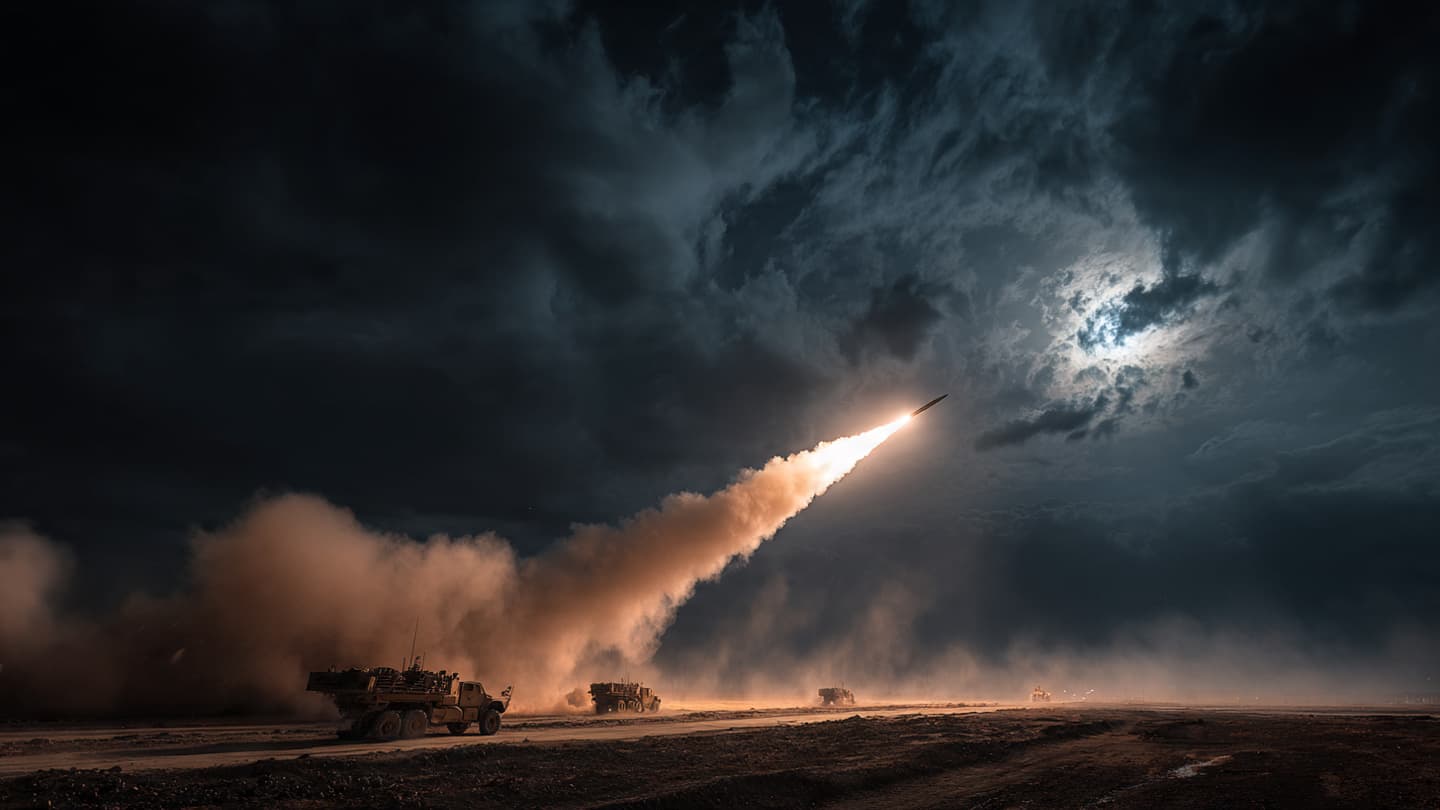
Modern warfare often unfolds far from the front lines imagined in older histories. Today, conflict can arrive through the sound of sirens, flashes across night skies, and the distant trajectory of weapons moving faster than ordinary human perception. Recent reports from Russian state media claiming the use of hypersonic and ballistic missiles against targets in Ukraine reflected the continuing intensity and technological dimension of the ongoing war.
According to Russian state news agencies, stated that its forces carried out strikes using hypersonic and ballistic missiles against targets in . Officials reportedly described the operation as part of broader military objectives linked to the continuing conflict between the two countries.
Hypersonic missiles, capable of traveling at extremely high speeds while maneuvering during flight, have become increasingly significant within modern military strategy. Defense analysts note that such weapons are designed to complicate interception efforts and demonstrate advanced technological capabilities.
Ballistic missiles, meanwhile, remain a major component of long-range military operations due to their ability to strike targets from considerable distances. Their use in populated or strategic areas frequently raises concerns regarding civilian safety, infrastructure damage, and escalation risks.
Since the war began, both Russia and Ukraine have regularly exchanged claims regarding military strikes, territorial operations, and battlefield developments. Independent verification of specific military details can often remain difficult during active conflict situations, particularly when information emerges through state-controlled channels.
International governments and defense observers continue monitoring missile deployments closely because the use of advanced weapons systems may influence broader regional security calculations. Discussions surrounding air defense systems, military aid, and strategic deterrence have become increasingly central within international diplomacy related to the war.
For civilians living in affected areas, missile attacks often mean repeated disruptions to daily life. Air raid alerts, damaged infrastructure, and prolonged uncertainty continue shaping conditions in multiple Ukrainian cities and regions affected by the conflict.
Global concern surrounding the war has also focused on the possibility of escalation involving neighboring countries or wider geopolitical alliances. Diplomatic efforts aimed at reducing hostilities have so far struggled to produce a lasting political resolution despite repeated international negotiations.
As reports regarding the latest strikes circulated, officials from multiple countries continued calling for restraint while monitoring developments on the ground. The conflict remains one of the most closely watched geopolitical crises in the world, with consequences extending far beyond Eastern Europe.
AI Image Disclaimer: Some accompanying illustrations were created using AI-generated imagery for newsroom and editorial visualization.
Sources: Reuters, BBC News, CNN, Associated Press
Published by Banx Network. This article is part of the Banx decentralized media programme, powered by the BXE token on the XRP Ledger.