
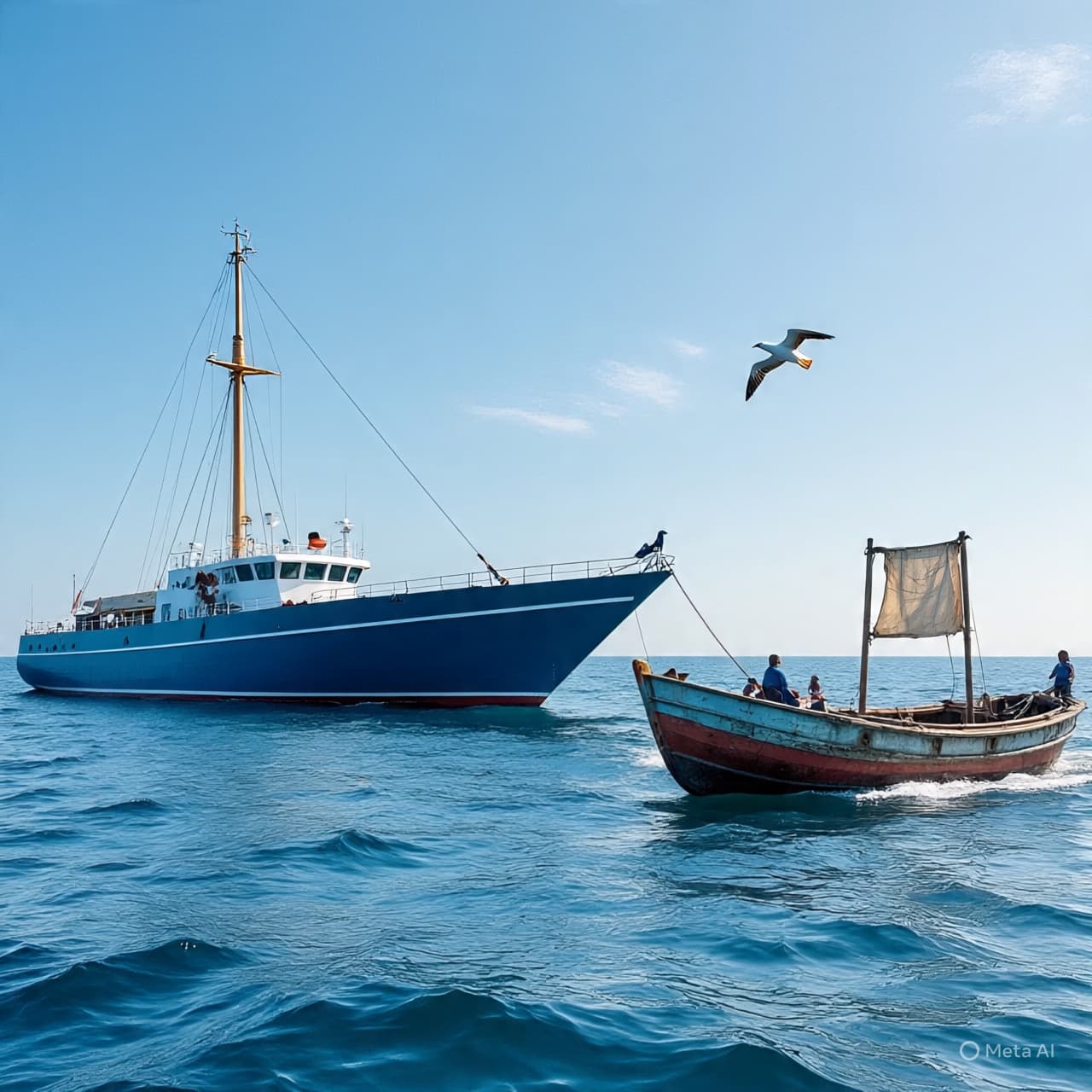
At sea, distance has a way of collapsing. Routes that look vast on a map narrow into corridors of habit, rhythm, and repetition. Somewhere between the Pacific’s long blue silences and the warmer, faster waters of the Caribbean, those corridors once again carried cargo that was never meant to arrive openly. This week, the French navy stepped into that flow, intercepting it twice, far from France itself yet firmly within its reach.
In the Pacific Ocean, naval forces seized more than four tons of cocaine from a vessel navigating international waters. The drugs, tightly packed and carefully concealed, represented months of logistics compressed into a single interception. Thousands of miles away, in the Caribbean, a separate operation unfolded with similar precision, as another boat was stopped and its illicit cargo removed from circulation. The two seizures, though oceans apart, formed part of the same invisible map — one traced by traffickers and increasingly contested by patrols.
France’s overseas territories give its navy an unusually wide maritime horizon. From Polynesia to the Antilles, French vessels patrol shipping lanes where geography and globalization intersect. These waters, vast and difficult to monitor, have become favored passages for traffickers moving cocaine from South America toward markets in Europe and beyond. Interceptions rarely come from chance alone; they are the result of intelligence-sharing, long surveillance, and the quiet endurance of crews operating far from home ports.
The scale of the seizures points to more than individual smuggling attempts. Four tons of cocaine is not opportunism; it is infrastructure. It implies supply chains robust enough to absorb losses, routes tested repeatedly, and profits large enough to justify the risk. Each successful interception disrupts that machinery, but never dismantles it entirely. The trade adapts, reroutes, waits.
What changes, however, is the signal. By operating simultaneously across distant regions, the French navy reinforces a message that maritime borders are not as porous as traffickers hope. Enforcement no longer belongs solely to coastal waters but stretches deep into the open ocean, where jurisdiction is shared and responsibility diffuse.
In these moments, the sea becomes a stage for quiet confrontations — no crowds, no spectacle, only the slow assertion of law against movement designed to evade it. The cocaine will be destroyed, the boats impounded, the routes redrawn. And somewhere already, farther out, another vessel will be adjusting its course, navigating a world where even the widest waters are no longer empty.
AI Image Disclaimer Visuals are AI-generated and serve as conceptual representations.
Sources French Ministry of Armed Forces Reuters Agence France-Presse United Nations Office on Drugs and Crime European Maritime Security reporting
Published by Banx Network. This article is part of the Banx decentralized media programme, powered by the BXE token on the XRP Ledger.


.jpg&w=3840&q=75 "Romania Passes Controversial Integrity Law for Officials to Access EU Funds")