War has a curious geography. It begins in one place—perhaps a desert airfield or a city beneath the glow of distant explosions—but its echoes seldom stay there. They travel along invisible currents of strategy and fear, crossing oceans and alliances until they arrive in places far removed from the original battlefield.
In recent days, those currents have carried the sound of the Iran conflict far beyond the Middle East. They have reached the Pacific, the halls of Asian parliaments, and the uneasy waters of the Taiwan Strait.
On the surface, the war unfolding between the United States, Israel, and Iran appears rooted firmly in the Middle East. Airstrikes, missile exchanges, and naval operations have drawn Washington deeply into the region once again. Military officials say large quantities of advanced munitions—air defense interceptors, cruise missiles, and precision-guided bombs—have been used as the campaign has intensified.
Yet as the fighting grows heavier in the Gulf and surrounding airspace, another conversation has quietly begun elsewhere: what this conflict might mean for Taiwan.
Defense analysts and officials across Asia have expressed concern that a prolonged confrontation with Iran could stretch the U.S. military across multiple theaters at once. Naval forces, aircraft, and ammunition stocks are not infinite, and sustaining large operations in the Middle East inevitably draws from the same strategic reserves that underpin deterrence in the Pacific.
Some experts describe the American fleet as already operating under extensive global commitments, with deployments required simultaneously in Europe, the Middle East, and Asia. If the Iran conflict persists, they warn, Washington might face difficult decisions about where to concentrate ships, aircraft, and logistical support.
Another concern centers on munitions consumption. Modern conflicts rely heavily on precision weapons and advanced interceptors, and sustained missile defense operations can quickly deplete stockpiles that take months or years to replenish. Military planners therefore watch such campaigns carefully, not only for their immediate results but also for their long-term implications.
For Taiwan and its neighbors, these developments naturally draw attention. The island’s security has long depended on the expectation that the United States could respond rapidly if China attempted to change the status quo by force. A conflict that absorbs American attention elsewhere inevitably raises questions about timing, readiness, and global balance.
Yet strategic outcomes rarely move in a single direction.
Some analysts suggest that the Iran conflict could also strengthen deterrence in ways that extend beyond the Middle East. By demonstrating a willingness to employ significant military power and coordinate closely with allies, the United States sends a signal about its capacity to act decisively when confronted with regional threats.
Others argue that once the confrontation with Iran subsides, Washington may find greater freedom to shift resources toward the Indo-Pacific. For years, American defense planners have described that region as the central arena of future geopolitical competition, and any reduction of tensions in the Middle East could accelerate that long-planned rebalancing.
In Taipei, officials are watching events unfold with careful attention. Government agencies have begun reviewing energy security, economic stability, and air-defense preparedness as the wider conflict reshapes global markets and strategic calculations.
Thus the paradox becomes visible. A war in one region may temporarily pull resources away from another, yet the same conflict may also reshape perceptions of power and resolve across the international system.
In geopolitics, events rarely remain confined to their point of origin. A missile launched in one theater can alter strategy thousands of miles away, just as the quiet movement of ships in one ocean can influence decisions in another.
For now, the war remains centered in the Middle East. But the questions it raises—about military readiness, strategic priorities, and global deterrence—are already reaching the distant waters of the Taiwan Strait.
Officials in Washington and across Asia continue to monitor the situation as it develops. The duration and intensity of the Iran conflict may ultimately determine how significantly it shapes security calculations in the Indo-Pacific.
AI Image Disclaimer
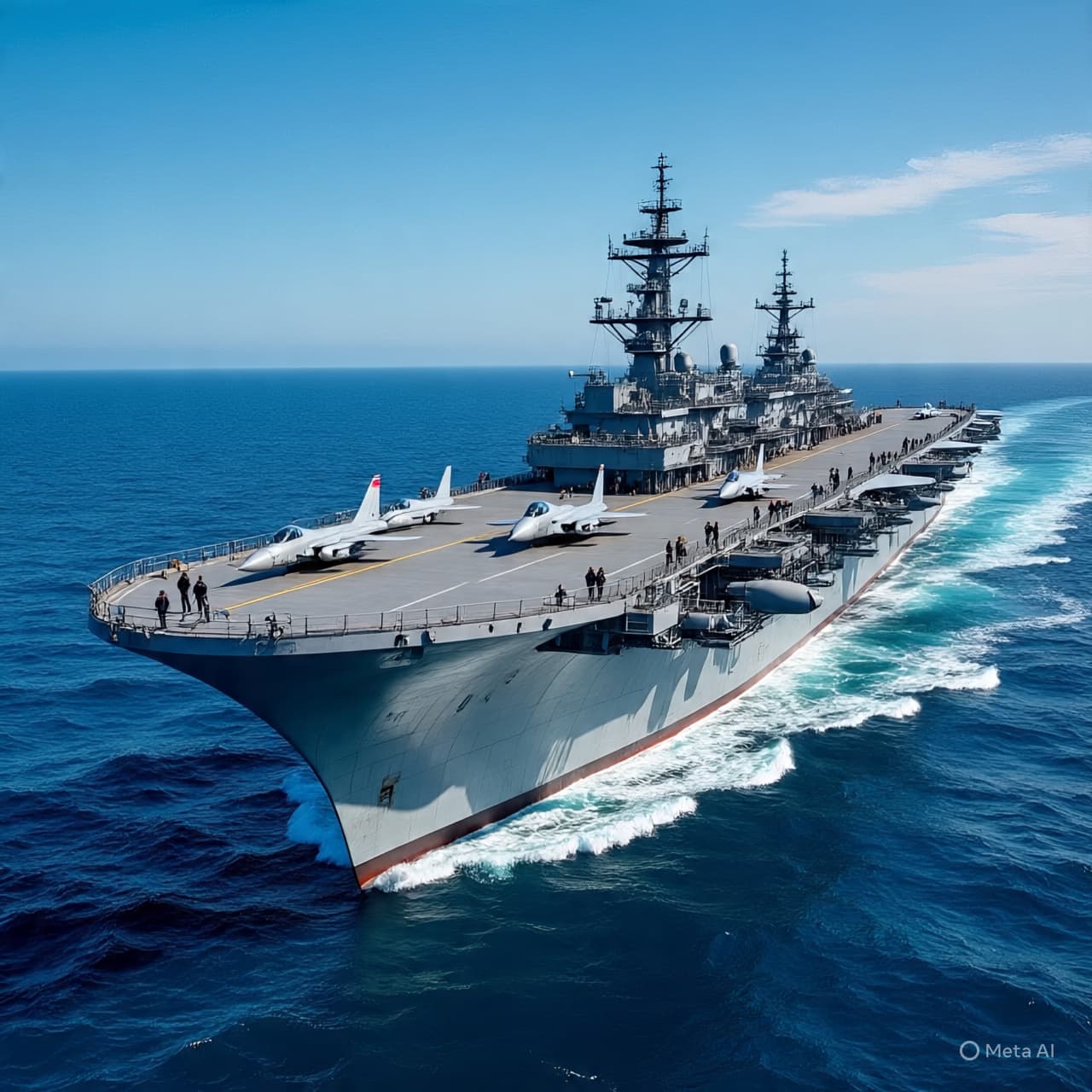
Visuals are AI-generated and serve as conceptual representations.
Sources (Media Names Only) Reuters The Washington Post Sky News South China Morning Post Atlantic Council
Published by Banx Network. This article is part of the Banx decentralized media programme, powered by the BXE token on the XRP Ledger.