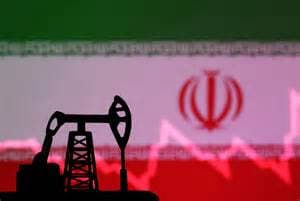
There are moments in the rhythm of global markets when movement feels less like a sudden break and more like a tide—gradual, persistent, carrying with it the weight of distant forces. The numbers change, almost quietly at first, but beneath them lies a broader motion, one that connects seas, cities, and the unseen pathways of energy.
In the oil markets, that motion has begun to tilt upward again. Brent crude futures have settled at $112.19 per barrel, rising by $3.54, a gain of 3.26% on the day. The figure itself is precise, but the forces behind it are less easily contained, shaped by a convergence of tension, expectation, and constraint.
The increase arrives at a time when global energy systems are already under strain. Disruptions across key producing regions, coupled with uncertainty surrounding shipping routes and supply continuity, have created an environment where even incremental shifts carry amplified significance. Markets, attuned to these signals, respond not only to what is known, but to what might unfold next.
Oil, in this sense, becomes both measure and messenger. Its price reflects immediate conditions—production levels, inventories, demand—but also the broader atmosphere in which those conditions exist. Recent geopolitical developments, particularly in the Middle East, have introduced a layer of unpredictability that continues to influence trading behavior. The possibility of further disruptions, whether to infrastructure or transit corridors, remains present in market calculations.
There is also a temporal dimension to the movement. Price changes do not exist in isolation; they accumulate, shaping expectations over time. A rise such as this, while contained within a single trading session, contributes to a wider narrative—one in which energy costs edge higher, influencing industries and economies far beyond the point of origin.
For businesses and consumers alike, the implications are often felt gradually. Transportation costs adjust, production expenses shift, and the price of goods begins to reflect the changing cost of energy. These effects move outward in quiet increments, rarely tied to a single moment, yet rooted in movements such as this.
Markets themselves remain in a state of watchfulness. Traders and analysts continue to assess the durability of the increase, weighing it against broader indicators—inventory data, policy signals, and the evolving geopolitical landscape. The rise, while notable, is part of a larger pattern that remains in flux.
And so the numbers settle, marking the close of a trading day while pointing toward an uncertain continuation. The tide has risen, but its direction remains open, shaped by forces that extend well beyond the immediate horizon.
Brent crude futures settled at $112.19 per barrel, up $3.54 or 3.26% on the session, reflecting ongoing market sensitivity to supply risks and geopolitical developments affecting global energy markets.
AI Image Disclaimer
Illustrations were created using AI tools and are not real photographs.
Source Check Reuters Bloomberg CNBC Financial Times The Wall Street Journal
Published by Banx Network. This article is part of the Banx decentralized media programme, powered by the BXE token on the XRP Ledger.