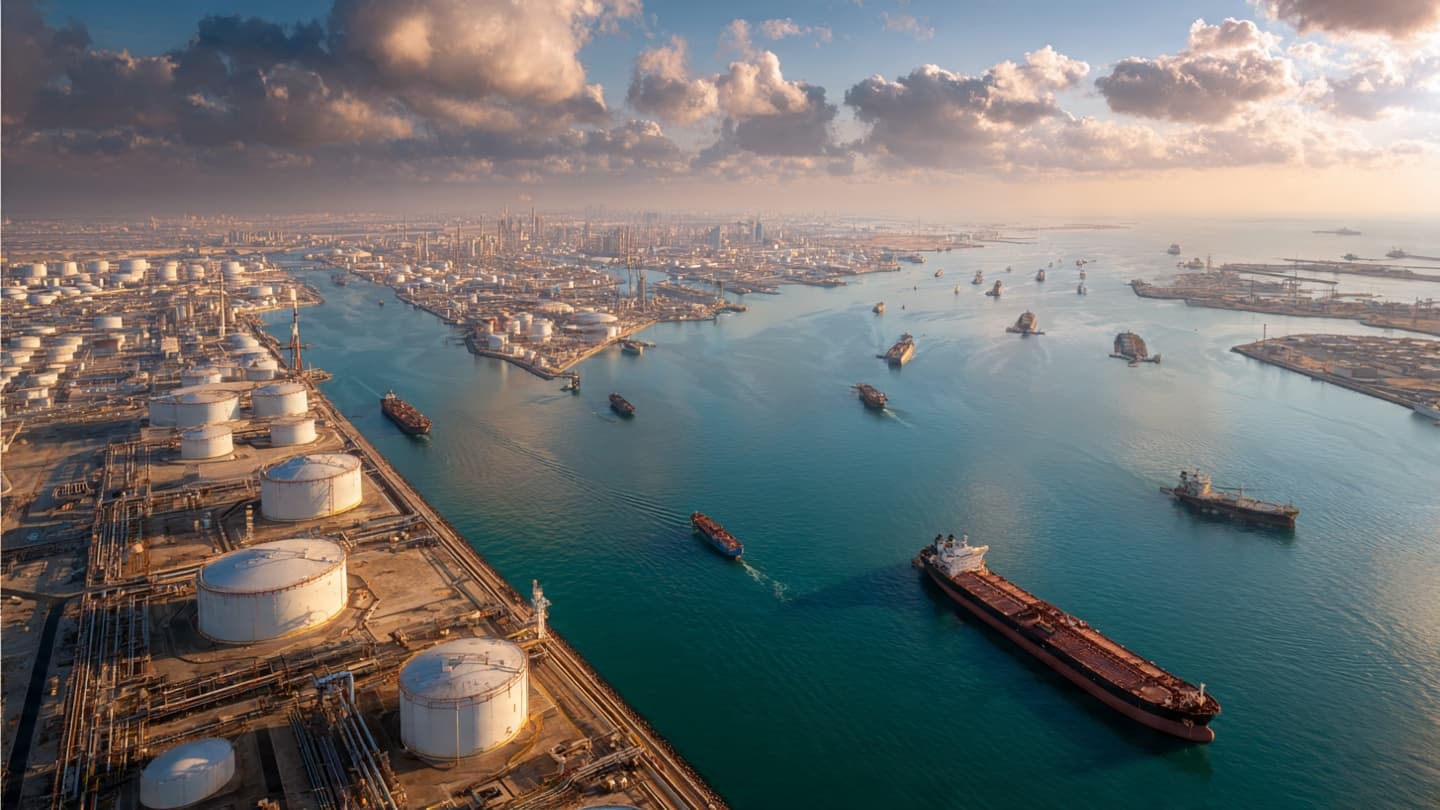
The sea has always possessed its own language. It speaks through tides that rise without haste, through vessels that appear as distant silhouettes before drawing close to busy ports, and through routes that quietly bind continents together. In the Strait of Hormuz, where water narrows between rugged coastlines, that language has recently begun to change. The rhythm of commerce has slowed, not because the sea itself has altered, but because uncertainty now travels alongside every voyage.
As renewed fighting in the Middle East continues to unsettle the region, commercial shipping companies have become increasingly cautious about navigating the Strait of Hormuz. Some vessels have delayed departures, adjusted sailing schedules, or selected longer alternative routes where possible, reflecting growing concerns over maritime security in one of the world's most strategically important energy corridors.
The Strait of Hormuz serves as one of the principal gateways for global oil and liquefied natural gas exports. Every day, millions of barrels of crude oil pass through its narrow waters on their journey toward markets in Asia, Europe, and other regions. The uninterrupted movement of these shipments has long supported the stability of international energy supplies, making even temporary disruptions a matter of worldwide economic interest.
Recent military exchanges involving the United States and Iran, together with broader regional hostilities, have heightened the risks facing commercial operators. Shipping companies, insurers, and port authorities continuously monitor security assessments, balancing commercial obligations with the safety of crews and cargo. While many vessels continue to transit the strait under existing maritime protection measures, others have chosen to proceed with greater caution as conditions remain uncertain.
The impact extends beyond shipping alone. Insurance premiums for vessels operating in high-risk waters may increase, fuel transportation costs can rise, and global commodity markets often respond quickly to perceived threats against vital trade routes. Even without a formal closure of the waterway, uncertainty itself becomes an economic factor, influencing prices, contracts, and logistical planning across international supply chains.
For countries heavily dependent on imported energy, developments in the Gulf are followed with particular attention. Refiners, manufacturers, and governments closely observe maritime traffic, recognizing that delays in one narrow channel can eventually influence industries and consumers thousands of miles away. In this way, the Strait of Hormuz connects not only producing nations but also households, businesses, and transportation networks around the world.
Despite heightened tensions, international naval forces and regional authorities continue efforts to maintain freedom of navigation and protect commercial shipping. Maritime security operations, surveillance patrols, and coordination among allied navies remain important components of safeguarding one of the busiest energy corridors on the planet. Their presence reflects a shared understanding of the waterway's global significance.
History has shown that the Strait of Hormuz has weathered periods of conflict before, often remaining open even during moments of severe geopolitical strain. Yet each episode leaves behind subtle adjustments in how businesses assess risk and how global markets prepare for uncertainty. The passage may remain physically unchanged, but confidence moves according to events unfolding far beyond the horizon.
As another evening settles across the Gulf, tankers continue their patient journeys, though some now travel with greater vigilance than before. The sea still offers the shortest path between producers and consumers, yet recent fighting has reminded the world that commerce depends as much on stability as it does on geography. In the Strait of Hormuz, the flow of oil continues, but so too does the quiet awareness that even the narrowest waterways can carry consequences felt across the global economy.
AI Image Disclaimer The accompanying visuals are AI-generated conceptual illustrations intended to represent the subject matter and are not real photographs.
Sources Reuters Bloomberg Associated Press Financial Times Lloyd's List
Published by Banx Network. This article is part of the Banx decentralized media programme, powered by the BXE token on the XRP Ledger.