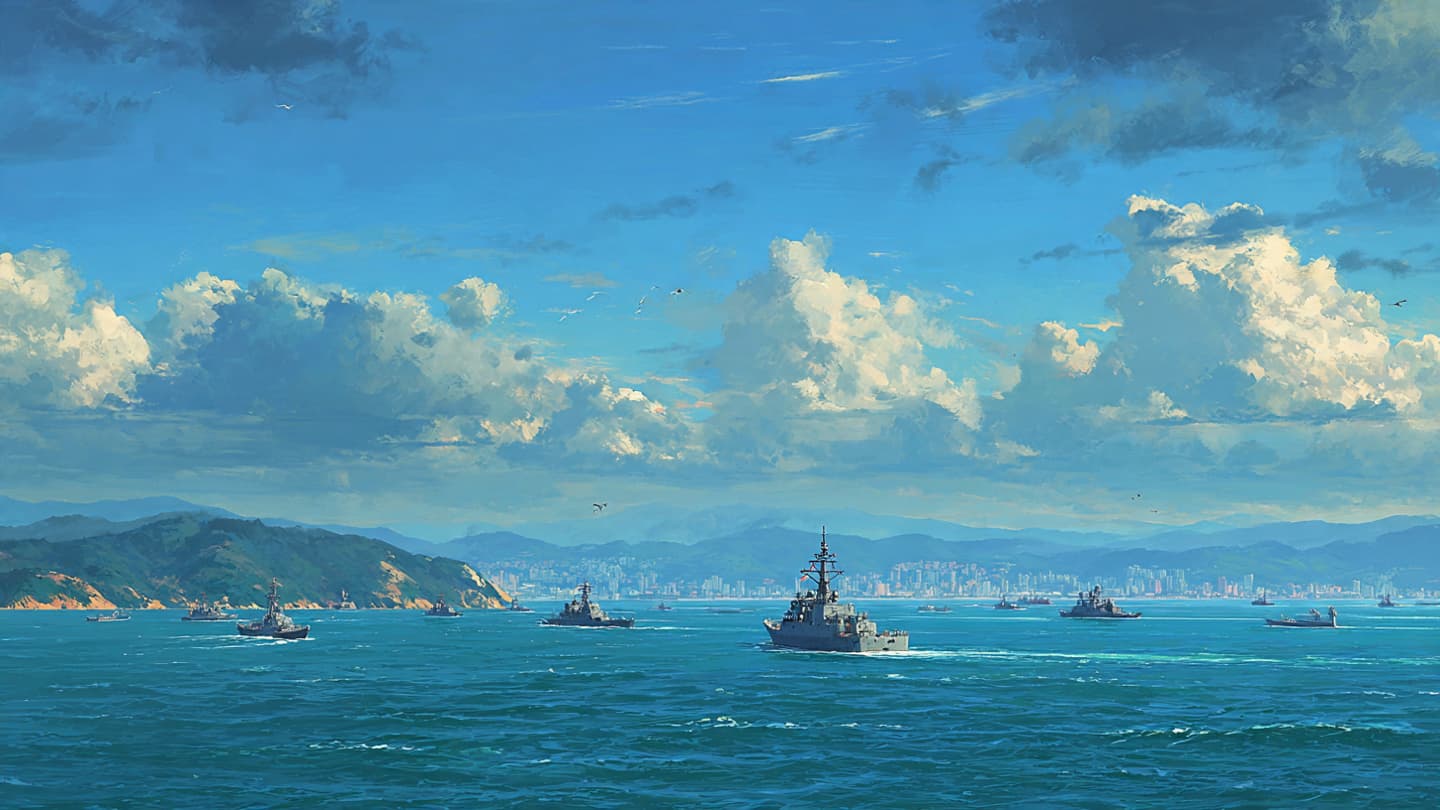
The Taiwan Strait has long resembled calm water carrying deep political currents beneath its surface. Every statement related to Taiwan, Beijing, or Washington often echoes far beyond the immediate moment, touching historical sensitivities and strategic calculations that have shaped the region for decades. Comments attributed to Donald Trump regarding Taiwan’s independence once again drew international attention toward this delicate geopolitical balance.
According to reports, Trump warned against any declaration of formal independence by Taiwan from China. The remarks quickly entered broader discussions surrounding United States policy in East Asia and the continuing complexity of cross-strait relations.
China considers Taiwan part of its territory and has consistently opposed any move toward formal independence. Beijing has repeatedly stated that reunification remains a central national objective, while Taiwan maintains its own democratic government and political system.
The United States officially adheres to the “One China” policy while also maintaining unofficial relations and security cooperation with Taiwan. This long-standing diplomatic framework has often required careful balancing between support for regional stability and avoidance of direct confrontation with Beijing.
Analysts note that statements from prominent American political figures regarding Taiwan frequently carry significant international implications. Even rhetorical remarks can influence diplomatic responses, military readiness discussions, and regional perceptions surrounding stability in East Asia.
Taiwan itself continues navigating a complex political environment shaped by domestic democratic identity, economic ties, and external security pressures. Public discussions on the island often reflect varying perspectives regarding sovereignty, regional relations, and future political direction.
Regional observers also emphasize that stability in the Taiwan Strait remains closely connected to broader global economic interests. The area plays a critical role in international trade routes and semiconductor production, making tensions there a matter of worldwide concern.
Officials from China, Taiwan, and the United States continue maintaining diplomatic and strategic communication channels despite ongoing disagreements. International attention toward the region remains high as geopolitical competition in East Asia continues evolving.
Illustrative visuals in this report were generated using AI-assisted imaging technology.
Sources Verification Check: Reuters, Associated Press, BBC, Kompas
Published by Banx Network. This article is part of the Banx decentralized media programme, powered by the BXE token on the XRP Ledger.