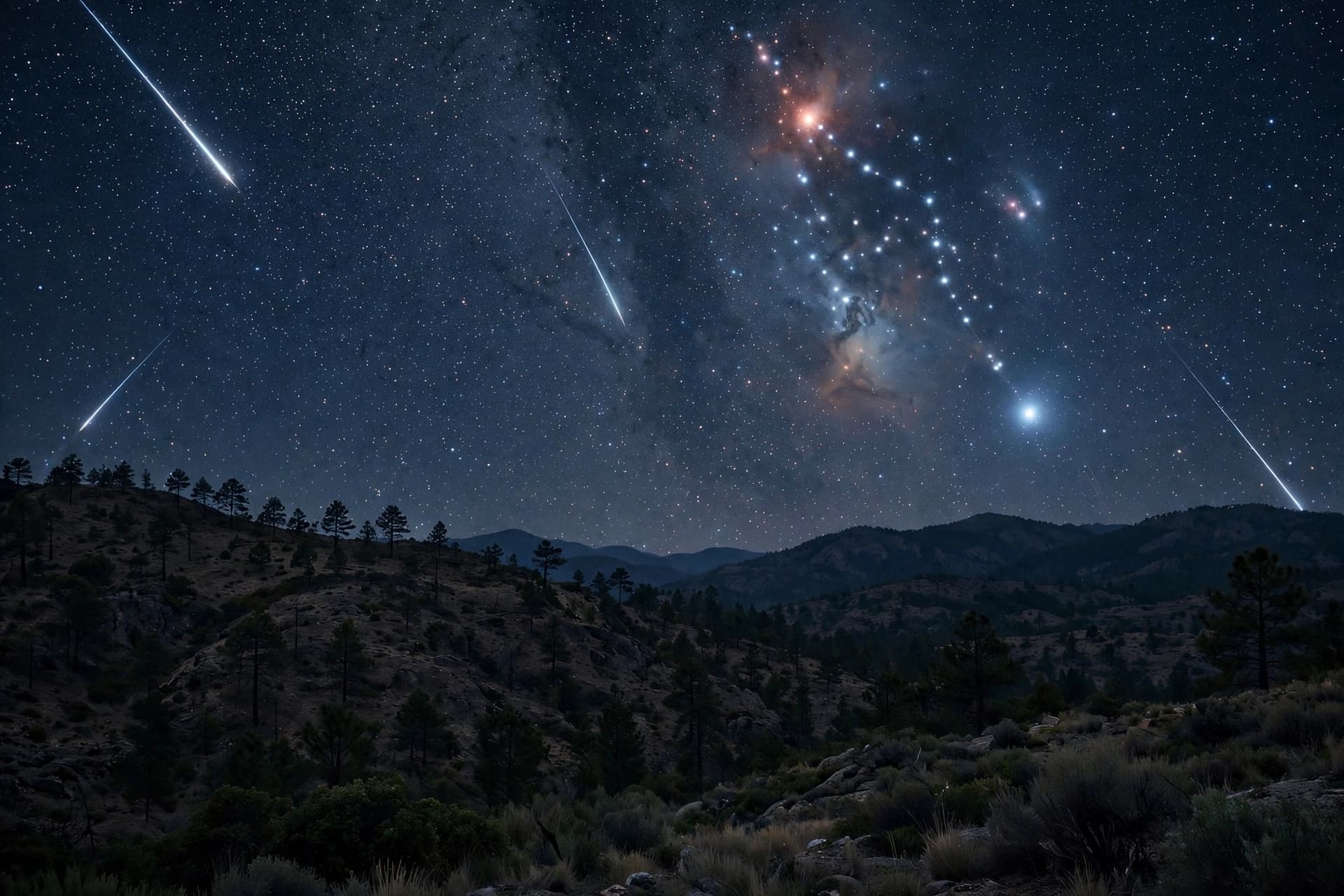
Night after night, the Moon rises with a kind of quiet certainty.
It moves along a path that has remained familiar for centuries, crossing the sky with a calm that has comforted observers from ancient astronomers to modern scientists. Around it, however, the wider solar system remains in motion. Asteroids drift along long elliptical paths, fragments of the early solar system still circling the Sun in silent loops.
Occasionally, one of these wandering bodies appears close enough to invite attention.
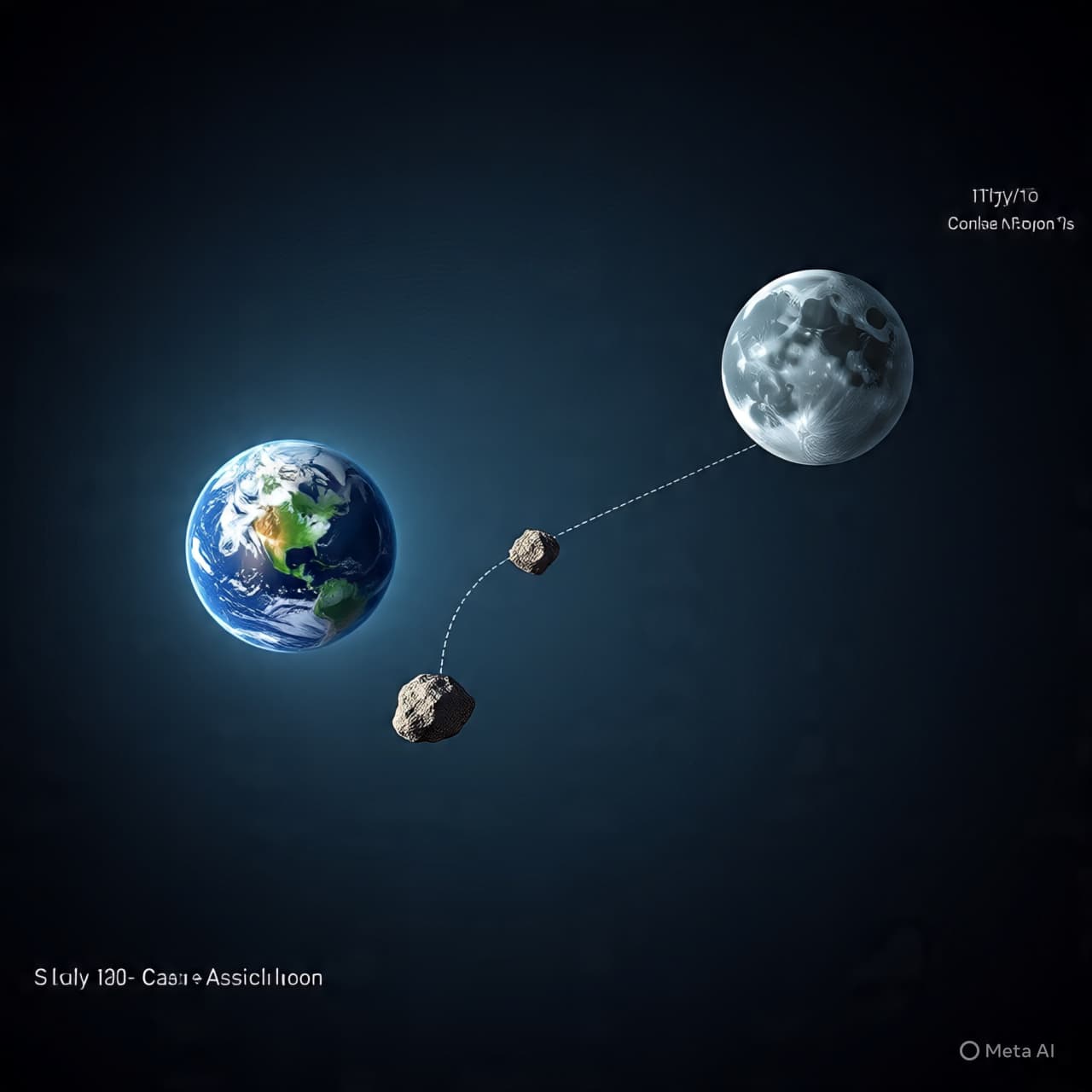
Recently, astronomers turned their telescopes toward a newly tracked asteroid whose projected path briefly stirred speculation. Early orbital calculations suggested that the object might pass unusually near the Moon. For a moment, the possibility of an impact—even a distant one—entered the conversation among observers and space scientists.
Such uncertainties are not unusual in planetary science. When an asteroid is first detected, its trajectory is calculated from a limited set of observations. With each additional measurement, the path becomes clearer, like a sketch gradually filling with detail.
In this case, as astronomers gathered more data, the picture shifted.
Updated orbital calculations show that the asteroid is not on a collision course with the Moon. The object will pass through space at a safe distance, continuing its journey around the Sun without disturbing Earth’s natural satellite.
Scientists say the initial concern arose from the normal process of refining asteroid trajectories. Early models must account for limited information, and small uncertainties can temporarily widen the range of possible paths. As observations accumulate—tracking the object’s position against distant stars—those uncertainties shrink.
By the time enough measurements are collected, the orbit often settles into a far more precise prediction.
Space agencies and observatories around the world regularly monitor near-Earth objects using a network of telescopes and tracking systems. These efforts form part of a broader planetary defense program designed to identify and analyze objects that approach the Earth–Moon system.
Most of these asteroids pass harmlessly by. The solar system contains countless rocky fragments left over from its formation more than four billion years ago, and many cross the inner planetary region without coming close to any world.
Yet each observation adds to a growing catalog that helps scientists understand how these objects move and evolve.
For astronomers, the episode serves as a reminder of the careful vigilance required to track bodies moving across vast distances. Even small shifts in an orbit can alter predictions, and constant monitoring allows scientists to update calculations as new information arrives.
In this case, the conclusion is straightforward.
Researchers confirm that the asteroid’s refined orbit does not intersect with the Moon’s path. The object will pass safely through space, and the Moon will continue its steady course around Earth, unchanged by the brief attention drawn to a visitor from the outer reaches of the solar system.
Astronomers say updated observations show the asteroid poses no risk to the Moon and will pass by at a safe distance.
AI Image Disclaimer
The accompanying visuals are AI-generated illustrations intended to represent the concept of the event rather than actual space imagery.
Source Check
Credible coverage and/or primary reporting exist from: BBC News The Guardian Space.com Reuters NASA
Published by Banx Network. This article is part of the Banx decentralized media programme, powered by the BXE token on the XRP Ledger.