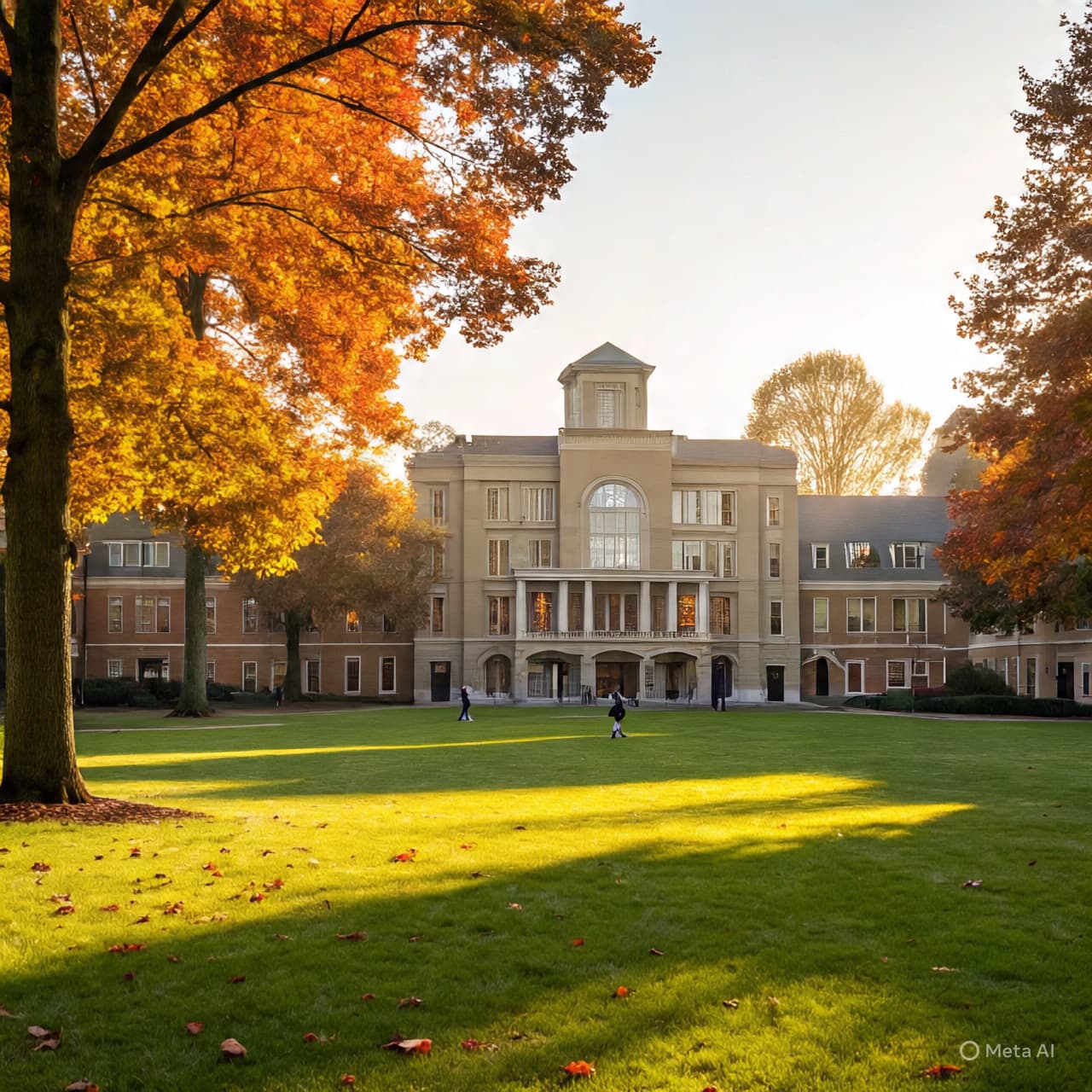
In the hush before dawn, a great institution — its laboratories darkened by uncertainty, its scholars pressing their palms to the glass asking “why?” — finds its way back to light. The corridors that once hummed with urgent research, paused, breathe again. For weeks, silence reigned over unanswered grants and frozen ambitions. But now, the tides shift. The frozen funds flow again, the future softens, and trust — fragile, yet persistent — begins to glimmer anew.
When the government froze roughly $790 million in federal research funding to Northwestern University this past April, it was more than a financial blow. It was a shuttering of hopes — experiments uncertain, faculty and staff laid off, projects put on hold. The freeze, triggered by investigations tied to campus protests, admissions practices, and alleged civil-rights lapses, threatened not only university budgets but years of scientific, medical, and social-science work halted mid-stream.
Inside those quiet labs, work continued only out of dedication — internal funds replacing grants, faith holding where funding could not. But even that retreat had a cost: 425 jobs were cut. Researchers and support staff alike felt the brunt.
Now — as of November 28, 2025 — things have changed. Northwestern reached an agreement with the administration: a $75 million settlement to be paid over three years, and in return, nearly $790 million in frozen research funding will be restored. The deal also brings an end to active investigations.
Under the agreement, the university will establish a special oversight committee within its Board of Trustees to ensure compliance with federal anti-discrimination laws and commitments to campus safety and fairness. Yet, the agreement preserves the core academic independence of the institution: hiring, admissions, curricula remain under Northwestern’s control.
For many researchers, staff, and students, the restored funds mean more than money — they mean continuity, possibility, and relief. Experiments suspended, data gathering halted, aspirations deferred — all can resume. For a university that anchors countless lives and innovations, this return is not just administrative. It is hopeful.
In the quiet offices and laboratories of Northwestern, the hum of machines may soon return. The datasets paused mid-collection may be completed. Projects reaching for cures, new materials, social insights, and human betterment can once again move forward.
The restoration is also a reminder — for institutions under pressure and for governments holding purse-strings — that funding policy shapes more than balance sheets. It shapes futures, progress, discovery.
What remains now is steadiness. Compliance, oversight, transparency. And a renewed commitment to the work: to science, to learning, to truth.
Because when the money stops, the work pauses — but not always the questions. And when the money returns, so too does the chance to answer them.
AI Image Disclaimer: “Visuals are created with AI tools and are not real photographs.”
Sources: Reuters, Politico, Chicago Sun-Times, ABC News, Northwestern University official statement.
Published by Banx Network. This article is part of the Banx decentralized media programme, powered by the BXE token on the XRP Ledger.