Along the rugged frontier where mountains fold into one another and dust drifts across invisible lines, the border between Pakistan and Afghanistan has rarely been quiet. Villages wake to the sound of livestock and wind through stone, but also, at times, to distant echoes that carry across valleys—reminders that geography here is inseparable from history.
This week, those echoes grew sharper.
Pakistan declared it is in what officials described as an “open war” with Afghanistan, following a series of cross-border strikes and escalating exchanges. The statement came after Pakistan said it had conducted operations targeting militant positions it believes are sheltering along Afghan territory. Afghan authorities, in turn, reported casualties from airstrikes and accused Pakistan of violating sovereignty, responding with their own artillery fire and warnings.
The exchange marks one of the most direct confrontations between the two nations in recent years. Tensions have simmered along the border since the Taliban returned to power in Kabul in 2021. Islamabad has repeatedly accused militant groups, including factions it associates with the Tehreek-e-Taliban Pakistan (TTP), of operating from Afghan soil and launching attacks inside Pakistan. Afghan officials have denied allowing their territory to be used for such purposes, even as skirmishes have flared intermittently.
In recent days, reports from both sides describe airstrikes, shelling, and casualties among security forces and civilians. Villagers in border provinces have reportedly fled homes as military activity intensified, seeking refuge from the uncertainty of night skies marked by aircraft and artillery. Roads once used for trade and family visits have grown tense, punctuated by checkpoints and caution.
Pakistan’s declaration signals a rhetorical escalation as much as a military one. Officials have framed the operations as necessary to defend national security against insurgent violence that has increased over the past year. Afghanistan’s Taliban-led government has condemned the strikes, describing them as aggression and vowing to respond.
The border itself—known as the Durand Line—has long been contested in perception, if not in official demarcation. Drawn during the colonial era, it slices through ethnic and tribal communities with deep cross-border ties. In such terrain, political disputes do not remain confined to capitals; they travel along footpaths and riverbeds, touching families whose histories predate the line itself.
Regional observers note that sustained escalation could strain an already fragile economic and humanitarian environment. Afghanistan continues to grapple with economic isolation and limited international recognition, while Pakistan faces its own financial pressures and security challenges. Any prolonged conflict risks disrupting trade routes, displacing civilians, and deepening mistrust.
Diplomatic channels, according to officials, remain technically open, though public language has hardened. International actors have urged restraint, emphasizing the need to prevent further civilian harm. Yet in the border districts, events unfold less in statements and more in sound—the thud of distant detonations, the hurried packing of belongings, the watchfulness of soldiers at dusk.
For decades, the frontier has been a place where alliances shift and grievances linger. The latest exchanges do not arise from a vacuum; they are layered atop years of insurgency, counterinsurgency, and uneasy coordination. Still, each escalation carries its own immediacy.
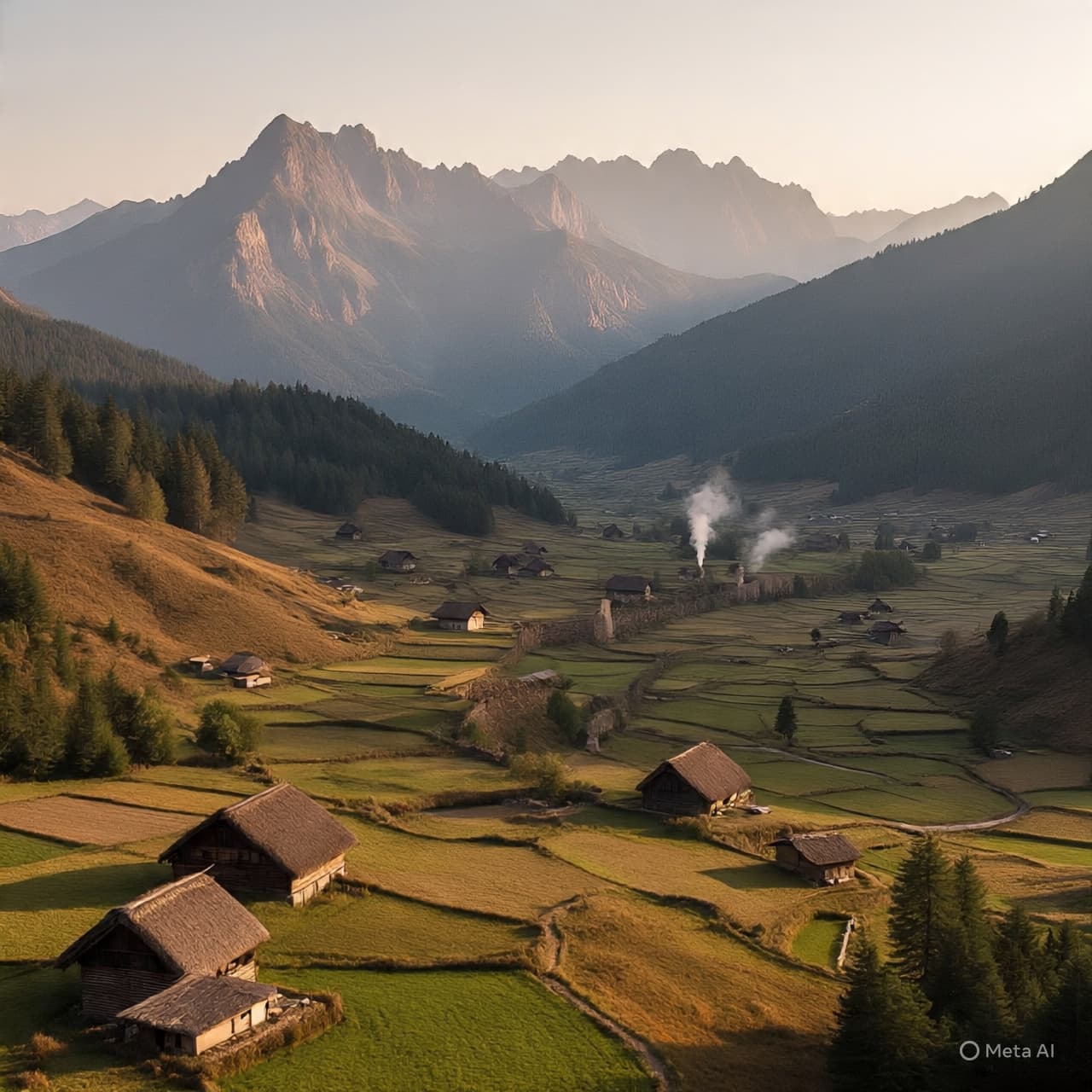
As evening falls over the mountains, the sky turns the same muted gold on both sides. The terrain does not distinguish between flags. But the words spoken in Islamabad and Kabul—of open war, of defense, of retaliation—reshape the atmosphere.
Whether this confrontation deepens into sustained conflict or bends back toward negotiation will depend on choices yet to be made. For now, along the high ridges and narrow passes, communities wait in the space between statement and outcome, listening for what tomorrow’s silence—or noise—might bring.
AI Image Disclaimer Images are AI-generated for illustrative purposes and do not depict real-time scenes.
Sources Reuters Associated Press BBC News Al Jazeera Dawn
Published by Banx Network. This article is part of the Banx decentralized media programme, powered by the BXE token on the XRP Ledger.