
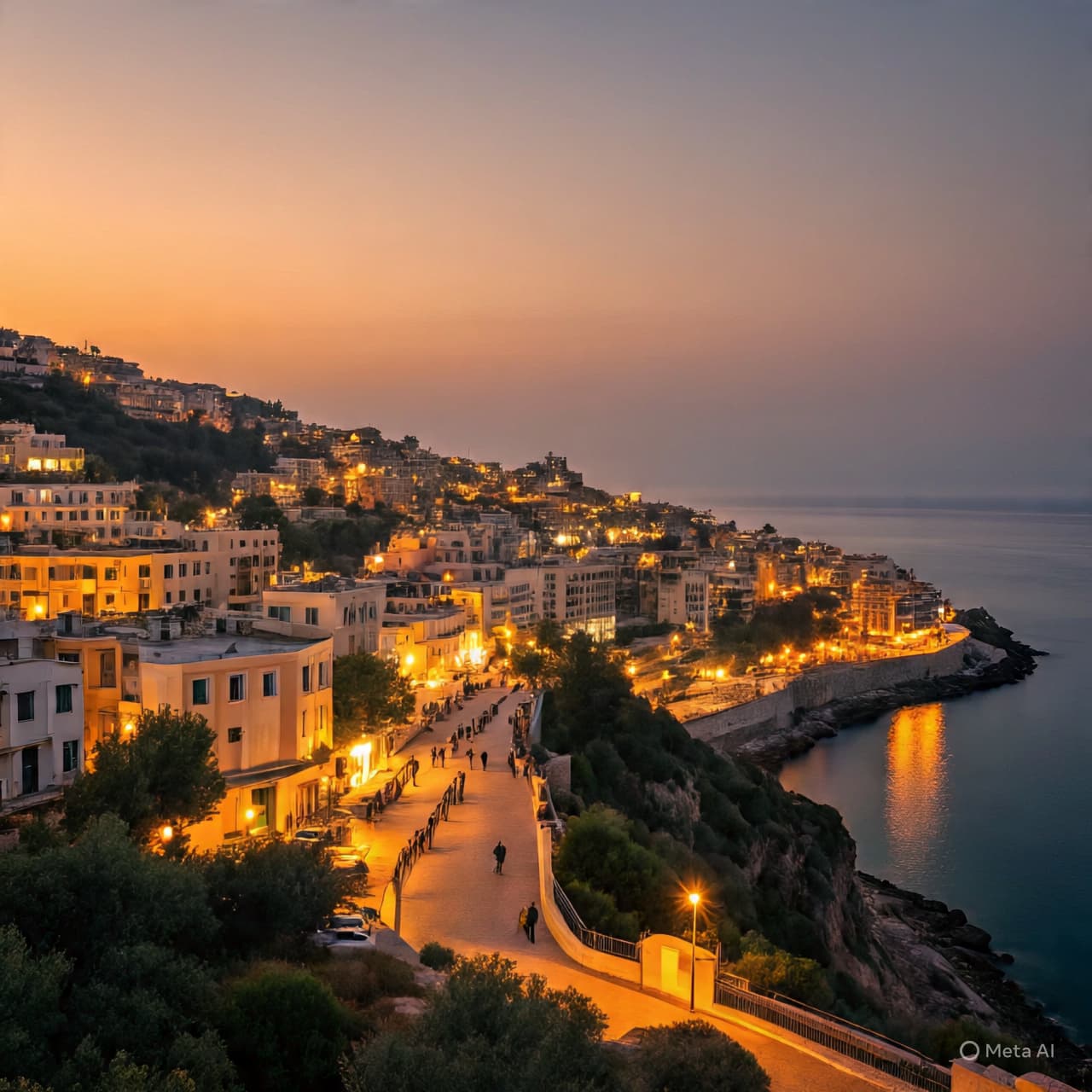
Evening in Lebanon often carries a quiet persistence. Lights flicker on across hillsides and along the coast, tracing the outline of a country that has learned to live between interruption and continuity. Conversations continue in cafés, traffic hums through narrow streets, and the Mediterranean reflects a calm that feels, at times, at odds with what unfolds inland.
It is within this delicate balance that concern has once again been voiced from afar.
António Guterres, speaking on behalf of the United Nations, has warned that Lebanon risks slipping into an irreversible crisis if current pressures remain unaddressed. His remarks arrive alongside renewed diplomatic efforts, as international actors seek to steady a situation that has, for years, hovered between fragility and endurance.
Lebanon’s challenges are neither sudden nor singular. Economic collapse, political deadlock, and institutional strain have gradually reshaped daily life, turning once-routine activities into careful calculations. Currency instability has eroded purchasing power, while infrastructure—electricity, banking, public services—has become increasingly uncertain. These shifts are not always visible in a single moment, but they accumulate, altering the rhythm of life in ways that are both subtle and profound.
Against this backdrop, the United Nations has intensified its diplomatic engagement, urging political leaders to move toward reforms and governance measures that might restore a degree of stability. The language used remains measured, but the warning carries weight: the notion of an “irreversible” crisis suggests a threshold, a point beyond which recovery becomes far more difficult to chart.
Diplomacy, in this context, unfolds quietly. Meetings take place behind closed doors, statements are issued with care, and progress—if it comes—often does so incrementally. The aim is not dramatic resolution but gradual alignment, an effort to bring together competing interests within a framework that allows for forward movement.
For Lebanon, the stakes are deeply rooted in its social fabric. The country’s history has long been defined by resilience, by an ability to absorb shock and continue. Yet resilience, like any resource, is not without limits. The concern expressed by Guterres reflects an awareness that prolonged strain can alter not only systems, but expectations—shifting what is considered normal, and what is no longer sustainable.
Still, life continues in its familiar patterns. Shops open in the morning, families gather in the evening, and the coastline remains a place of quiet reflection. These moments, ordinary in their appearance, carry a quiet significance, suggesting both endurance and the desire for continuity amid uncertainty.
As the situation develops, the core facts remain clear: the United Nations has warned that Lebanon faces the risk of an irreversible crisis; diplomatic efforts are being intensified to encourage political and economic reform; and the country continues to navigate a prolonged period of instability. In the space between warning and response, Lebanon stands—steady in appearance, yet shaped by forces that continue to move beneath the surface.
AI Image Disclaimer Illustrations were created using AI tools and are not real photographs.
Sources United Nations Reuters BBC News Al Jazeera Associated Press
Published by Banx Network. This article is part of the Banx decentralized media programme, powered by the BXE token on the XRP Ledger.


