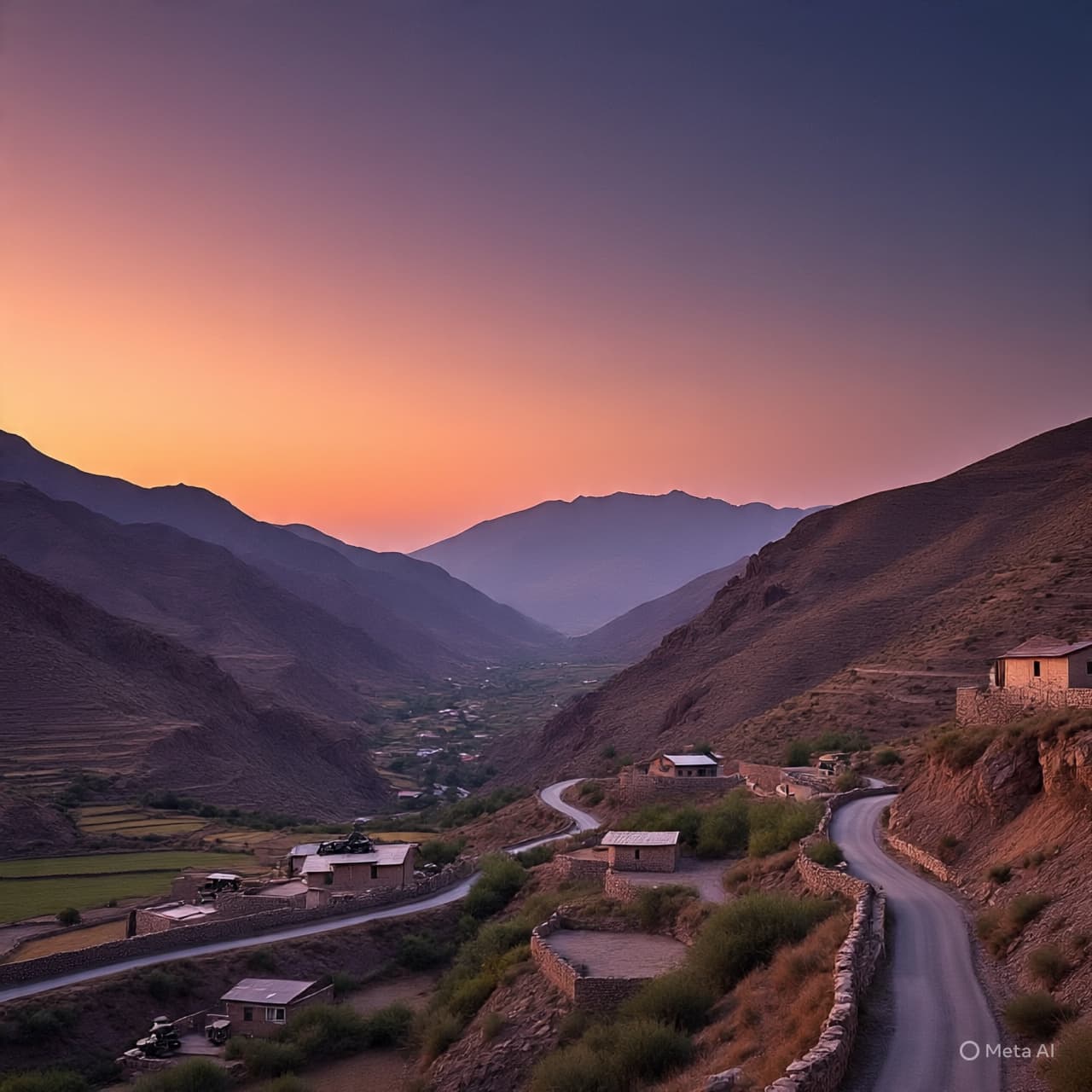
Night settles slowly across the mountains that curve between Iran and Iraq, where the air carries the quiet scent of dust and pine from the high ridges of Kurdistan. In these borderlands, roads wind between small towns and scattered military outposts, and the horizon often glows faintly from distant cities. Yet in recent days the stillness has been punctuated by flashes of light—missiles cutting across the sky, drones humming above valleys that have long stood at the crossroads of regional rivalries.
What unfolds here is part of a wider rhythm of conflict stretching across the Middle East. As tensions escalate between Iran, Israel, and their allies, the mountainous Kurdish frontier has once again become a stage where broader strategic currents quietly converge.
In early March, Iranian forces launched missile and drone strikes against bases belonging to Kurdish opposition groups in the autonomous Kurdistan region of northern Iraq. Iranian officials described the operation as a preemptive response to what they said were preparations by “separatist” militants attempting to infiltrate Iran from across the border. Several projectiles reportedly struck areas near Erbil and Sulaymaniyah where groups such as Komala and other Kurdish opposition organizations maintain camps.
For Tehran, these strikes are framed as an effort to close a door before it opens. Iranian leaders warned Kurdish factions not to exploit the broader regional crisis, signaling that any attempt to launch operations into Iranian territory would meet swift retaliation.
But the Kurdish dimension of the conflict is not unfolding in isolation. Analysts and regional reports suggest that Western and Israeli planners have explored the possibility of mobilizing Kurdish opposition groups along Iran’s western frontier, potentially opening a new pressure point against Tehran.
In that sense, the mountains that separate Iran from Iraq are no longer just geographic boundaries—they are becoming strategic fault lines.
The government of Iraq’s Kurdistan Region has publicly denied any role in facilitating attacks against Iran, emphasizing that its territory should not be used as a launching ground for regional confrontation. Officials in Erbil have reiterated that the region seeks stability and does not wish to be drawn into the widening conflict.
Meanwhile, the broader war continues to ripple outward. Iranian-aligned militias across Iraq have warned that Western interests could become targets if they support operations against Iran, while drone and missile attacks have struck military sites in several parts of the region.
The result is a layered landscape of tensions: one conflict unfolding across international borders, another within Iran’s own diverse regions, and a third playing out quietly among alliances and proxy networks.
In towns scattered along the Kurdish hills, daily life continues beneath the distant sound of aircraft and the occasional thunder of air defenses. Markets open in the morning, children walk to school, and farmers tend orchards on slopes that have seen generations of shifting power.
Yet above these routines hangs the uncertain geometry of a widening conflict—one that stretches from the Mediterranean coast to the Zagros Mountains.
For now, the latest chapter remains defined by missile trails and cautious statements: Iranian strikes on Kurdish opposition bases in Iraq, warnings against cross-border incursions, and an expanding regional confrontation that has drawn Israel, the United States, and multiple militias into a complex web of retaliation.
In the quiet valleys between Iran and Iraq, the night sky has begun to tell the story—brief flashes of light marking another turn in a conflict whose boundaries continue to expand.
AI Image Disclaimer Illustrations were created using AI tools and are not real photographs.
Sources Reuters Al Jazeera Anadolu Agency The Guardian Iraqi News
Published by Banx Network. This article is part of the Banx decentralized media programme, powered by the BXE token on the XRP Ledger.