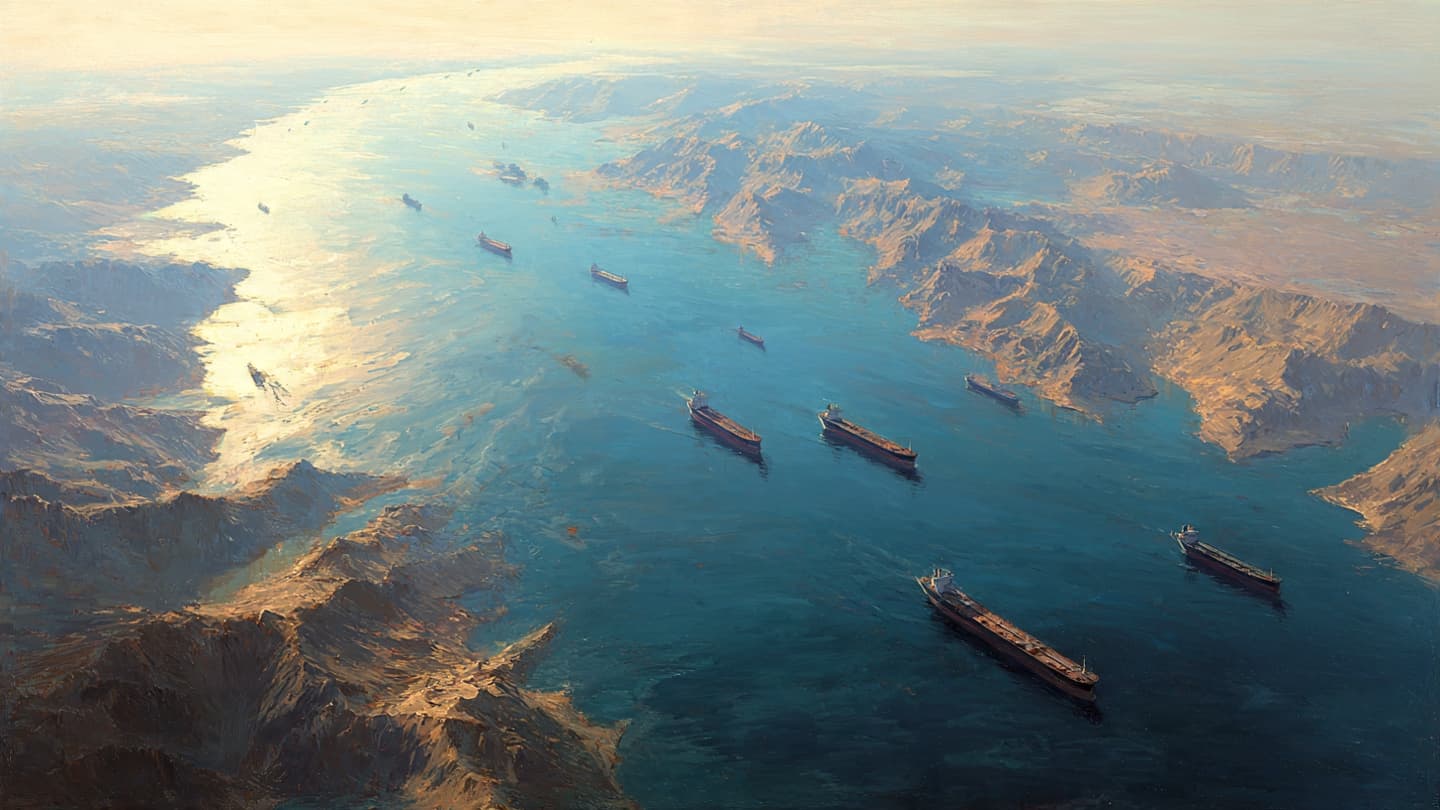
Morning arrives over the Strait of Hormuz with the same rhythm it has followed for generations. Tankers trace deliberate paths across calm waters, fishing boats drift beneath widening skies, and the sea quietly performs its ancient task of connecting distant shores. Yet beneath that familiar surface, every passing vessel now carries the weight of a world watching closely, where geography has become inseparable from uncertainty.
In recent weeks, tensions between the United States and Iran have continued to deepen around the strategic waterway, despite an intensification of military airstrikes elsewhere in the region. Rather than easing the confrontation, both sides have maintained firm public positions, illustrating that aerial campaigns alone have not altered the broader strategic balance surrounding one of the world's most important maritime corridors.
The Strait of Hormuz occupies only a narrow passage between the Persian Gulf and the Gulf of Oman, yet its importance extends far beyond its modest width. A substantial share of the world's seaborne oil and liquefied natural gas exports passes through these waters each day. For energy markets, shipping companies, and governments alike, the strait represents more than a shipping lane—it is a vital artery linking producers with consumers across Asia, Europe, and beyond.
Military activity has gradually become part of the region's daily landscape. Naval patrols, surveillance aircraft, missile defenses, and commercial shipping now operate within an environment shaped by heightened caution. While airstrikes may target military infrastructure or strategic assets, they have not removed the enduring reality that maritime security depends upon restraint, communication, and the willingness of competing powers to avoid broader confrontation.
For Iran, the Strait of Hormuz remains a significant element of its regional influence. Officials have repeatedly emphasized the country's capacity to affect maritime traffic should conflict continue to expand. The United States, meanwhile, has reaffirmed its commitment to protecting freedom of navigation and safeguarding commercial shipping alongside regional and international partners. These parallel positions leave little room for immediate compromise, even as neither side publicly signals a desire for an uncontrolled regional war.
The consequences of prolonged tension extend well beyond military calculations. Energy traders closely monitor every development, insurers reassess shipping risks, and transport companies prepare contingency plans for possible disruptions. Even without a complete interruption to maritime traffic, uncertainty alone can influence fuel prices, freight costs, and global supply chains that depend upon predictable movement through the Gulf.
Communities living along the surrounding coastlines experience these developments differently. Ports continue operating, fishing vessels continue their routines, and families maintain ordinary lives beneath extraordinary headlines. The contrast between daily life and geopolitical rivalry reflects how international disputes often unfold in places where ordinary routines persist despite distant diplomatic calculations.
Observers note that recent events demonstrate the limitations of relying solely on military pressure to achieve political objectives. Air campaigns may alter tactical conditions, but longstanding disputes rooted in security concerns, regional influence, and mutual distrust often require broader diplomatic engagement before meaningful de-escalation becomes possible. The Strait itself has become a reminder that strategic geography cannot easily be reshaped through force alone.
As daylight fades across the Gulf, ships continue their measured passage through the narrow channel, guided by navigation systems rather than political declarations. The waters remain open, yet the uncertainty surrounding them continues to ripple across international markets and diplomatic conversations. The ongoing standoff between the United States and Iran illustrates that while airstrikes may change events on land, the future of the Strait of Hormuz—and the stability it represents—will likely depend upon choices made far beyond the reach of military aircraft.
AI Image Disclaimer The accompanying illustrations are AI-generated visual interpretations intended to represent the subject and are not authentic photographs.
Sources Reuters Associated Press BBC News Al Jazeera Financial Times
Published by Banx Network. This article is part of the Banx decentralized media programme, powered by the BXE token on the XRP Ledger.

.jpg&w=3840&q=75 "Intelligence Agencies Suspect Russia Is Developing Anti-Satellite Weapon to Target Starlink")