
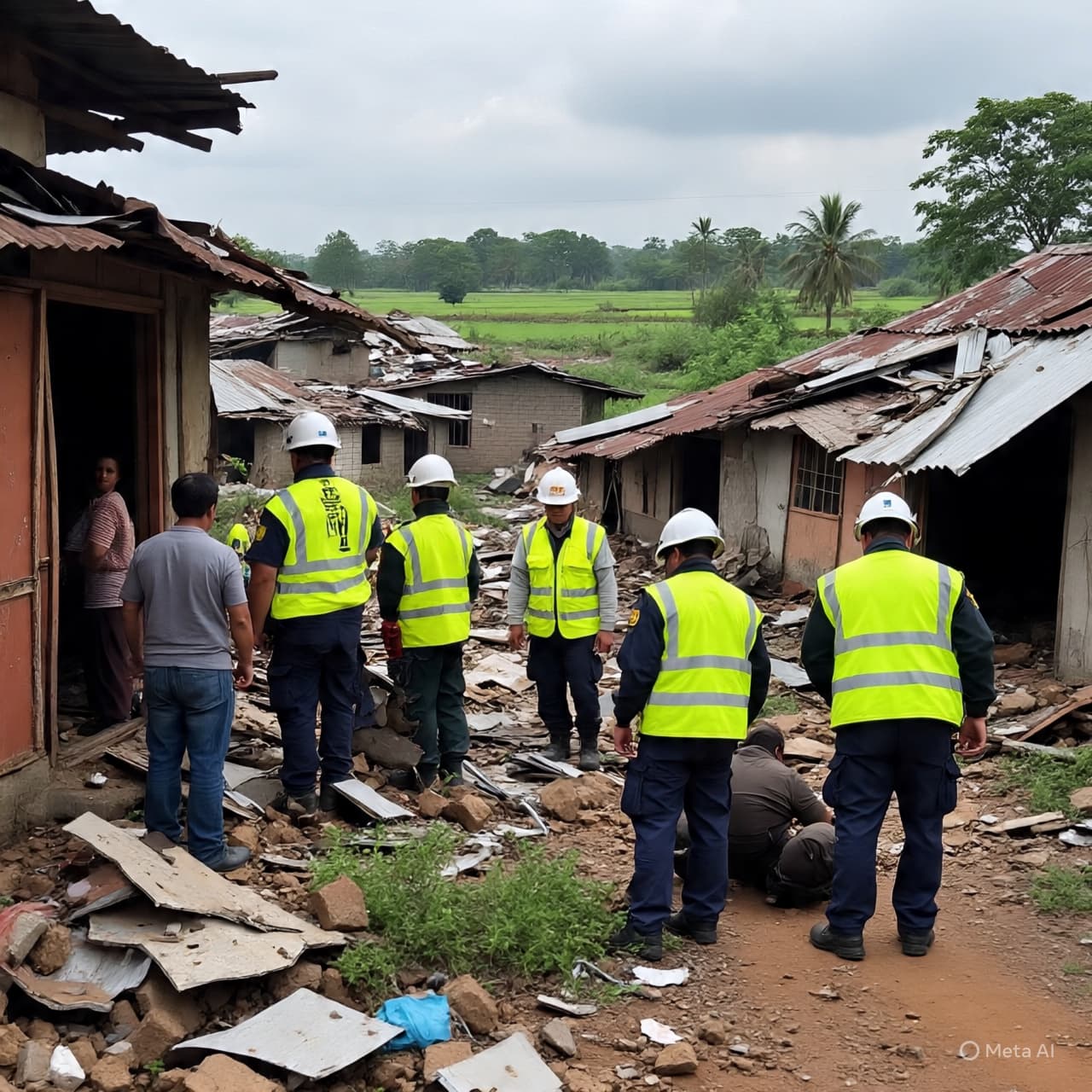
Morning light in eastern Afghanistan often sweeps across fields and villages with a calm that seems older than history itself, touching river bends and narrow roads where children walk and goats graze. In Nangarhar Province, where ridgelines fold into one another and prayer calls rise with dawn air, another day usually unfolds in the measured rhythm of rural life. Houses perch on gentle slopes; wheat fields shimmer in the rising glow.
But in the early hours of one recent morning, that familiar motion was interrupted. In the nocturnal hush between February’s last night and the first breath of day, aircraft crossed borders and released a series of deadly strikes. The United Nations Assistance Mission in Afghanistan reported that overnight airstrikes carried out by Pakistan inside Afghan territory killed at least thirteen civilians and wounded seven more, including women and children. The gravity of those losses settled in the villages like the lingering mist after a night’s storm.
The landscape of eastern Afghanistan is shaped by long horizons and thin air, but it is also etched by history’s shifting patterns of conflict and coexistence. On that night, strikes that Pakistan said targeted militant camps in Nangarhar and neighboring provinces also touched homes and lives far from the world’s gaze. Reports from provincial officials and the United Nations described civilian casualties that included entire families, their routines folded into sudden stillness.
Across the border in Pakistan, authorities framed the operation as necessary to halt militants accused of orchestrating attacks on Pakistani soil, including bombings in recent weeks that had sown grief there as well. Officials characterized the strikes as intelligence‑based and focused; in parliamentary discussions, ministers spoke of national security as non‑negotiable. Yet the morning after, villages in Afghanistan bore the visible marks beyond tactical language — damaged buildings, scattered belongings, and relatives tracing quiet steps among rubble.
For the communities of eastern Afghanistan, dawn’s return brings memories as vivid as the day’s tasks. Mothers prepare bread; elders sip tea in the courtyard; children chase dust motes in patches of sunlight. But in some homes, empty chairs and untouched bowls speak of absence before light. The United Nations called on all parties to uphold commitments under international law to protect civilians and to take “maximum restraint,” an appeal that echoed across diplomatic channels and local radio waves alike.
Tensions between the two neighbors have threaded through years of intermittent clashes and uneasy ceasefires. Occasional agreements reached through third‑party mediation have at times softened overt hostilities, yet suspicions and sporadic violence endure along long, porous frontiers. These human landscapes — villages strung along dusty roads and valleys carved by rivers — remain woven into that larger tapestry of regional politics and shared histories.
As investigations into the strikes proceed, and as officials in Kabul and Islamabad exchange statements and diplomatic notes, the echoes of that night’s motion linger. In narrow alleys and open courtyards, the everyday cadence resumes, but the rhythm is marked now by memory — the quiet imprint of those who will not rise with the next dawn.
AI Image Disclaimer Illustrations were created using AI tools and are not real photographs.
Sources (Media Names Only)
Reuters BBC News Al Jazeera Associated Press The Guardian
Published by Banx Network. This article is part of the Banx decentralized media programme, powered by the BXE token on the XRP Ledger.


