Far above the clouds, long after a mission’s cameras fall silent and its instruments stop listening, many spacecraft continue to move.
They circle the planet quietly, following paths carved by gravity and momentum. To observers on the ground, these machines have already completed their stories. Yet in orbit they remain—small travelers tracing invisible lines around Earth.
Eventually, however, gravity and atmosphere begin to reclaim them.
One such journey recently reached its final chapter when a spacecraft once operated by NASA reentered Earth’s atmosphere in an uncontrolled descent. The craft, long inactive, gradually lost altitude until friction with the upper layers of the atmosphere drew it back toward the planet.
As the spacecraft fell, the thin air at the edge of space thickened into resistance. Speed turned into heat. Metal surfaces glowed, and pieces of the structure likely broke apart during the plunge.
Such events are known as uncontrolled reentries, a term used when satellites return to Earth without the guidance of active propulsion or planned maneuvering. Instead of steering toward a predetermined oceanic region, the spacecraft descends naturally as atmospheric drag slowly pulls its orbit downward.
Most of the time, the outcome is predictable. The extreme temperatures generated during reentry typically destroy the majority of a spacecraft’s structure, turning large sections into fragments or vapor before they reach the ground.
Still, the precise location where surviving debris might fall is difficult to determine in advance.
Engineers and orbital analysts track such reentries carefully, using radar and satellite data to estimate when and where a spacecraft may cross into the denser layers of the atmosphere. These calculations narrow the window of time for the descent but often leave a broad corridor across the globe where debris could potentially land.
In this case, officials indicated that the spacecraft’s reentry occurred without reports of injuries or confirmed damage on the ground.
Events like this are not unusual in the long life cycle of satellites. Thousands of spacecraft have been launched since the dawn of the space age, and many eventually return to Earth in similar fashion after their missions conclude.
Today, space agencies increasingly design satellites with controlled deorbit plans intended to guide them safely into remote areas of the ocean once their operational lives end. Such measures aim to reduce uncertainty and limit the risk of debris reaching populated regions.
Still, older spacecraft launched decades ago were often built before these practices became standard.
For them, the end arrives quietly. Orbit shrinks by fractions of a mile each day, until the atmosphere—almost imperceptible at first—tightens its hold.
NASA confirmed that the spacecraft reentered Earth’s atmosphere in an uncontrolled descent after its orbit gradually decayed. Most of the vehicle is believed to have burned up during reentry, and there were no immediate reports of damage or injuries related to the event.
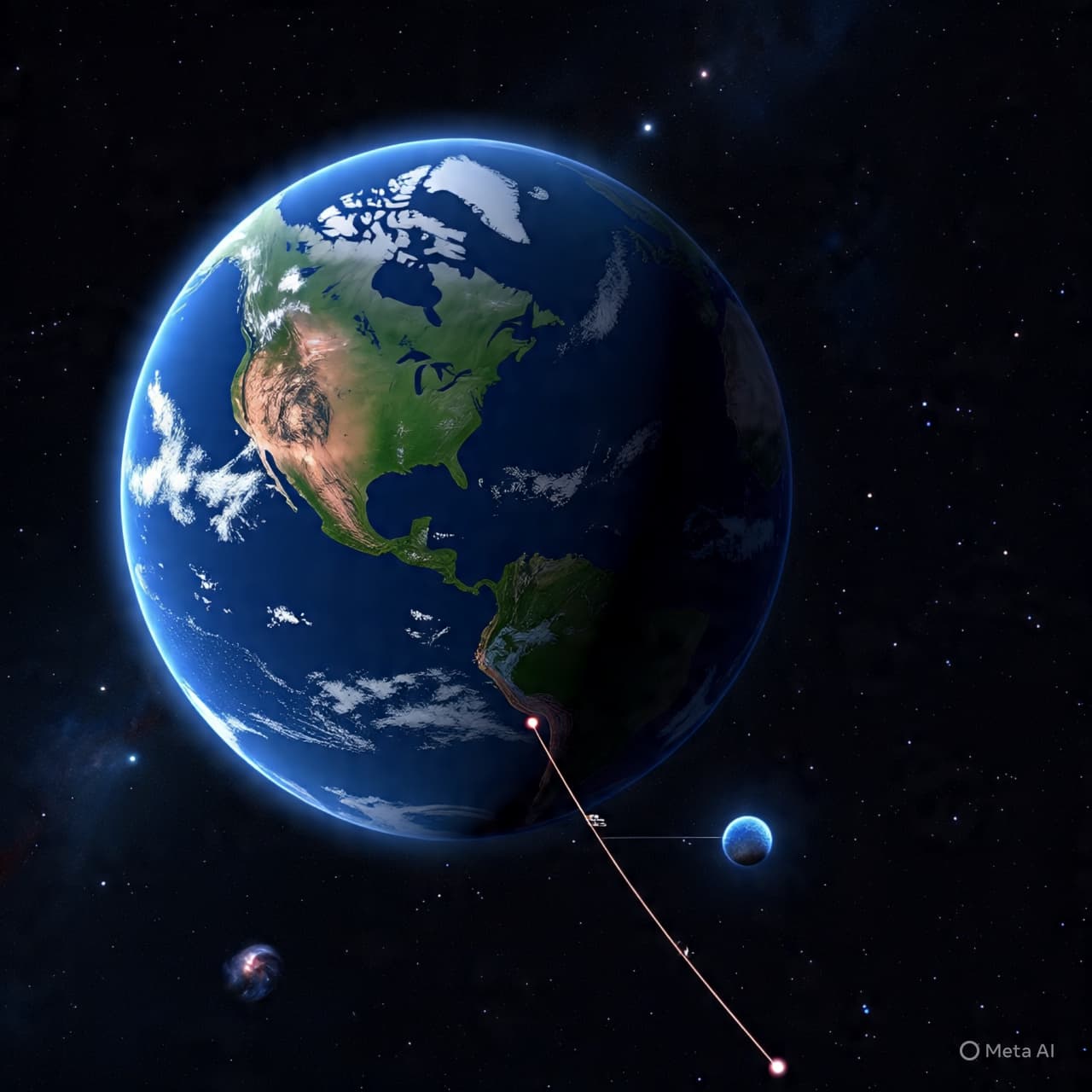
AI Image Disclaimer
Illustrations were created using AI tools and are not real photographs.
Source Check
Credible coverage and/or reporting exist from: Reuters Space.com Ars Technica CNN The Guardian
Published by Banx Network. This article is part of the Banx decentralized media programme, powered by the BXE token on the XRP Ledger.