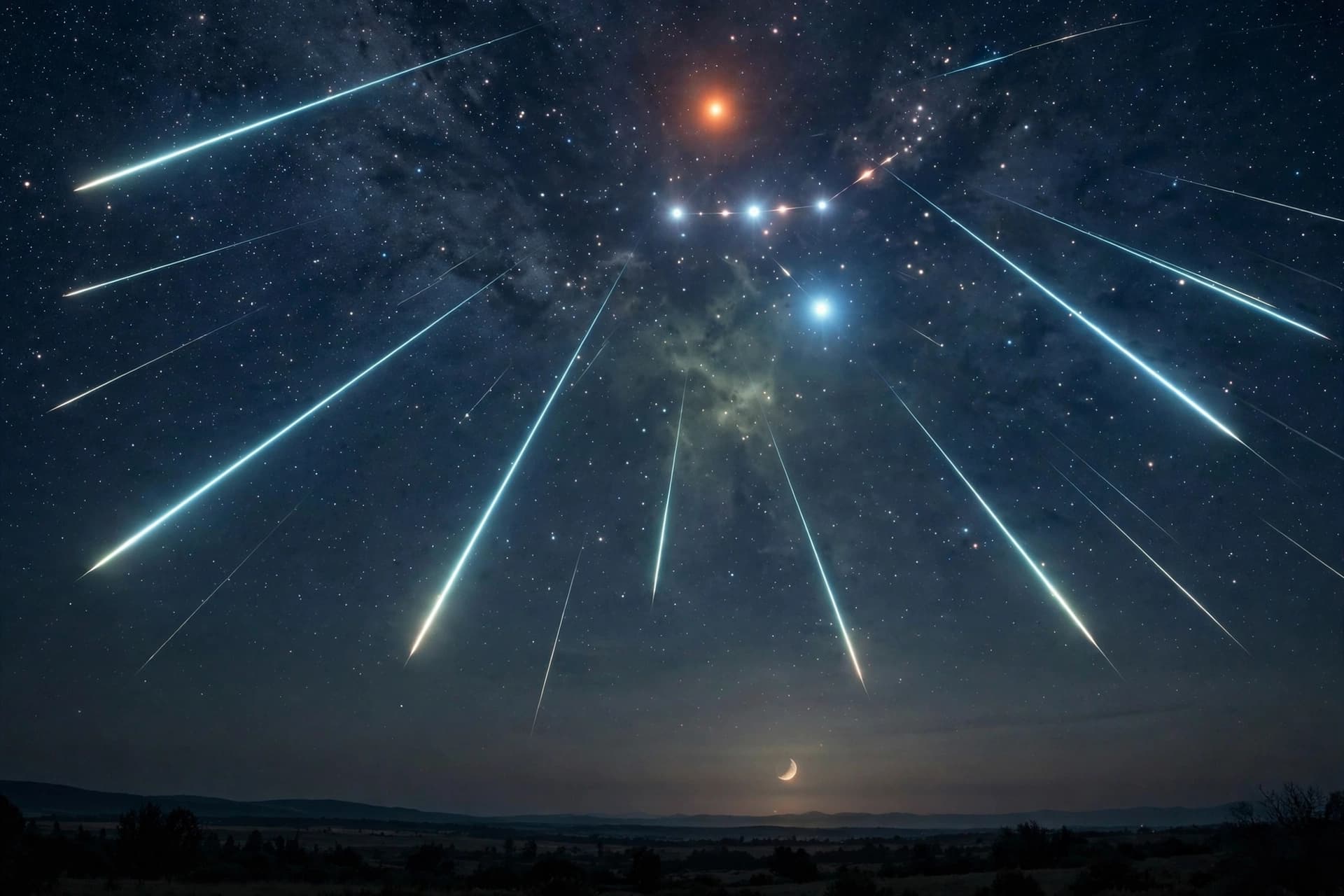
High above our atmosphere, the universe orchestrates a quiet ballet of celestial bodies, moving in patterns both predictable and extraordinary. On January 22, 2026, astronomers note a rare alignment: the interstellar object 3I/ATLAS will line up with the Sun-Earth axis, a configuration that invites observation, analysis, and reflection on the cosmic scale.
3I/ATLAS is a visitor from beyond our solar system, a traveler that has crossed vast interstellar distances to reach the neighborhood of the Sun. Its trajectory, carefully calculated by astronomers, intersects with the imaginary line connecting Earth to the Sun, providing a unique opportunity to study its composition, motion, and potential interactions with solar radiation. Observing such a moment offers insight into interstellar dynamics and the kinds of material that populate the space between stars.
These alignments are rare because they require precise geometric coincidence. Even slight variations in orbital paths, observational angles, or timing can prevent such a configuration. When it occurs, it allows astronomers to optimize telescopic tracking, collect spectral data, and refine models of interstellar object behavior. Instruments can detect subtle changes in brightness, outgassing, and rotational properties, helping researchers understand the physical nature of a body formed far from our Sun.
Beyond the technical significance, the alignment evokes a sense of perspective. A rock traveling across light-years, intersecting a line connecting Earth and Sun, underscores the vastness of space and the fleeting nature of observational windows. It is a reminder that even in the apparent calm of our skies, the universe continues its slow, deliberate dance.
In practical terms, on January 22, 2026, the interstellar object 3I/ATLAS will align with the Sun-Earth axis, offering astronomers a rare observational opportunity to study its trajectory, composition, and physical properties.
AI Image Disclaimer Visuals are AI-generated and serve as conceptual representations.
Sources (names only) NASA Hubble Space Telescope Space.com Scientific American Nature
Published by Banx Network. This article is part of the Banx decentralized media programme, powered by the BXE token on the XRP Ledger.