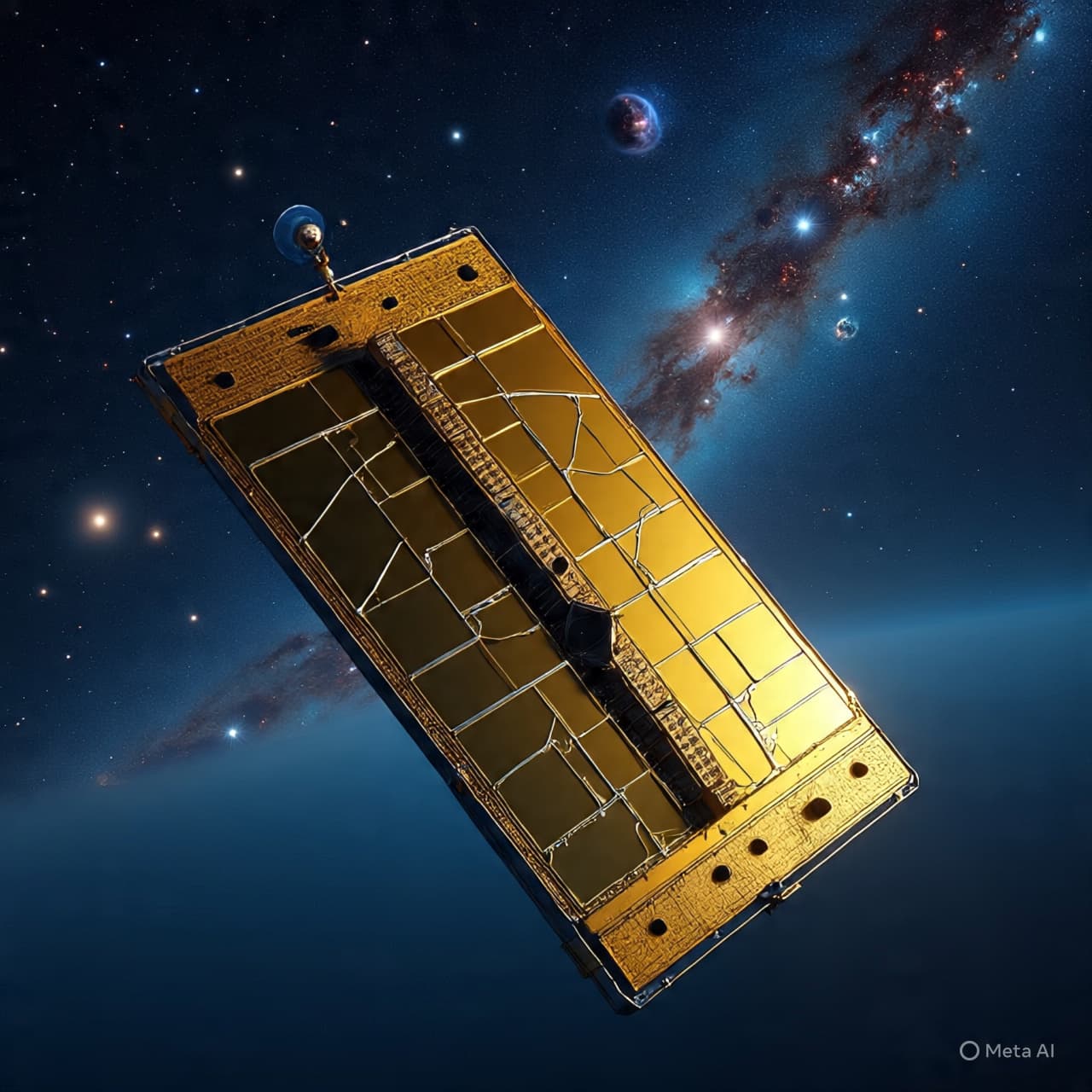
Somewhere far beyond the scattered glow of cities and the slow breathing of oceans, a golden mirror drifts in a patient orbit, turned toward the oldest light in the universe. The telescope does not hurry. It waits, and the cosmos—vast, ancient, and quietly luminous—answers in its own time.
Each year, astronomers gather their questions like lanterns before that mirror. They write proposals not merely as technical requests but as small maps of curiosity: a distant galaxy whose light left before Earth had oceans, the faint atmosphere of a faraway world, the dusty cradle of a star still learning to burn. In the language of science, they ask for time—precious hours in which the universe might reveal something new.
This quiet exchange has entered a new chapter. The Space Telescope Science Institute has announced the programs selected for the fifth General Observer cycle of the James Webb Space Telescope, a process that will shape the observatory’s scientific work beginning in July 2026. Like the turning of a season, the announcement marks another year in which human curiosity is carefully directed toward the depths of space.
The competition for that gaze is immense. Thousands of scientists around the world submit proposals, each one evaluated through peer review by the telescope’s allocation committees. From these submissions, a smaller number are chosen—projects that will share the telescope’s limited observing hours and guide its instruments toward specific corners of the sky.
Cycle 5 follows this familiar rhythm. Researchers proposed studies that range across the broad landscape of modern astronomy: the formation of galaxies in the early universe, the chemistry of exoplanet atmospheres, the turbulent birthplaces of stars, and the dynamics of black holes that shape entire galaxies. Even within our own solar system, icy bodies and distant planetary atmospheres remain subjects of Webb’s attention.
The telescope’s ability to observe infrared light—radiation that travels through cosmic dust and across immense stretches of time—makes it uniquely suited to such investigations. Where earlier observatories glimpsed faint shapes and uncertain outlines, Webb often reveals intricate structure: filaments of star-forming gas, the spectral fingerprints of molecules, or galaxies that appear as they were only a few hundred million years after the Big Bang.
Yet the telescope itself remains unchanged in its quiet discipline. Orbiting nearly a million miles from Earth at the Sun–Earth L2 point, it unfolds its instruments night after night, recording signals that have crossed billions of years to reach its mirrors. Each observation becomes another fragment in the long human attempt to understand how the universe came to be.
In that sense, the announcement of a new observing cycle is less a dramatic event than a quiet continuation of a much older story. Astronomy advances not only through sudden discoveries but also through steady attention—the patient accumulation of images, spectra, and measurements that slowly illuminate the structure of the cosmos.
The Space Telescope Science Institute confirmed that the Cycle 5 General Observer program will guide the James Webb Space Telescope’s observing schedule beginning July 1, 2026, with approximately 8,000 hours of observing time expected to be allocated among selected proposals from the international astronomy community. The selections follow a global peer-review process conducted earlier in 2026.
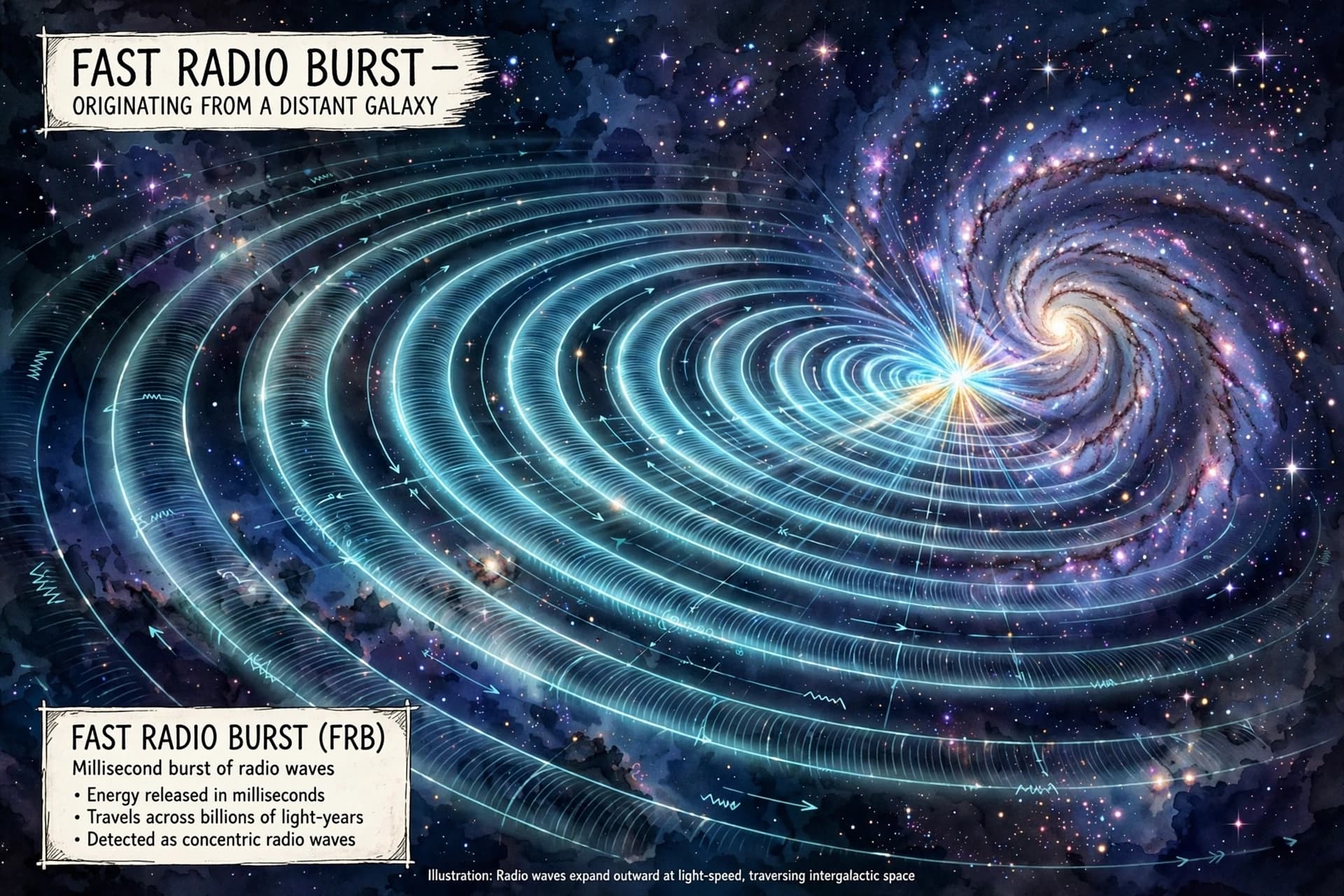
AI Image Disclaimer Illustrations were created using AI tools and are not real photographs.
Sources
Space Telescope Science Institute NASA Astrobiology Magazine ESA Nature Astronomy
Published by Banx Network. This article is part of the Banx decentralized media programme, powered by the BXE token on the XRP Ledger.