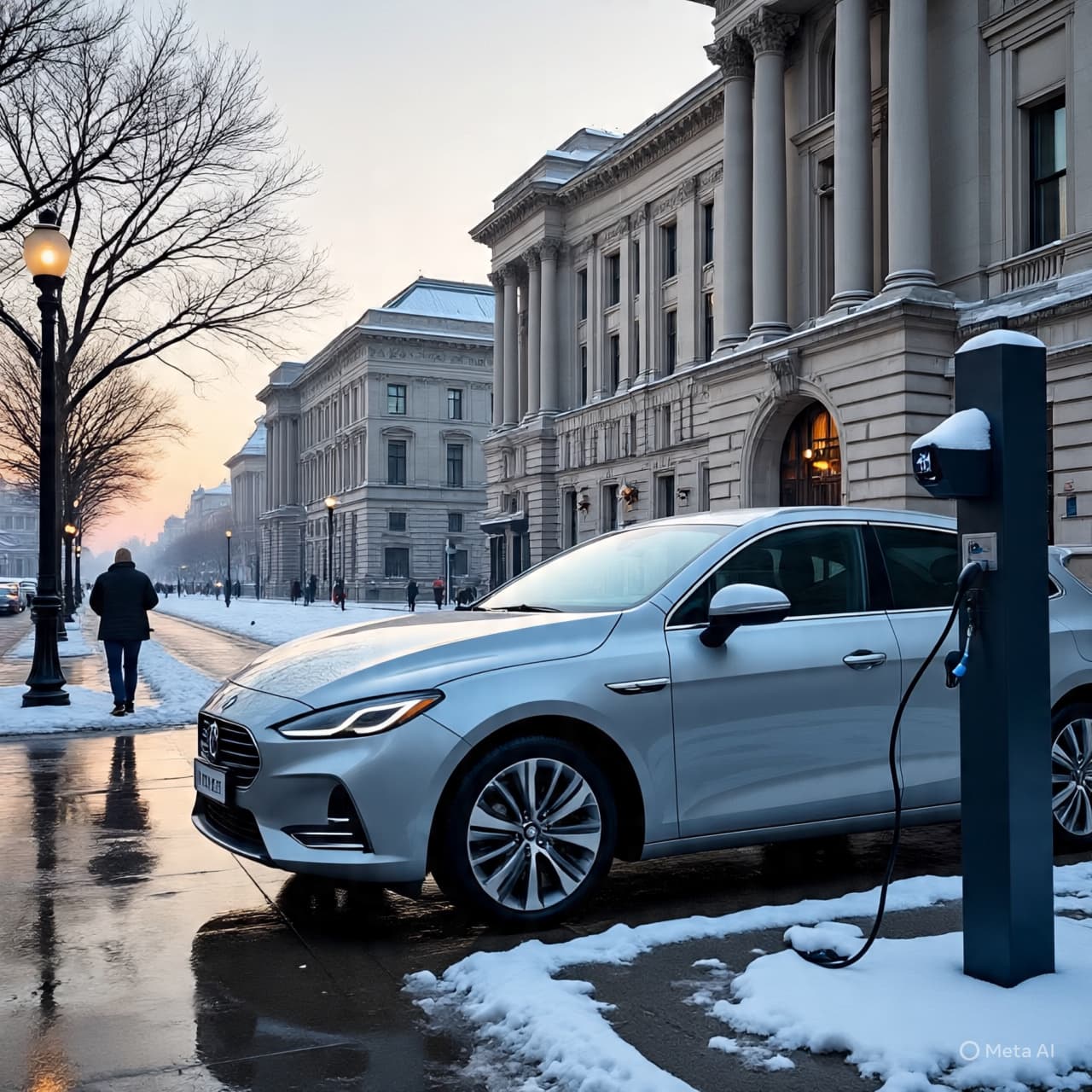
In the long arc of a Canadian winter, when exhaust clouds drift like pale ghosts above frozen intersections and tires whisper over salted roads, the idea of an electric car feels almost poetic. A quieter engine. A different future. In driveways edged with snowbanks from Ottawa to the Atlantic coast, the question hums softly: what will power the next journey?
In Ottawa, that question has recently been met with renewed encouragement. The federal government continues to lean into its ambition of reducing transportation emissions by incentivizing the purchase of zero-emission vehicles. Through national rebate programs, eligible buyers can receive thousands of dollars back at the point of sale when purchasing electric or plug-in hybrid models that meet price thresholds. The policy folds into Canada’s broader climate strategy, which includes targets for phasing out the sale of new gasoline-powered passenger vehicles over the coming decade.
The incentives are designed not only to ease sticker shock, but to signal direction. Electric vehicles, once novelties on Canadian roads, are increasingly visible—parked outside suburban supermarkets, charging beside office towers, gliding along the Queensway in near silence. Federal rebates, paired in some provinces with additional local incentives, can narrow the price gap between electric and internal combustion models. For households weighing monthly payments and long-term fuel savings, that gap can feel decisive.
Yet the map of Canada is wide, and policy does not always move in unison across its provinces.
In Nova Scotia, recent changes have altered the arithmetic. Provincial fees and adjustments tied to vehicle registration have made owning certain electric vehicles more expensive than before. While the province has offered its own rebate programs in the past to encourage adoption, newer measures—such as additional annual road-use fees for zero-emission vehicles—reflect a different concern: how to maintain transportation infrastructure funding as fuel tax revenues gradually decline.
The logic is technical, almost quiet in its rationale. Gasoline taxes have long helped pay for road maintenance. As more drivers move away from the pump, that revenue stream thins. Some provinces across North America have responded by introducing specific fees for electric vehicles, seeking balance in a shifting fiscal landscape. In Nova Scotia, the added cost has prompted debate among drivers who had seen electric ownership as both an environmental and economic choice.
The contrast between Ottawa’s incentives and Nova Scotia’s added costs does not necessarily represent contradiction, but rather the layered nature of Canadian federalism. National climate objectives intersect with provincial budget realities. One level of government accelerates adoption; another recalibrates how roads are funded. For consumers, the experience can feel like standing at a crossroads where encouragement and expense meet in the same transaction.
Still, the broader trend is unmistakable. Electric vehicle sales in Canada have risen steadily in recent years, supported by expanding charging infrastructure and improved battery range. Automakers are investing heavily in Canadian supply chains, from battery manufacturing to critical minerals. Charging stations now dot highways once considered too remote for anything but gasoline engines. What was once a leap of faith has become, for many, a practical consideration.
In Halifax and Ottawa alike, drivers continue to do the math. They consider upfront rebates, provincial fees, fuel savings, maintenance costs, and resale values. They watch as policy evolves, sometimes in tandem, sometimes in tension. And beneath it all lies a quieter transformation: the gradual reimagining of how Canadians move across vast distances of snow, forest, and shoreline.
As spring approaches and the ice thins along the Rideau Canal, federal incentives remain in place to encourage electric adoption, even as provinces like Nova Scotia refine their fee structures to address fiscal gaps. The result is a landscape shaped by both aspiration and adjustment. On Canadian roads, the future is arriving—not with a roar, but with the faint electric hum of change.
AI Image Disclaimer Visuals are AI-generated and serve as conceptual representations.
Sources (names only) Government of Canada Natural Resources Canada Government of Nova Scotia Statistics Canada International Energy Agency
Published by Banx Network. This article is part of the Banx decentralized media programme, powered by the BXE token on the XRP Ledger.