Singapore's skyline has long been a symbol of commerce moving at extraordinary speed. Yet beneath the towers and glass facades, another transformation is taking place more quietly. Artificial intelligence is becoming increasingly embedded in the country's digital economy, moving from experimental projects into offices, factories, financial services and everyday business operations.
The country's position as a regional technology hub has helped attract investment in computing infrastructure and digital services. As demand for AI applications increases, companies are looking not only for software but also for the data centers, cloud capacity and specialized computing resources needed to operate increasingly sophisticated systems.
The growth of artificial intelligence is closely connected to Singapore's broader digital economy. Financial institutions are exploring AI for risk management and customer services, manufacturers are applying automation to production processes, while professional-service companies are using digital tools to analyze documents and information more efficiently.
For smaller businesses, the technology offers a different kind of possibility. AI tools can help companies automate administrative tasks, produce marketing materials, analyze customer behavior and provide basic support without requiring the same level of manpower previously needed. Adoption remains uneven, but the technology is becoming easier for businesses to access through cloud-based platforms.
Singapore's infrastructure has also become an important part of the story. The city-state has invested heavily in connectivity and data-center capacity, creating an environment where technology companies can operate regional services. At the same time, the country's limited land and energy resources mean that digital expansion must be balanced with infrastructure efficiency.
The energy question is particularly important because AI computing requires substantial electricity. Data centers already represent a significant component of Singapore's power demand, and continued growth in AI could increase that requirement. This has encouraged greater attention to energy-efficient computing, cooling systems and cleaner sources of electricity.
The economic benefits are potentially broad. New AI-related investments can create demand for engineers, data specialists, cybersecurity professionals and other technology workers. They can also encourage existing businesses to redesign their processes, potentially improving productivity and creating new digital services for customers across Southeast Asia.
Yet AI adoption does not happen at the same speed everywhere. Businesses must consider costs, cybersecurity, data protection and the reliability of automated systems. For Singapore, where trust and regulatory certainty are important parts of its business environment, the development of AI is therefore accompanied by efforts to create standards that allow innovation while maintaining safeguards.
Singapore's AI story is still unfolding. The technology is moving gradually from specialized laboratories into ordinary commercial activity, while investment in infrastructure continues beneath the city's familiar skyline. For businesses, the question is increasingly less about whether AI will become part of the economy and more about how deeply it will shape the way Singapore works, trades and creates value in the years ahead.
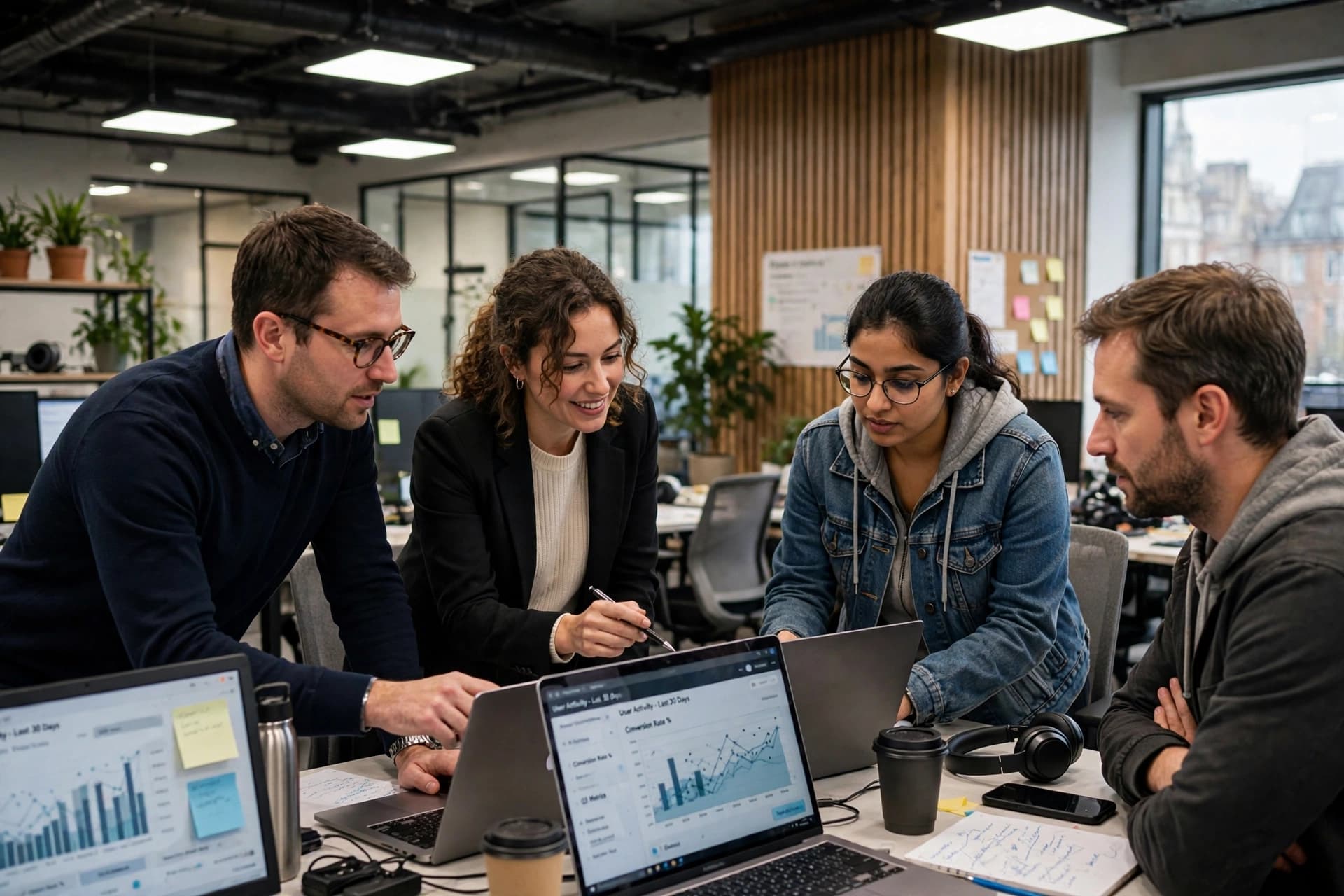
AI Image Disclaimer: The visuals are AI-generated conceptual illustrations and are not photographs of actual Singapore facilities or technology operations.
Sources: Reuters, Singapore Economic Development Board, Infocomm Media Development Authority, Ministry of Digital Development and Information.
Published by Banx Network. This article is part of the Banx decentralized media programme, powered by the BXE token on the XRP Ledger.