Volantis has raised $88 million to develop technology aimed at improving the connection between AI computing and memory chips, according to Reuters.
The company is working on a part of computing infrastructure that is rarely visible to ordinary users. Behind AI applications are processors, memory systems, networking technologies, and other components that determine how quickly data can move through a computing system.
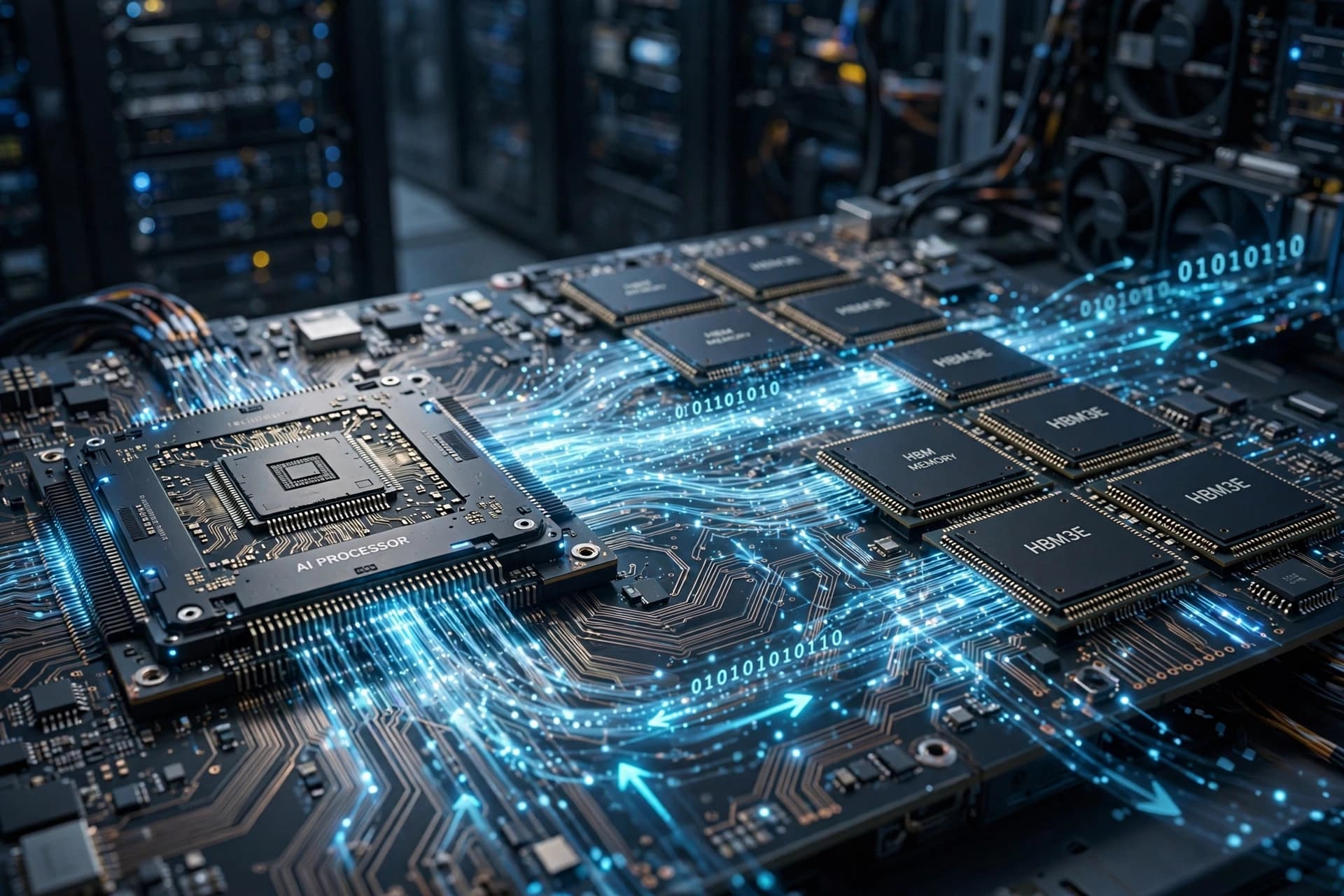
Modern AI workloads can require enormous quantities of data to be moved repeatedly between processing units and memory. This movement consumes time and energy, creating what engineers often describe as a bottleneck between computation and memory.
Technology designed to reduce that bottleneck could become increasingly valuable as AI models expand. Faster and more efficient movement of data can help computing systems process workloads with less delay and potentially lower energy consumption.
Volantis' fundraising reflects investor interest in this less visible layer of the AI hardware ecosystem. Much of the public attention surrounding artificial intelligence focuses on models and applications, but the underlying hardware determines what those systems can actually accomplish.
The company's technology is aimed at connecting AI processors with memory chips more efficiently. That approach places Volantis within a growing group of companies seeking improvements in the infrastructure supporting modern AI computing.
Memory technology has become particularly important as AI accelerators require increasing amounts of high-bandwidth memory. Data must move rapidly between memory and processors to keep computing units working efficiently.
The challenge extends beyond performance. Data centers consume significant amounts of electricity, and AI workloads are increasing demand for computing capacity around the world. Improvements in efficiency can therefore have implications for both operating costs and the amount of infrastructure required.
Volantis' $88 million funding does not by itself determine how successful its technology will become. Semiconductor markets are highly competitive, and new architectures must ultimately demonstrate that they can perform reliably and economically at scale.
Still, the investment points toward an important part of the AI story. As artificial intelligence becomes more powerful, the challenge is no longer only about teaching machines to think or generate. It is also about building the physical pathways that allow enormous volumes of information to move quickly enough for those systems to function.
SEO SLUG
volantis-88-million-ai-memory-chip-technology-2026
HASHTAGS
#Volantis #ArtificialIntelligence #AI #Semiconductors #MemoryChips #Technology #DataCenters #Computing
IMAGE DISCLAIMER
This AI-generated image is a conceptual representation of AI semiconductor and memory technology and does not depict an actual Volantis facility, chip, or fundraising event.
SOURCES
Reuters Volantis Semiconductor Industry Association
Published by Banx Network. This article is part of the Banx decentralized media programme, powered by the BXE token on the XRP Ledger.