There are times when a country’s technological ambitions can be read not from one invention but from the collection of questions it chooses to pursue. In South Korea, seven new projects now form such a collection, stretching from quantum computing and space to nuclear energy and biotechnology.
The projects were unveiled as part of South Korea’s effort to develop technologies expected to influence future economic and scientific competitiveness. The program includes research areas that require long development cycles and significant investment, making the initiative less about immediate products and more about building capabilities for the years ahead. (reuters.com)
Quantum computing is among the most closely watched fields. Unlike conventional computers, quantum machines use principles of quantum mechanics to process certain kinds of information in fundamentally different ways. The technology remains at an experimental stage, but researchers are exploring possible applications in chemistry, materials science, optimization, and cryptography.
Space forms another part of the program. South Korea has been steadily expanding its space capabilities, from satellite development to launch systems and lunar exploration. The country has set a goal of reaching the Moon by 2030, adding a long-term destination to its growing space program.
Nuclear technology also appears in the broader group of projects. Advanced nuclear systems are being studied internationally as countries seek reliable low-carbon energy sources while addressing questions of safety, cost, waste, and construction time. South Korea's established nuclear engineering base gives it a foundation from which to pursue new applications.
Biotechnology provides a different route into the future. Advances in genomics, drug development, medical technologies, and biological manufacturing are creating new connections between science and industry. For South Korea, investment in biotechnology offers an opportunity to diversify beyond its traditional strengths in electronics and heavy industry.
The timing is important because semiconductors remain central to the country’s current technology economy. Samsung Electronics and SK Hynix are benefiting from strong AI-driven memory demand, while South Korean policymakers are increasingly looking at technologies that could become the next engines of growth. (reuters.com)
These technologies also share a common characteristic: they require patience. Quantum computing cannot be developed through a single product launch, while space exploration depends on years of engineering and testing. Biotechnology and advanced nuclear systems likewise involve long research cycles, specialized talent, and substantial infrastructure.
That makes the projects significant beyond their individual scientific goals. They represent an attempt to create several technological pathways at the same time, reducing dependence on any single industry. Success will ultimately depend on whether research can move into usable technologies, commercial applications, and sustainable ecosystems.
For now, the seven projects mark another stage in South Korea’s technology development. Quantum computing, space, nuclear energy, biotechnology, and related fields are moving onto a national research agenda that looks well beyond the immediate semiconductor cycle and toward technologies that may shape the next decade.
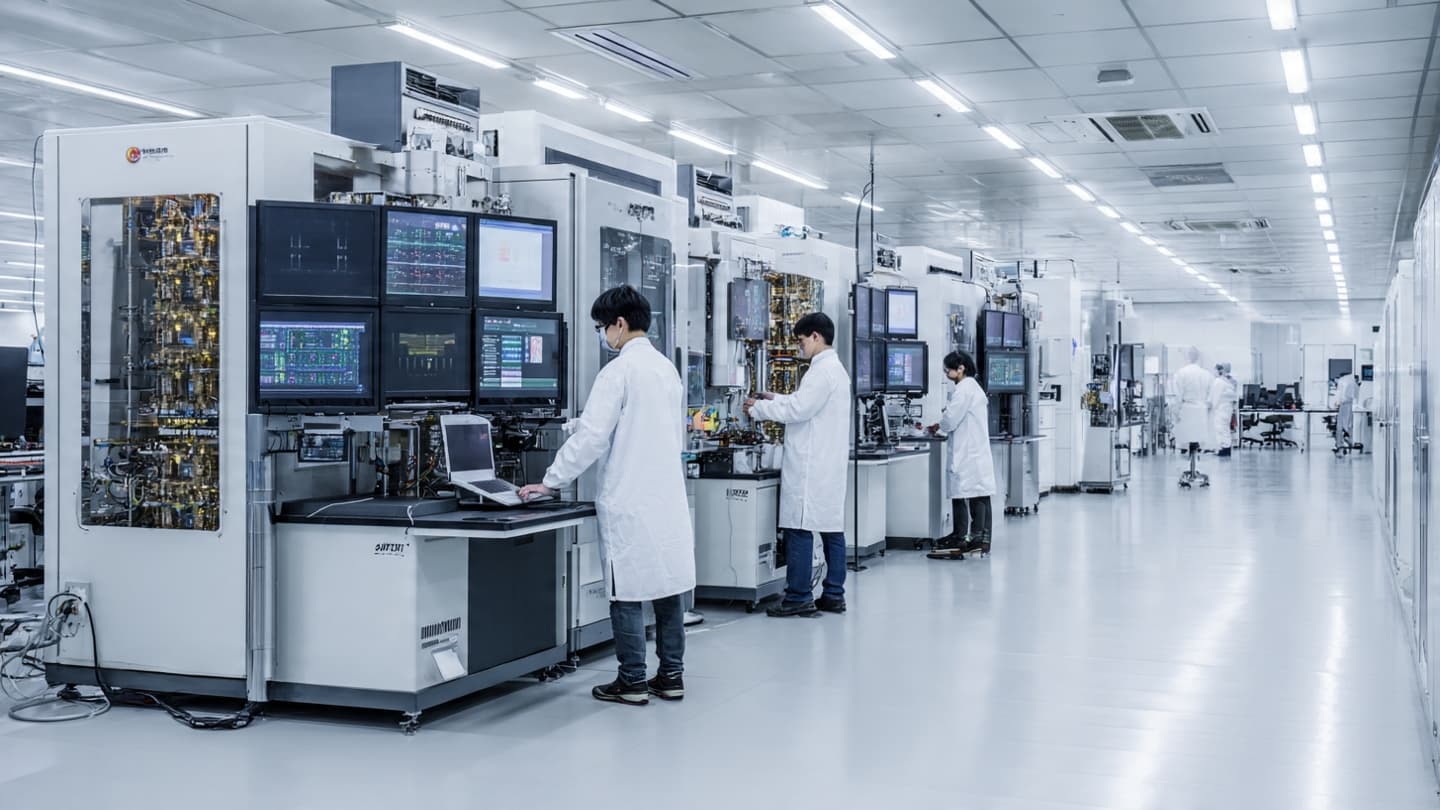
AI Image Disclaimer These visuals are AI-generated conceptual illustrations and do not depict actual South Korean laboratories, spacecraft, or research projects.
Sources Reuters Ministry of Science and ICT of Korea Korea Aerospace Research Institute The Korea Herald Yonhap News Agency
Published by Banx Network. This article is part of the Banx decentralized media programme, powered by the BXE token on the XRP Ledger.