
Key Highlights
- Exhibition Length:David Hockney's latest work spans approximately ninety meters.
- Digital Interaction:Visitors often photograph the artwork, altering their experience.
- Artistic Transformation:The piece reflects the shift in how art is perceived in the digital age.
[David Hockney's Latest Exhibition]
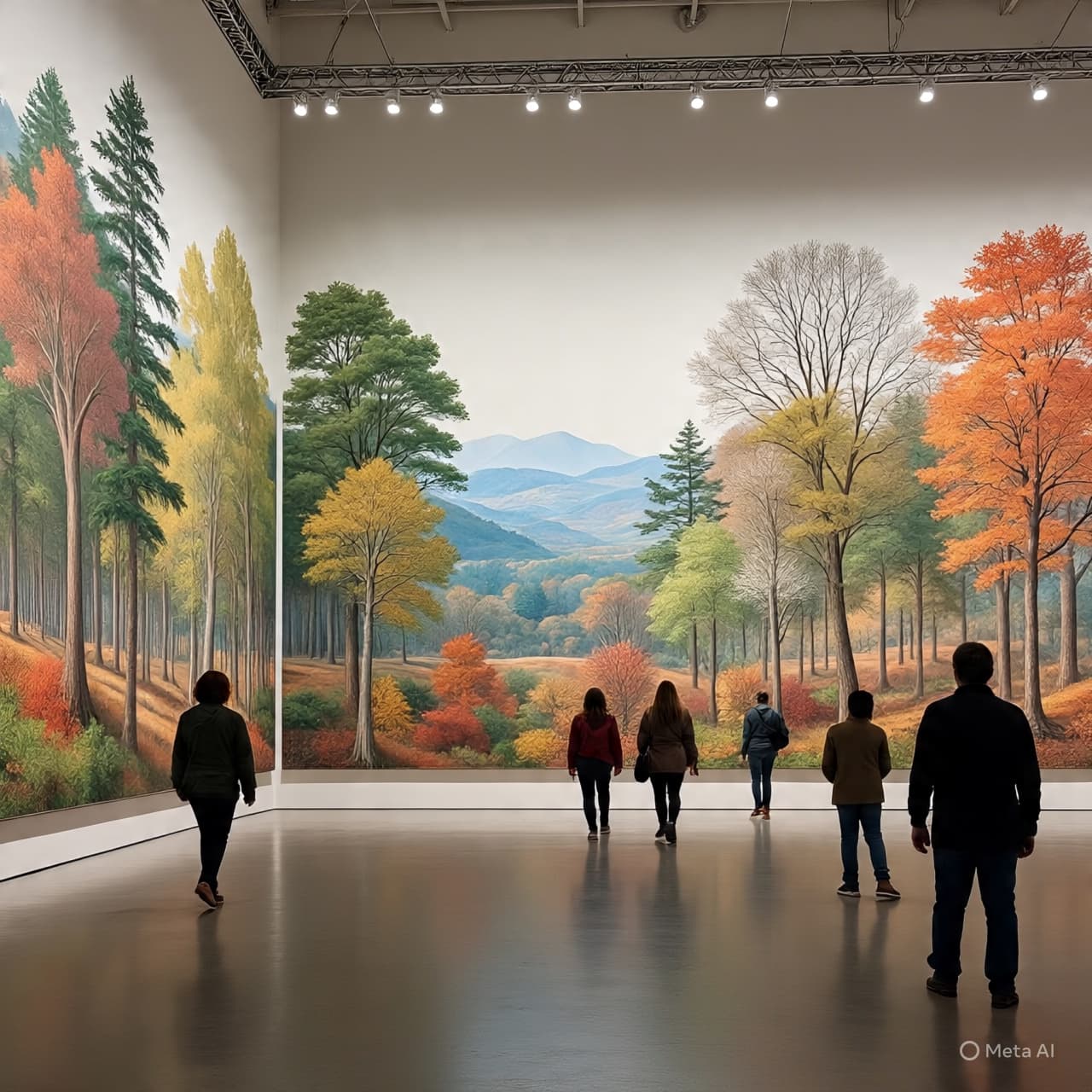
In a groundbreaking exhibition, British artist David Hockney showcases a stunning ninety-meter-long landscape that invites viewers to engage with art in a new way. This expansive piece, filled with vibrant colors and intricate details, captures the essence of nature while simultaneously challenging traditional perceptions of art in the gallery setting.
Hockney's work is not just a visual feast; it represents a dialogue between the physical and digital realms. As visitors approach the installation, they are drawn to the sheer scale of the artwork, which stretches across the gallery wall, creating an immersive experience. However, instead of absorbing the piece in its entirety, many attendees find themselves lifting their smartphones to capture sections of the landscape. This act of photographing the artwork transforms the experience, allowing viewers to interact with it in a manner that aligns with contemporary digital habits.
[The Role of Technology in Art]
Hockney has long been an advocate for the integration of technology in art. His fascination with digital tools is evident in his previous works, where he has utilized devices like the iPad to create stunning pieces that blur the lines between traditional and modern art forms. The ninety-meter landscape continues this exploration, inviting viewers to navigate the artwork physically while also engaging with it through their screens.
The experience of viewing Hockney's landscape is multifaceted. In person, the piece can feel overwhelming, with its myriad colors and forms challenging the eye to create a cohesive vision. Visitors often walk alongside the installation, experiencing it as a journey rather than a singular moment. However, when they photograph the artwork, the image becomes more manageable. The smartphone screen compresses the vast panorama into a coherent visual narrative that can be easily revisited and shared.
[Art in the Digital Age]
This transformation in how art is experienced reflects broader changes in society. Galleries remain vital spaces for physical engagement with art, yet the digital realm increasingly influences how artworks are perceived and disseminated. Hockney's landscape serves as a reminder of this duality, existing simultaneously in the gallery and the digital world. As visitors capture and share their experiences online, the artwork gains a new life, extending its reach beyond the physical confines of the exhibition space.
The installation not only showcases Hockney's artistic prowess but also highlights the evolving nature of art consumption in the 21st century. It prompts viewers to consider how their interactions with art are shaped by technology, ultimately leading to a richer understanding of the work itself.
As the exhibition continues, visitors are encouraged to engage with Hockney's landscape in both its physical form and its digital representations. This duality invites a deeper reflection on the nature of art and the ways in which it can be experienced in an increasingly interconnected world.
Published by Banx Network. This article is part of the Banx decentralized media programme, powered by the BXE token on the XRP Ledger.



