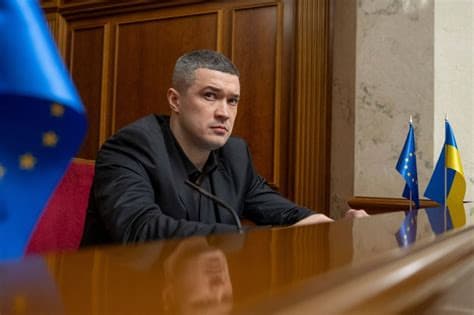
In Belgrade, as winter light settled early over the rivers that divide and define the city, Serbia’s president spoke not of local roads or regional elections, but of events unfolding far beyond the Balkans. His words, delivered calmly in a televised appearance, carried a sense of unease rather than certainty, as though he were tracing connections rather than declaring conclusions.
Aleksandar Vučić suggested that the possibility of a military strike on Iran could not be separated from the wider atmosphere of global exposure and pressure. He pointed to the renewed attention surrounding documents linked to the late financier Jeffrey Epstein, arguing that moments of sudden disclosure often coincide with geopolitical turbulence. In his framing, the release of sensitive information and the movement of military power exist in the same unsettled climate.
The connection he drew was not technical or evidentiary, but atmospheric. Vučić spoke of a world in which reputations, alliances, and long-buried associations surface unexpectedly, creating pressure points that ripple outward. In such conditions, he warned, decisions once delayed can accelerate, and distant conflicts can edge closer to action.
Serbia, positioned between historical alliances and modern diplomatic balancing, has long watched global tensions with caution. Vučić’s remarks reflected that posture, offering observation rather than alignment. He did not claim foreknowledge, nor did he announce any change in Serbia’s stance. Instead, he described a sense that the international environment had grown thinner, more reactive, and less forgiving of uncertainty.
The reference to Epstein’s case carried symbolic weight. The renewed circulation of documents has revived discussions about power, secrecy, and accountability across multiple countries. For Vučić, these revelations formed part of a broader pattern, one in which private histories and public policy collide under global scrutiny.
Officials in Washington and Tehran have continued to speak in guarded terms, maintaining diplomatic language even as military readiness and strategic warnings remain visible. No official confirmation has been offered to support predictions of imminent action, leaving the Serbian president’s remarks suspended between caution and conjecture.
As the interview concluded, Belgrade returned to its evening routines. Cafés filled, traffic flowed, and the city’s concerns remained local. Yet the comments lingered beyond the broadcast, reflecting a wider anxiety shared by many governments watching a world where information surfaces suddenly and consequences travel quickly.
Vučić’s statement did not forecast an event so much as describe a condition: a global moment where disclosures, distrust, and force exist close together, shaping decisions in ways that are not always visible until they unfold.
AI Image Disclaimer Visuals are AI-generated and serve as conceptual representations.
Sources (Media Names Only) Reuters Associated Press Agence France-Presse Al Jazeera
Published by Banx Network. This article is part of the Banx decentralized media programme, powered by the BXE token on the XRP Ledger.