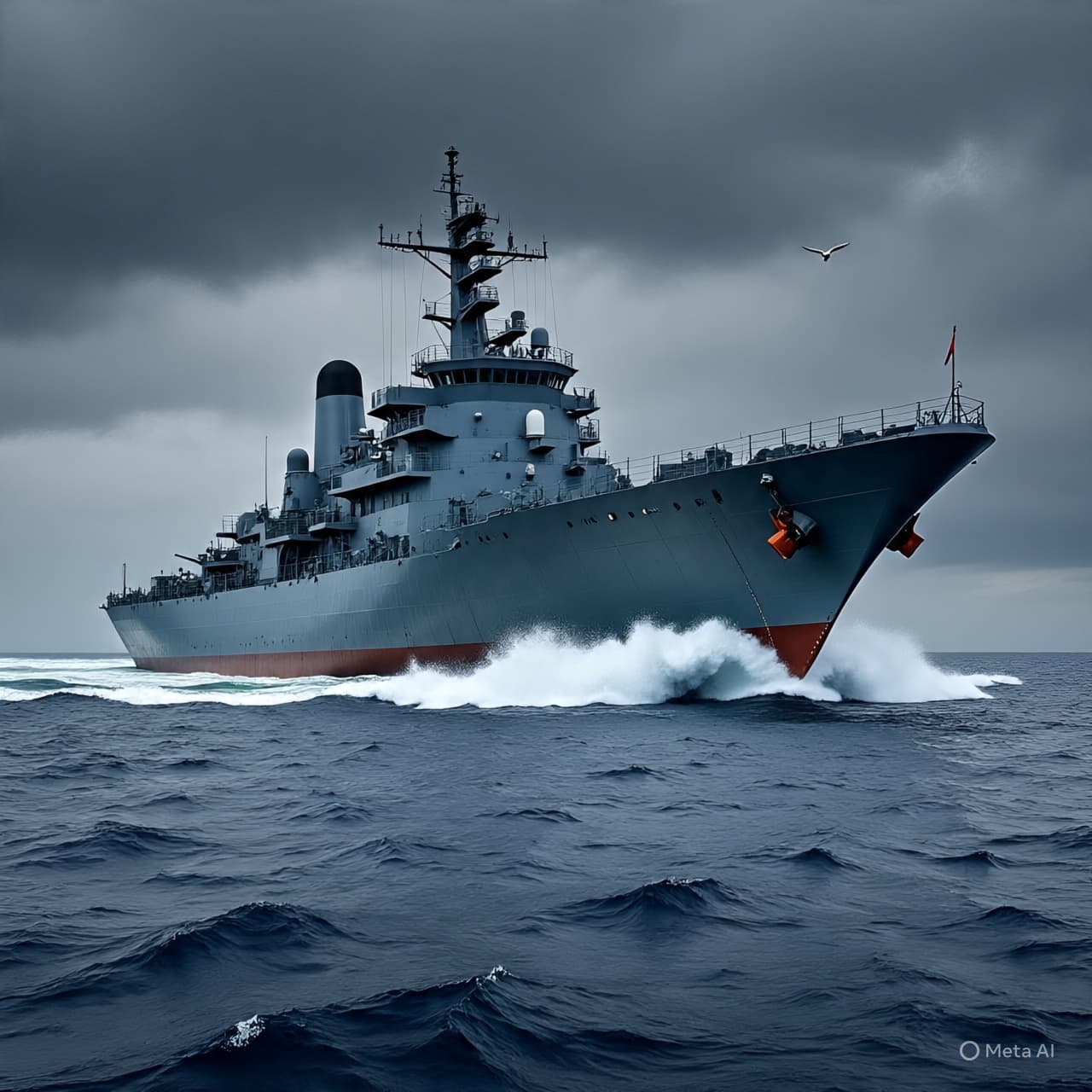
The sea has long been a theater of distance—vast, patient, and often silent. Across the open waters of the Indian Ocean, ships move along invisible routes, guided by radar and routine. Yet even in that expanse, where horizons blur and borders dissolve, geopolitical tension can travel swiftly, carried not by wind but by words.
This week, Iranian authorities claimed that one of their ballistic missiles struck a United States Navy destroyer in the Indian Ocean. The statement, delivered through state media channels in , immediately drew international attention. It suggested a dramatic escalation in an already sensitive maritime environment.
The vessel in question was described as a U.S. destroyer operating in the region, though no immediate independent confirmation was provided at the time of the claim. The has not publicly verified that any of its ships were hit, and U.S. officials have historically responded cautiously to similar assertions, often emphasizing operational security and verification protocols before issuing detailed statements.
Ballistic missile capabilities have been a central component of Iran’s defense posture for years. Tehran has repeatedly highlighted its advancements in missile range and precision, framing them as deterrence tools amid regional tensions. Any claim involving a direct strike on a U.S. naval asset, however, carries broader implications—not only militarily but diplomatically.
The Indian Ocean, while expansive, is far from isolated. It serves as a crucial corridor for global trade, energy shipments, and naval operations. The presence of multiple international fleets underscores its strategic value. A confirmed attack in these waters would reverberate beyond bilateral relations, raising questions about maritime security and escalation management.
Regional analysts note that information warfare often accompanies moments of heightened tension. Public claims, counterclaims, and denials can shape narratives before independent verification is complete. In such situations, governments tend to rely on satellite imagery, radar tracking data, and allied intelligence assessments before drawing firm conclusions.
The broader context includes ongoing friction between Iran and the United States over sanctions, regional influence, and security arrangements. Previous incidents—ranging from drone interceptions to tanker seizures—have demonstrated how quickly maritime encounters can attract global scrutiny. Yet each episode has also shown a measured effort, at least publicly, to prevent escalation into direct conflict.
For now, the Iranian claim stands alongside the absence of confirmation from U.S. officials. International observers are watching closely for further statements from Washington and allied governments, as well as any corroborating evidence that may clarify the situation.
The immediate focus remains on verification. U.S. defense officials are expected to assess operational reports, while maritime monitoring groups continue tracking naval movements in the region. Until additional information is released, the incident remains defined by competing narratives rather than established fact.
In the stillness of open water, events can unfold far from public view. Whether this claim signals a turning point or fades into the pattern of contested assertions will depend on what emerges next. For now, both governments maintain their respective positions, and the Indian Ocean continues to carry ships across its surface—steady, watchful, and under careful observation.
AI Image Disclaimer Illustrations were produced with AI and serve as conceptual depictions.
Source Check Credible mainstream international sources covering this topic include:
Reuters Al Jazeera BBC News The Associated Press The Guardian
Published by Banx Network. This article is part of the Banx decentralized media programme, powered by the BXE token on the XRP Ledger.