
Key Highlights
- AI Integration:New Zealand farmers are using AI technology to manage livestock without physical barriers.
- Enhanced Efficiency:The technology allows for real-time adjustments in grazing patterns and reduces labor.
- Tradition Meets Innovation:The shift reflects a balance between traditional farming practices and modern technological advancements.
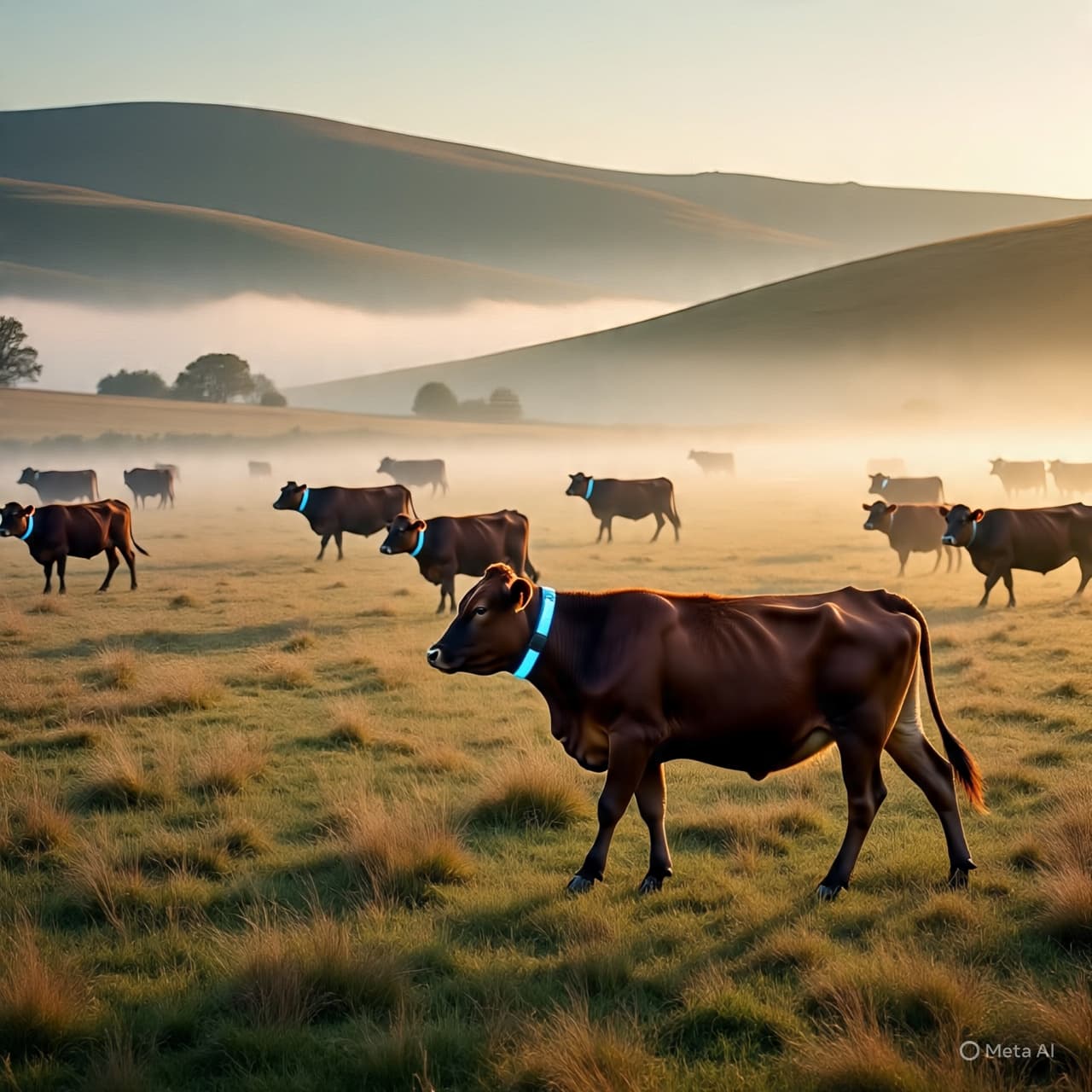
New Zealand's pastoral landscape, often characterized by its serene beauty and traditional farming practices, is undergoing a subtle yet significant transformation. As dawn breaks over the rolling hills, a new kind of farming technology is quietly taking root, reshaping how farmers manage their livestock. This innovation involves small, AI-powered devices that rest around the necks of cattle, allowing farmers to guide their movements without the need for physical fences.
The introduction of these devices marks a departure from conventional methods that relied heavily on timber and wire. Instead, farmers can now use sound cues and digital signals to direct their livestock, creating a more flexible approach to pasture management. This shift not only enhances the efficiency of farming operations but also reflects a philosophical change in how land is utilized. Grazing patterns can be adjusted in real-time, enabling farmers to respond swiftly to changing conditions without the need for extensive infrastructure.
This technological advancement is part of a broader trend in agriculture, where data and automation are increasingly integrated into everyday practices. Sensors and algorithms are becoming essential tools for farmers, allowing them to monitor their livestock and land more effectively. As these technologies become more prevalent, they are woven into the fabric of farming life, changing the way farmers interact with their environment.
However, this shift also raises questions about the balance between tradition and innovation. Farming has historically been a hands-on profession, with farmers relying on their instincts and observations to manage their herds. The introduction of AI systems introduces a layer of digital oversight that can alter the immediacy of this connection. While the animals continue to graze under open skies, the cues they respond to now come from a technological source rather than direct human interaction.
Experts suggest that the adoption of AI technology in agriculture could redefine efficiency, particularly in regions where geographical challenges complicate traditional farming methods. The ability to adapt quickly to changing conditions without the need for physical alterations to the landscape offers farmers a new level of resilience. As this technology becomes more widespread, the image of farming in New Zealand is gradually evolving.
In this new paradigm, the quiet fields of New Zealand may come to symbolize a harmonious blend of tradition and innovation. The landscape will reflect not just the physical presence of fences but also the invisible signals that guide livestock, illustrating a future where technology and nature coexist in a balanced relationship. As farmers embrace these advancements, the essence of farming may remain unchanged, even as the methods evolve beneath the surface.
Published by Banx Network. This article is part of the Banx decentralized media programme, powered by the BXE token on the XRP Ledger.



