

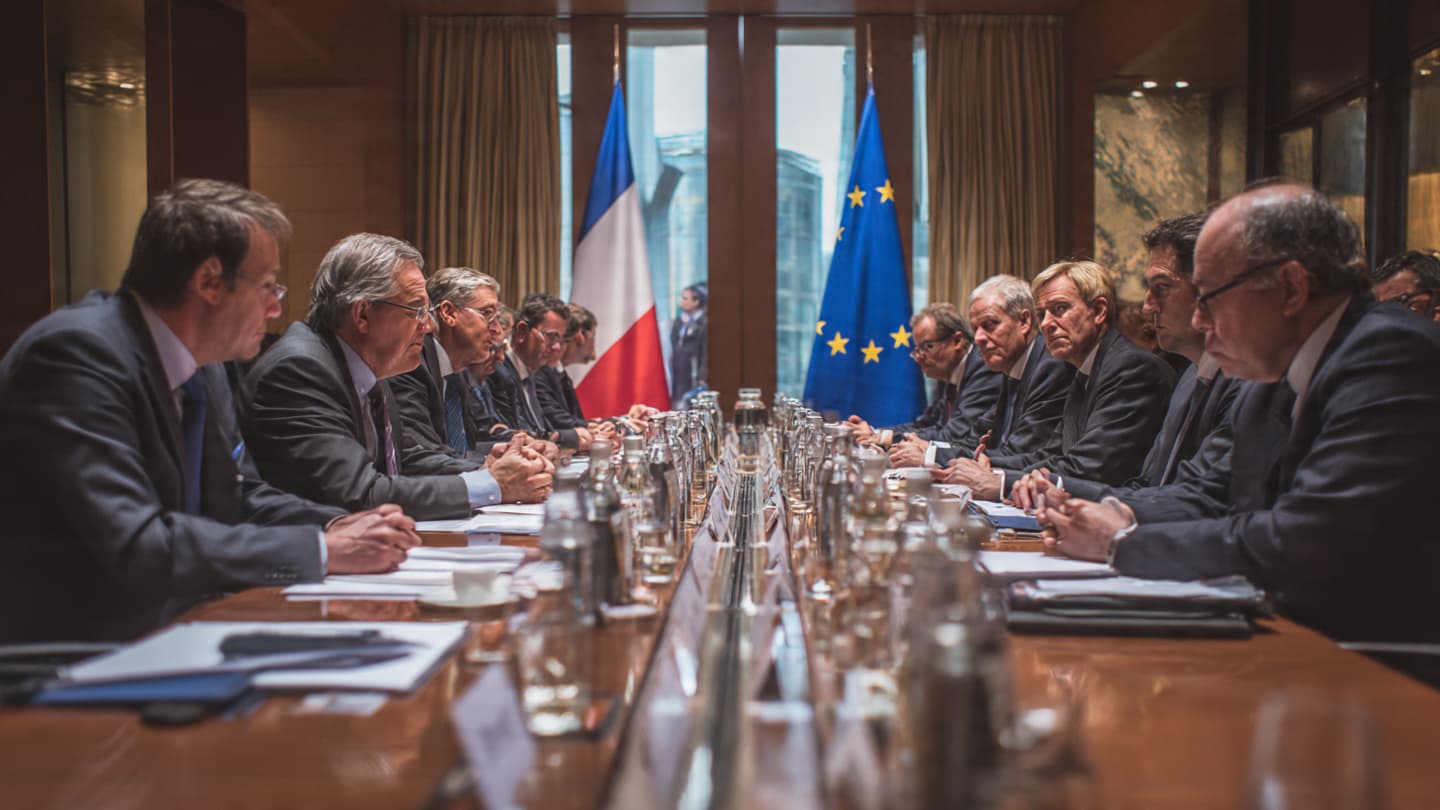
Key Highlights
- New Agreement:France and Germany have reached a significant agreement regarding the governance of defense company KNDS.
- Strengthened Oversight:The deal aims to enhance operational coordination and oversight within the defense group.
- European Security Context:This agreement reflects broader changes in Europe's security environment and defense spending.
[New Franco-German Agreement]
Europe's history has often been shaped by the relationship between France and Germany. Once marked by conflict and rivalry, this relationship has gradually transformed into one of cooperation, becoming a cornerstone of European integration. This week, another chapter was added as both countries reached a new agreement concerning the governance of defense company KNDS, a major European defense group created through the merger of France's Nexter and Germany's Krauss-Maffei Wegmann.
The agreement aims to strengthen oversight and operational coordination within KNDS, which plays a significant role in the production of armored vehicles and future defense technologies. Officials from Paris and Berlin described the arrangement as an important step toward reinforcing Europe's defense industrial base. The agreement is expected to clarify governance structures and facilitate joint decision-making between stakeholders from both countries.
[Context of the Agreement]
The timing of this agreement reflects broader changes in Europe's security environment. In recent years, European governments have increased defense spending while emphasizing the importance of strategic autonomy and industrial resilience. The ongoing geopolitical tensions and the need for a unified defense strategy have prompted nations to reconsider their defense capabilities and partnerships.
KNDS has been central to several ambitious defense programs, including efforts to develop next-generation military systems. Policymakers view closer industrial coordination as essential for maintaining competitiveness and reducing duplication across Europe's defense sector. The agreement is seen as a proactive measure to ensure that both nations can effectively collaborate on future defense projects.
[Challenges and Opportunities]
Analysts note that Franco-German cooperation has not always progressed smoothly. Differences over procurement priorities, export policies, and industrial interests have occasionally slowed major projects. Nevertheless, both governments continue to regard collaboration as strategically necessary. Supporters of the agreement argue that clearer governance structures could accelerate future projects and improve efficiency. They also believe stronger industrial partnerships may contribute to Europe's broader security ambitions.
[Implications for European Defense]
The agreement comes as European leaders continue discussing how to strengthen collective defense capabilities while maintaining close partnerships within NATO. Industrial cooperation remains an important component of those discussions. For France and Germany, the latest accord represents more than a corporate arrangement; it reflects a continuing effort to balance national interests with shared European objectives in an increasingly complex geopolitical landscape.
Published by Banx Network. This article is part of the Banx decentralized media programme, powered by the BXE token on the XRP Ledger.




