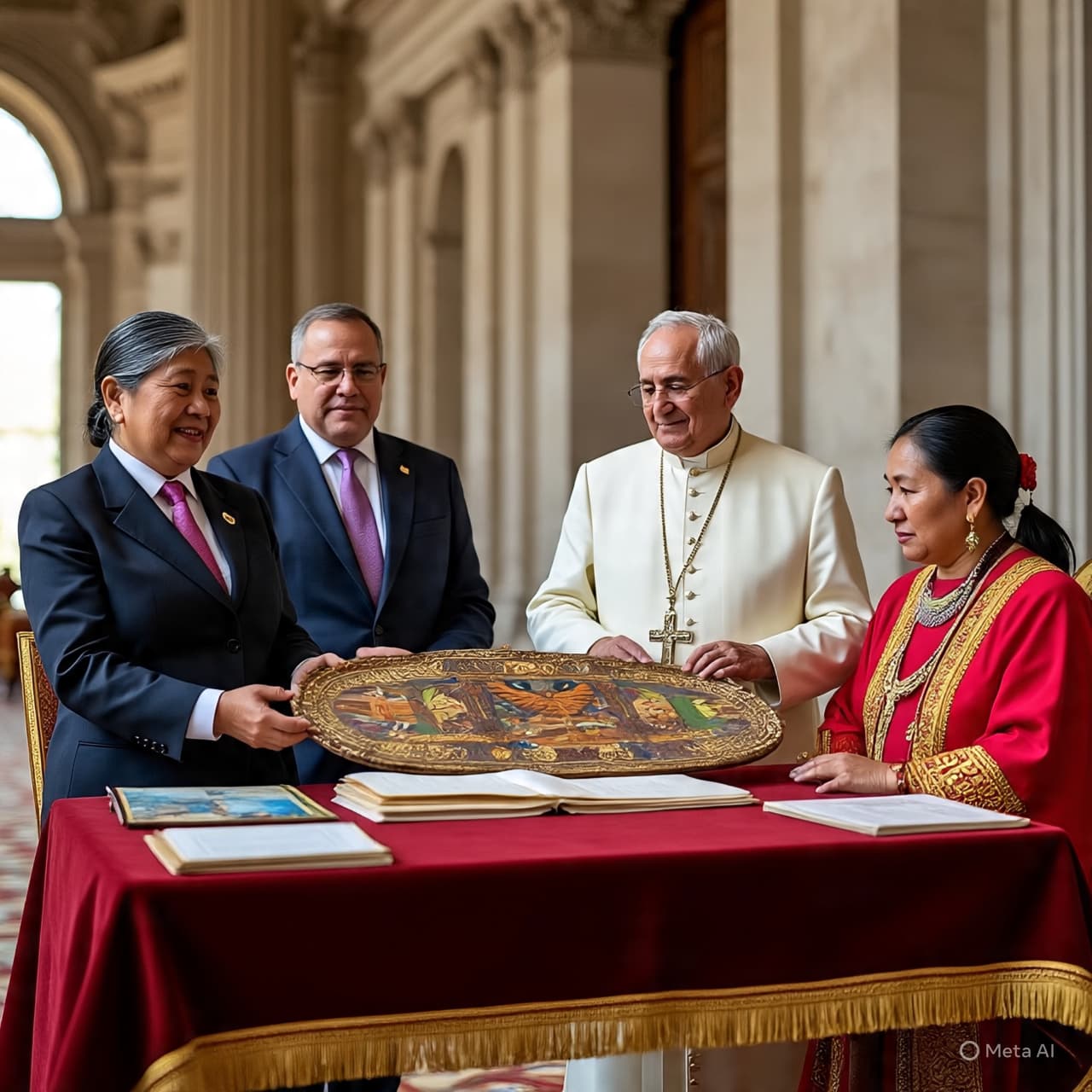
There are moments when history seems to breathe, when objects once treated as museum pieces regain the quiet pulse of meaning. That is the feeling carried in the Vatican’s decision to return dozens of Indigenous artefacts to Canada — a gesture that resonates far deeper than any ceremonial handover.
For generations, these items lived in drawers, archives, and carefully guarded collections. They were catalogued, studied, and preserved, but rarely understood the way the communities who created them understand them — not as objects, but as carriers of stories, relationships, and responsibilities. Their return marks not only a physical journey but a spiritual one, a crossing back into the cultural landscapes that once shaped them.
Canadian Indigenous leaders describe the repatriation as a restoration of balance, the kind that cannot be measured by the number of items involved. Some artefacts were gifted in good faith decades ago; others were taken during times when Indigenous identities were dismissed, suppressed, or treated as remnants of a fading world. To see them return now is to see acknowledgment — imperfect, delayed, but real.
Within the Vatican’s walls, the decision has been presented as part of a broader commitment to healing. In recent years, the relationship between the Catholic Church and Indigenous communities has been defined by difficult truths: residential school trauma, cultural erasure, and generations of grief. The return of these artefacts does not erase that history, but it adds a new chapter — one where dialogue replaces silence, and respect replaces detachment.
In Canada, preparations are underway to welcome the items with ceremony rather than spectacle. Elders, cultural guardians, and knowledge keepers are expected to determine how each piece should be approached: where it belongs, who should hold it, and what role it will play in the community’s life. In some cases, the objects may never be displayed at all. Their purpose is not to be seen, but to be honored.
The repatriation also arrives at a time when countries around the world are revisiting what heritage truly means. Museums with global collections face mounting pressure to return sacred objects to their original communities. The Vatican’s move, though small in scale compared to global holdings, signals a willingness to rethink the boundaries of stewardship.
For the communities receiving them, these artefacts are not returning as relics of the past — they are coming home as living parts of a culture that has endured, resisted, and continued. The gesture matters because it reminds the world that Indigenous identity is not a chapter in history books. It is a present tense, still unfolding.
And so the journey closes where it began: with stories. Stories etched in carvings, woven into materials, held in shapes crafted by ancestors who understood the land in ways that defied written language. Objects that once crossed oceans are now crossing time, returning to the hands that can read them best.
Published by Banx Network. This article is part of the Banx decentralized media programme, powered by the BXE token on the XRP Ledger.