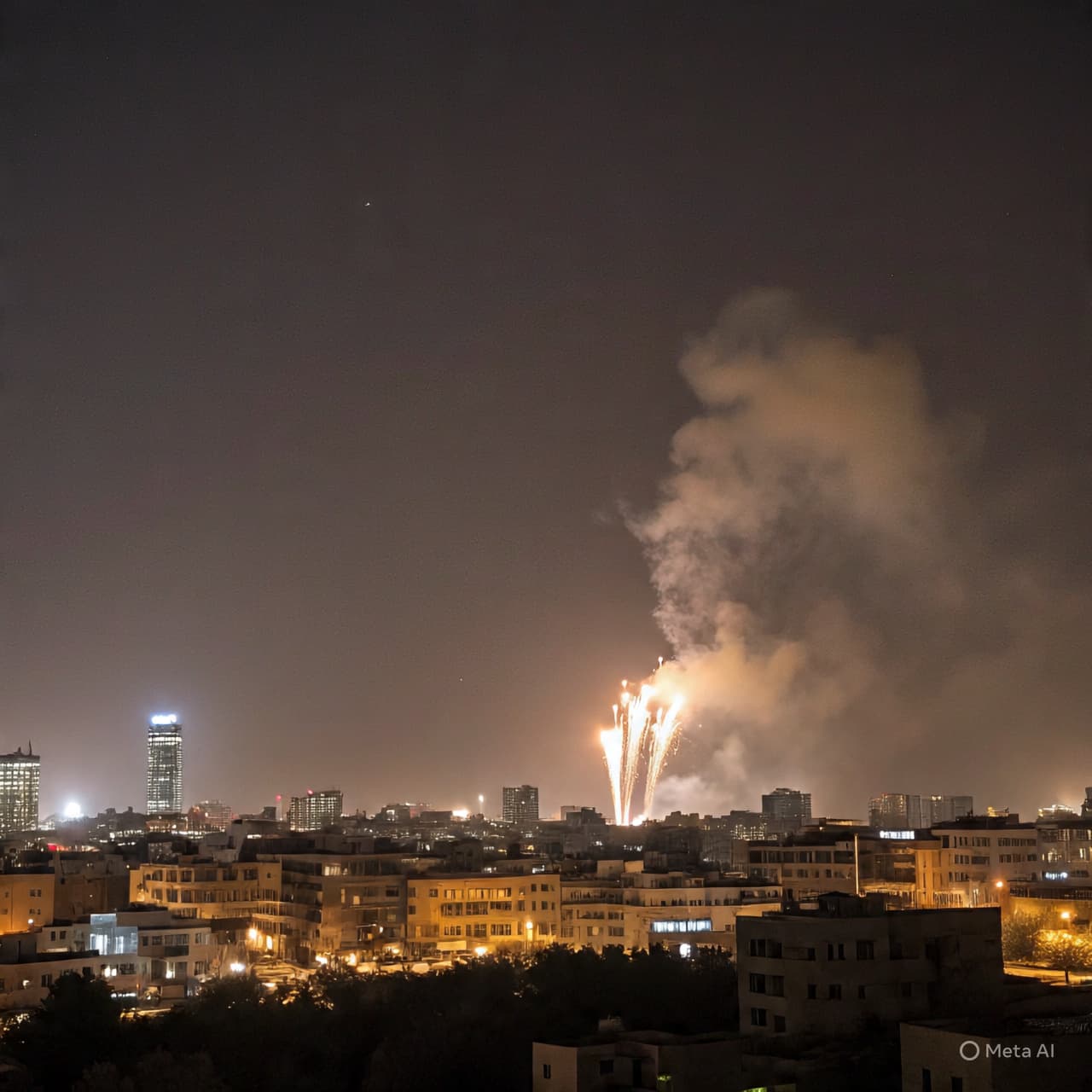
Night settles differently over cities that expect the sound of engines overhead. In Tehran, the air has carried a deeper tremor in recent evenings, the distant rumble of aircraft and the rising columns of smoke that follow. Far to the west, across mountains and sea, Beirut has felt the same uneasy rhythm—moments when streets fall silent, and the sky itself seems to hold its breath.
The pattern has repeated in recent days as Israel continues a wave of airstrikes against targets linked to Iran and its regional allies. Reports describe explosions across parts of Tehran, where bombardments have intensified as the conflict enters another phase. Witnesses and journalists in the Iranian capital have described the attacks as among the most forceful since the fighting began, with smoke rising from multiple areas across the city.
The strikes are part of a broader military campaign unfolding across the Middle East, where the confrontation between Israel and Iran—supported in varying ways by allied forces—has expanded beyond a single battlefield. Israeli aircraft have also struck areas in Lebanon, including the southern suburbs of Beirut, a district long associated with Hezbollah’s presence. Those attacks followed evacuation warnings and have pushed thousands of civilians to leave their homes as the sound of explosions echoed through the densely populated neighborhoods.
Across the region, the conflict has drawn in a widening circle of actors and anxieties. Missile and drone launches have been reported in multiple directions, with air defense systems activated in neighboring states. Some Gulf countries have intercepted drones, while international airlines have altered routes and governments have begun evacuating citizens. The movement of people—by road, air, and sea—has become one of the quiet markers of a war that stretches far beyond the cities where bombs fall.
Amid these events, the language of political leaders has become another dimension of the unfolding moment. In Washington, U.S. President Donald Trump addressed speculation about whether the United States might eventually send troops into Iran. In remarks reported by several outlets, he dismissed the prospect of a large ground invasion, calling it “a waste of time” and suggesting that Iran had already suffered extensive military losses.
The comments came as U.S. and Israeli forces continue to strike Iranian military infrastructure, including naval and missile assets. According to officials cited in reports, the campaign has already destroyed multiple Iranian ships and targeted facilities linked to missile launches and command structures.
At the same time, Iran has responded with missile attacks toward Israel and allied targets in the region, underscoring how the confrontation has shifted into a sustained exchange rather than a single operation. Military analysts say the conflict now carries the risk of further escalation, especially as regional militias and allied forces become increasingly involved.
In the streets of cities touched by the conflict, however, the experience often feels less strategic than immediate. People gather belongings, watch the horizon for the next plume of smoke, and listen for the distant sound that might signal another strike. The geography of war, once mapped in briefings and headlines, becomes something measured in minutes between sirens.
Israeli forces continued airstrikes on Tehran and Hezbollah-linked areas in Beirut as the conflict entered its seventh day. President Donald Trump said a U.S. ground invasion of Iran would be “a waste of time,” though military operations and retaliatory attacks across the region are ongoing.
AI Image Disclaimer Illustrations were created using AI tools and are not real photographs.
Sources (Media Names Only) The Guardian Associated Press Al Jazeera ABC News The Times of Israel
Published by Banx Network. This article is part of the Banx decentralized media programme, powered by the BXE token on the XRP Ledger.