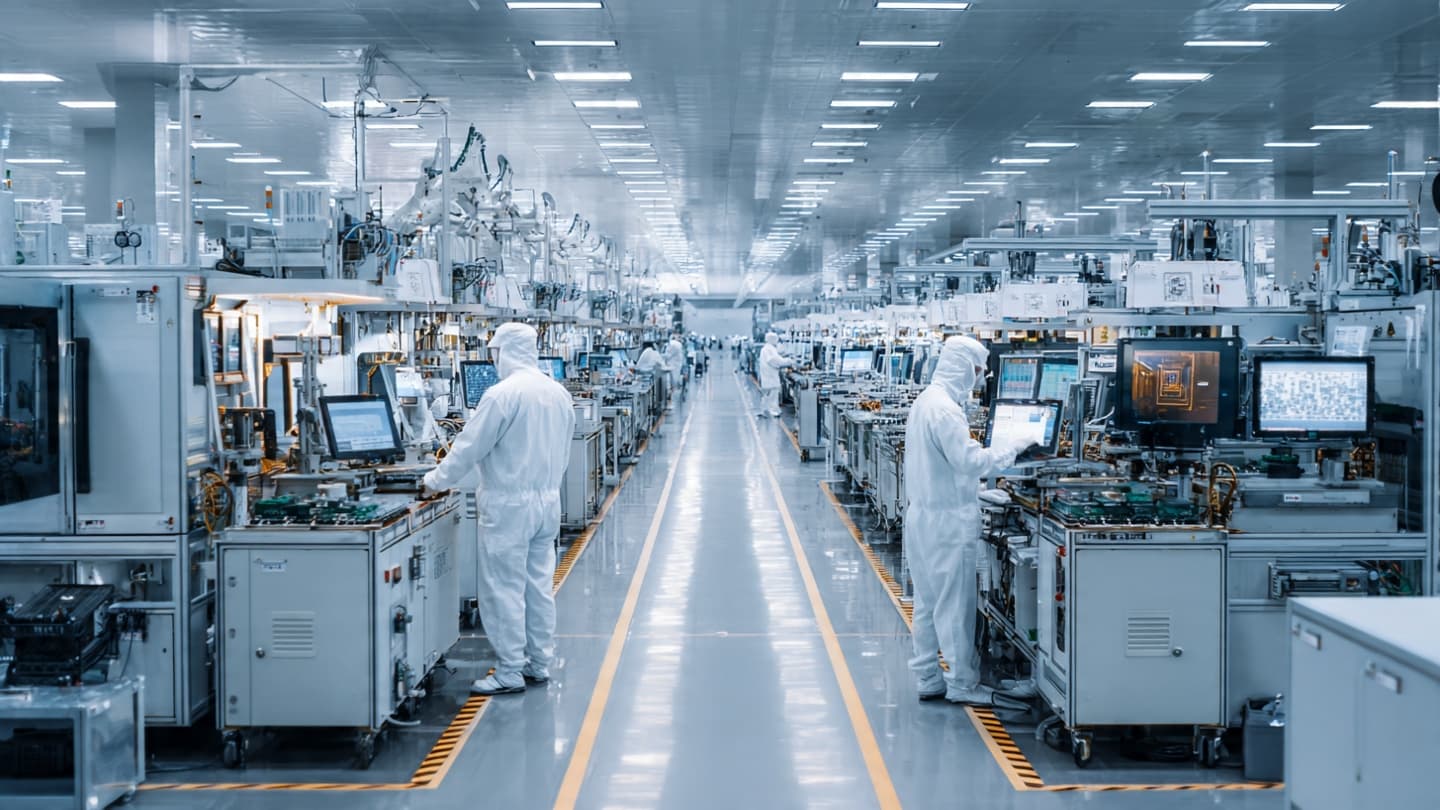
Across Japan, factories begin their days with a rhythm that rarely appears in economic headlines: machines warming, components arriving, workers moving between production lines, and finished goods gradually taking shape. Yet beneath that ordinary repetition, August brought a notable change. New orders strengthened sharply, giving Japanese manufacturing one of its clearest signs of momentum in years.
The S&P Global Flash Japan Manufacturing Purchasing Managers’ Index rose to 55.1 in August from 54.5 in July. A reading above 50 indicates expansion, while the latest survey showed that new orders increased at their fastest pace since January 2018.
The improvement extended beyond domestic demand. Japanese manufacturers recorded strong growth in total sales and overseas demand, while semiconductor and artificial-intelligence-related activity provided an important source of orders. The technology sector’s appetite for chips continues to influence manufacturing patterns across Asia, reaching deep into Japan’s industrial supply chains.
Production also increased during the month, accompanied by stronger purchasing activity and employment growth. When factories receive more orders, the effects often move outward through suppliers, logistics companies, component makers, and other businesses that form the industrial network around production.
Yet stronger demand can also create pressure. Supplier delivery times lengthened as factories became busier, while companies continued managing the cost of materials and other inputs. The industrial recovery therefore carries a second rhythm beneath the headline numbers: expansion on one side and the practical limits of supply on the other.
Japan’s manufacturing improvement also arrived alongside growth in services. The August survey showed private-sector activity continuing to expand, suggesting that the country’s economic movement was not confined entirely to factory floors. Manufacturing remained the stronger area, but services provided another source of activity.
The role of semiconductors is particularly significant. Chips have become fundamental components in automobiles, electronics, data centers, industrial equipment, and artificial-intelligence systems. Rising demand for these products can therefore affect many layers of production, from specialized machinery to advanced materials and logistics.
For Japanese manufacturers, the latest orders offer a reason for greater confidence. Business sentiment improved during August, supported by expectations for stronger sales and continued demand. At the same time, companies remain aware that international conditions, currency movements, input prices, and supply-chain disruptions can quickly alter the industrial landscape.
The strength of new orders is especially notable because Japan’s broader economic performance has not moved in a single direction. Manufacturing has shown renewed energy while other parts of the economy face their own pressures. The August PMI therefore provides a more detailed view of the economy, revealing how individual industries can accelerate even while the larger picture remains mixed.
For now, Japan’s factories are moving forward. The 55.1 manufacturing PMI places the sector firmly in expansion territory, while new orders have reached their strongest pace since early 2018. Behind those numbers are machines, workers, components, and increasingly sophisticated technologies that continue to shape Japan’s industrial landscape.
AI Image Disclaimer The images accompanying this article are AI-generated conceptual visuals and do not depict actual factories or locations.
Sources Reuters S&P Global Nikkei Bank of Japan Channel NewsAsia
Published by Banx Network. This article is part of the Banx decentralized media programme, powered by the BXE token on the XRP Ledger.