Economic growth rarely moves in a straight line. It rises through one quarter, pauses in another, and sometimes reveals its uncertainties in the space between what businesses produce and what households choose to buy. Japan’s latest figures offer such a moment.
Japan’s economy expanded at an annualized 0.2% in the April-June quarter, according to government data reported by Reuters. The result was weaker than the 0.4% growth expected by economists surveyed by Reuters.
The slowdown was partly connected to softer domestic spending and business investment. Household consumption increased only modestly, while capital expenditure also failed to provide as much support as markets had anticipated.
Exports provided some assistance to the economy, helping offset weaker domestic components. But reliance on external demand can leave Japan exposed to changes in global trade, overseas consumer demand, and international economic conditions.
The figures also arrive alongside stronger manufacturing indicators. Japan’s August manufacturing PMI rose to 55.1, its strongest level in several years, with new orders supported particularly by semiconductor and artificial-intelligence demand.
That contrast creates an interesting picture. Factories can be busy while households remain cautious. Export-oriented companies can benefit from global technology demand even as domestic consumers carefully consider their spending.
Japan’s services sector also showed improvement in August. The services PMI reached 52.3, while the composite output index climbed to 53.4, suggesting that private-sector activity was gaining some momentum after the weaker second quarter.
Inflation remains another important part of the picture. Higher prices can encourage consumers to spend sooner in some circumstances, but persistent increases in food and other household costs can also reduce purchasing power and make families more cautious about discretionary spending.
Financial markets are watching the situation closely because the Bank of Japan continues to navigate the difficult balance between inflation and economic growth. Long-term Japanese government bond yields recently reached levels not seen in decades, reflecting changing expectations about monetary policy and inflation.
For Japanese businesses, the coming months will therefore depend on several forces moving at once: domestic consumption, investment, global technology demand, prices, and interest rates. Strong semiconductor-related orders offer support, but the broader recovery still needs household and business spending to remain resilient.
Japan enters the second half of the year with a mixed economic picture. Second-quarter growth was weaker than expected, while manufacturing and services indicators later improved. The contrast suggests that the country's recovery remains active but uneven, moving forward through several different currents rather than one steady stream.
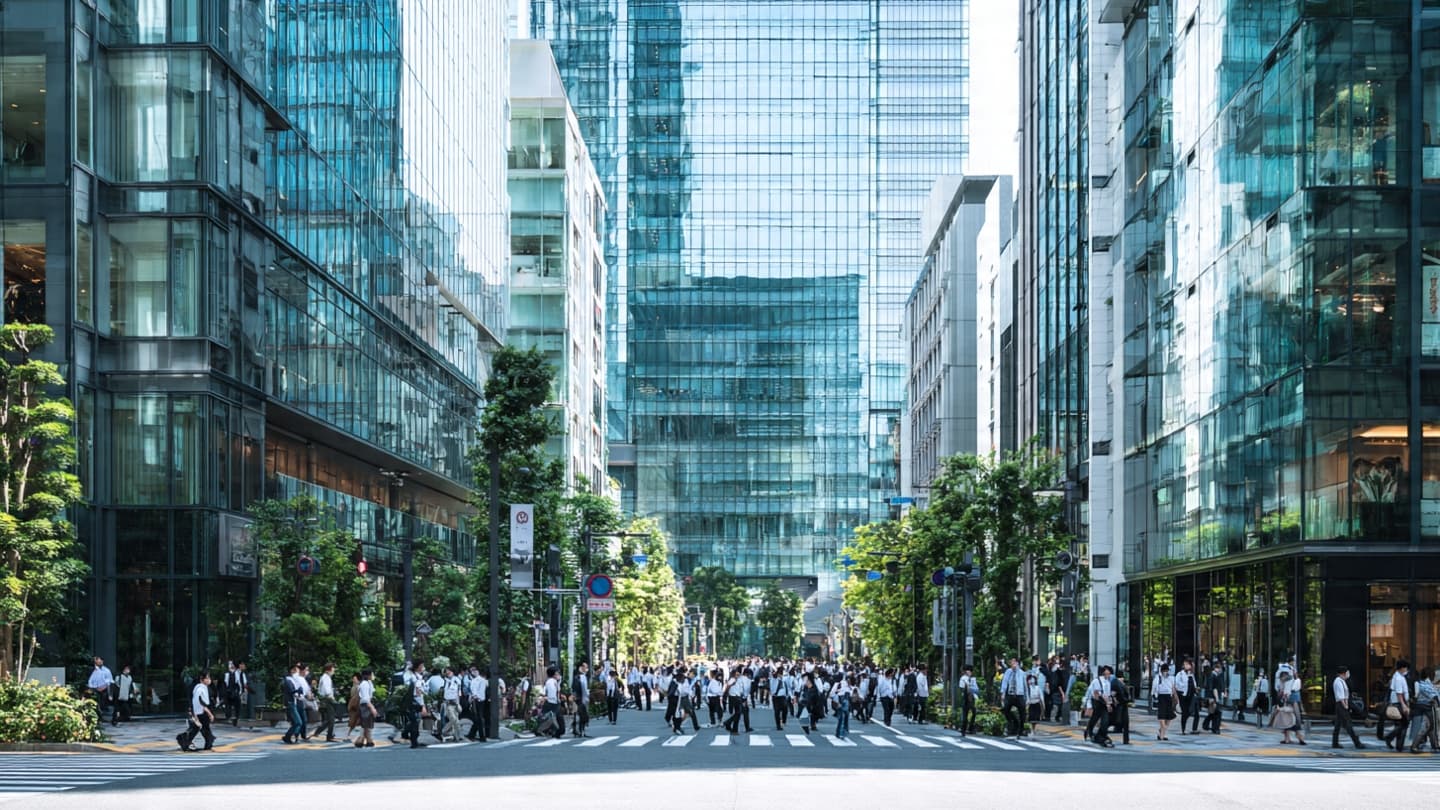
AI Image Disclaimer The illustrations accompanying this article were generated by AI and are conceptual representations of Japan’s economic environment, not photographs of actual economic events.
Sources Reuters Bank of Japan Cabinet Office of Japan S&P Global Nikkei Asia
Published by Banx Network. This article is part of the Banx decentralized media programme, powered by the BXE token on the XRP Ledger.