Across Indonesia, distance can change meaning from one island to another. A short journey on a map may become a difficult passage when mountains, water and limited roads stand between a patient and a hospital. In that geography, the sky offers another route, and the development of the N219 aircraft is increasingly being connected with the country's effort to improve medical access in remote areas.
Indonesia's National Research and Innovation Agency, BRIN, is developing an operational ecosystem for the N219 and its amphibious N219A variant to support medical evacuation and health logistics. The initiative is connected to the government's broader concept of using aircraft as flying ambulances for areas where conventional transportation is limited. (rri.co.id)
The N219 is being developed by PT Dirgantara Indonesia and BRIN, with the aircraft designed for operations suited to Indonesia's varied geography. Its development has included attention to remote and archipelagic environments where access to conventional airports and roads can be difficult.
The amphibious N219A adds another possibility to that landscape. Its configuration is intended to allow operations around water, providing an option for communities located near coastal areas, rivers or islands where traditional runways may not be readily available.
Medical evacuation is one of the areas where that flexibility could become particularly useful. When a serious medical emergency occurs in a remote location, transportation time can become a critical factor. An aircraft capable of reaching smaller or less accessible areas could help connect patients with larger medical facilities.
The project is also broader than the aircraft itself. BRIN is working on an ecosystem that includes operational planning and the distribution of health logistics. Such a system requires coordination between aviation, healthcare providers, local authorities and communities in areas that may have limited transportation infrastructure.
Indonesia's geography makes the challenge especially distinctive. The country stretches across thousands of islands, with communities separated by sea and mountainous terrain. In some locations, roads are limited or absent, while weather conditions and distances can make conventional transportation unpredictable.
The N219 program therefore sits at the intersection of aviation and healthcare. Aircraft technology becomes part of a wider effort to make essential services more reachable, particularly in regions where building extensive road infrastructure can be difficult and expensive.
The development also illustrates how domestic aerospace capabilities can be directed toward practical public services. Rather than focusing only on commercial aviation, the aircraft ecosystem is being considered for medical evacuation, disaster response and the transportation of essential supplies.
The project remains under development, meaning its eventual operational scale and availability will depend on testing, infrastructure, regulation and coordination among the organizations involved. The current work is focused on building the systems required to make the concept functional in real-world conditions. (rri.co.id)
For Indonesia's remote communities, the significance is ultimately measured in distance. Where roads and conventional transportation reach their limits, the N219 offers another possible connection between isolated areas and essential healthcare. Its development continues as part of a broader effort to make Indonesia's vast geography more accessible through aviation technology.
Image Disclaimer
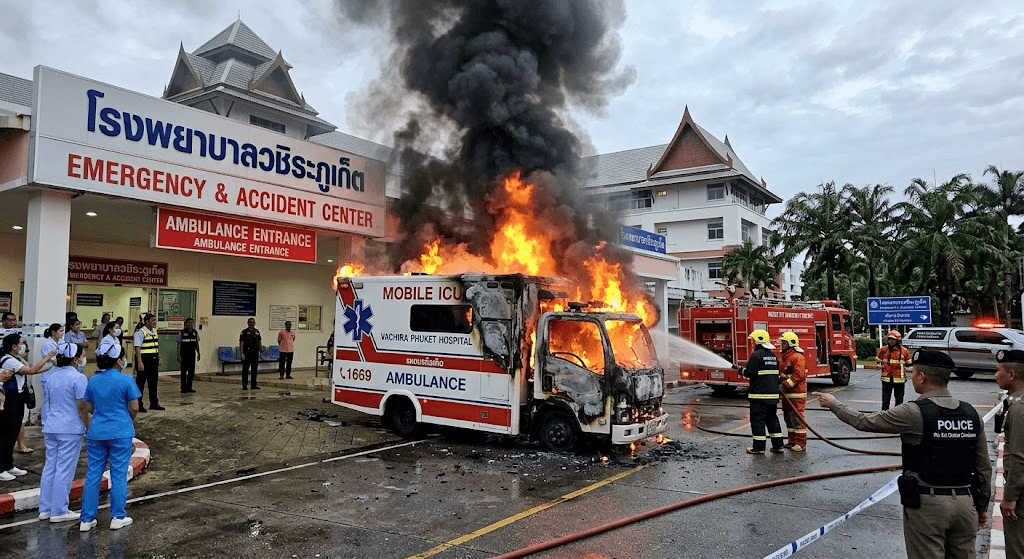
The illustrations were created using AI technology and represent the N219 conceptually rather than documenting actual medical evacuation operations.
Sources
RRI BRIN PT Dirgantara Indonesia ANTARA
Published by Banx Network. This article is part of the Banx decentralized media programme, powered by the BXE token on the XRP Ledger.