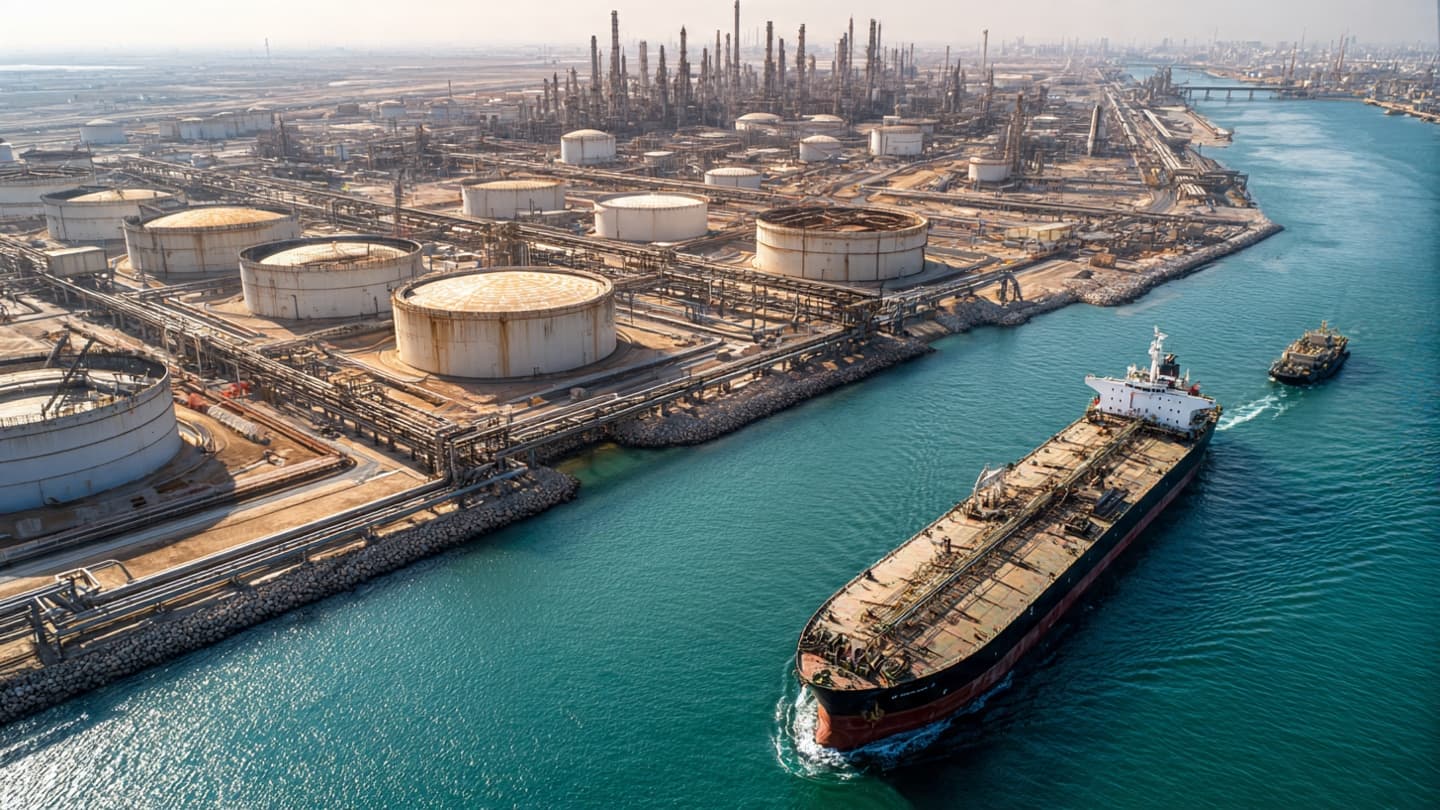
The movement of oil across the Gulf can seem almost invisible from the shore. A tanker departs a terminal, carrying crude toward another continent, while behind it an enormous network of pipelines, storage facilities and production fields continues operating. Yet when regional energy routes become unsettled, every additional shipment can take on greater significance.
Iraq’s rising oil exports are now providing another source of crude for international buyers. Shipments reached approximately 2.34 million barrels per day, with Asian refiners showing interest in Iraqi barrels offered at competitive prices.
The development reflects the way global oil markets adapt when supply conditions change. Buyers rarely depend on one source alone. Instead, refiners continually evaluate different producers and grades of crude, adjusting purchases according to availability, pricing and transportation conditions.
Iraq has a natural advantage in this environment because of its substantial oil reserves and established production base. Its southern fields produce large volumes of crude, while export terminals near Basra provide access to international shipping routes.
The connection with Asia is particularly important. The region contains some of the largest oil-consuming economies in the world, and its refineries require steady supplies to produce gasoline, diesel, jet fuel and petrochemical feedstocks. Changes in purchasing patterns can therefore influence global crude flows.
Price remains one of the most important factors. When Iraqi crude is offered at a discount, refiners can compare the lower purchase price against freight and other transportation costs. If the overall economics are favorable, Iraqi cargoes can become more attractive than competing supplies.
Shipping conditions add another variable. Oil tankers must navigate an environment where route availability, insurance costs and maritime risks can change rapidly. These factors can influence not only the final cost of a barrel but also the willingness of companies to take particular routes.
For Iraq, increased exports can support government revenues and the wider economy, although the benefits depend on global oil prices and the costs associated with production and transportation. The country’s economy remains closely connected to the performance of its petroleum sector.
For international markets, the additional Iraqi barrels provide a degree of flexibility. They may not fully offset every disruption elsewhere, but they contribute to the broader pool of crude available to refiners. In a market shaped by constant adjustments, even relatively small changes in supply can influence purchasing decisions.
Iraq’s growing shipments therefore represent one part of a much larger transformation in regional energy trade. As buyers continue searching for dependable and competitively priced crude, the route from southern Iraq toward Asian refineries remains an increasingly important corridor in the global oil market.
AI Image Disclaimer The images used in this article are AI-generated illustrations created to visualize general energy-trade conditions. They are not documentary photographs and do not represent specific real-world shipments.
Sources Reuters OPEC Iraq Ministry of Oil
Published by Banx Network. This article is part of the Banx decentralized media programme, powered by the BXE token on the XRP Ledger.