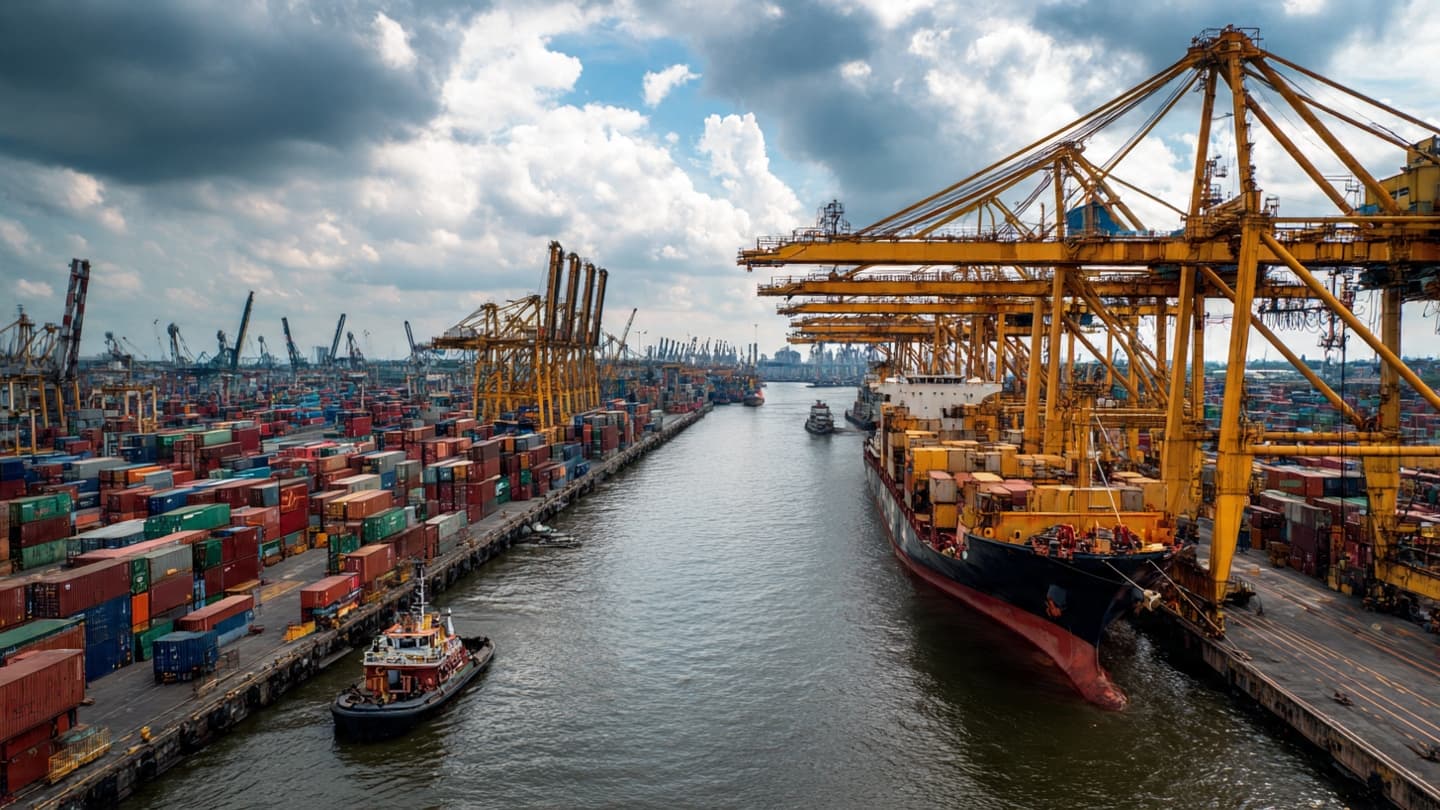
At Indonesia’s ports, the rhythm of international trade rarely pauses. Containers move beneath cranes, bulk commodities are loaded onto vessels, and products from across the archipelago begin journeys toward distant markets. In July, that steady movement produced a more favorable figure for Indonesia, as the country returned to a trade surplus after recording a deficit in the previous month.
Indonesia recorded a trade surplus in July as exports increased more than expected, according to data reported by Reuters. The improvement offered a stronger reading for the country’s external trade position at a time when global markets remain sensitive to changes in demand, commodity prices and international supply chains.
Exports increased 6.05% year-on-year in July, according to Indonesia’s statistics agency. The increase provided an important contribution to the return of the trade balance to positive territory, showing that overseas demand for Indonesian goods remained relatively resilient.
Indonesia’s export structure continues to be closely connected with its natural resources. Coal, palm oil, minerals and other commodities remain significant parts of international shipments, while processed products and manufactured goods have become increasingly important as the country seeks to move further up the value chain.
The mineral sector has gained particular attention in recent years. Indonesia possesses large nickel resources, an important material for stainless steel and parts of the battery supply chain. Investments in processing facilities have changed the character of some exports, with more value being created domestically before products leave the country.
Palm oil remains another major component of Indonesia’s international trade. The commodity supports a large network involving plantations, processing facilities, transportation companies and ports. Changes in global food, energy and agricultural markets can therefore influence Indonesian exports in several different ways.
Imports tell another part of the story. Indonesian companies need machinery, raw materials, components and other goods to support domestic production. When imports rise, it can sometimes reflect stronger industrial activity and investment rather than simply increased consumer demand.
The July surplus consequently needs to be viewed within that broader balance. A positive trade figure can strengthen external accounts, but its sustainability depends on whether export demand remains strong and how domestic businesses respond to changing global conditions.
For now, the July data provides a constructive moment for Indonesia’s trade sector. Stronger exports have brought the country back into surplus, while the 6.05% annual increase demonstrates that Indonesian products continue to find demand abroad. As global markets move through another period of uncertainty, the next months will reveal whether July’s momentum can continue.
AI Image Disclaimer The illustrations accompanying this article are AI-generated visual representations of Indonesia’s international trade activity. They are conceptual and do not depict actual shipments, ports or commercial transactions.
Sources Reuters Statistics Indonesia (BPS) Bank Indonesia
Published by Banx Network. This article is part of the Banx decentralized media programme, powered by the BXE token on the XRP Ledger.