There are experiments that unfold on scales too small for the eye to follow, yet their implications stretch outward, touching questions as vast as the future of life itself. In laboratories that simulate the conditions beyond Earth, researchers sometimes turn to the most fundamental elements of biology, observing how they respond when the familiar weight of gravity is removed.
In one such study, scientists sent sperm on a carefully designed obstacle course, using controlled environments to examine how these cells move and behave under conditions that resemble space. The aim is not spectacle, but understanding—an effort to trace how life at its most basic level might function beyond the planet that shaped it.
The obstacle course itself is not physical in the conventional sense, but a structured environment designed to test movement, orientation, and response. In the absence of Earth’s steady pull, cells may behave differently, altering their speed, direction, or ability to navigate through fluid environments. These subtle changes can offer insight into how reproduction and early development might be affected in space.
The context for such research lies in the broader question of long-term human presence beyond Earth. As agencies and researchers look toward extended missions, including those associated with organizations like NASA, understanding how biological systems respond to space conditions becomes increasingly important. Reproduction, development, and cellular function are all part of that inquiry, each contributing to a fuller picture of what sustained life away from Earth might require.
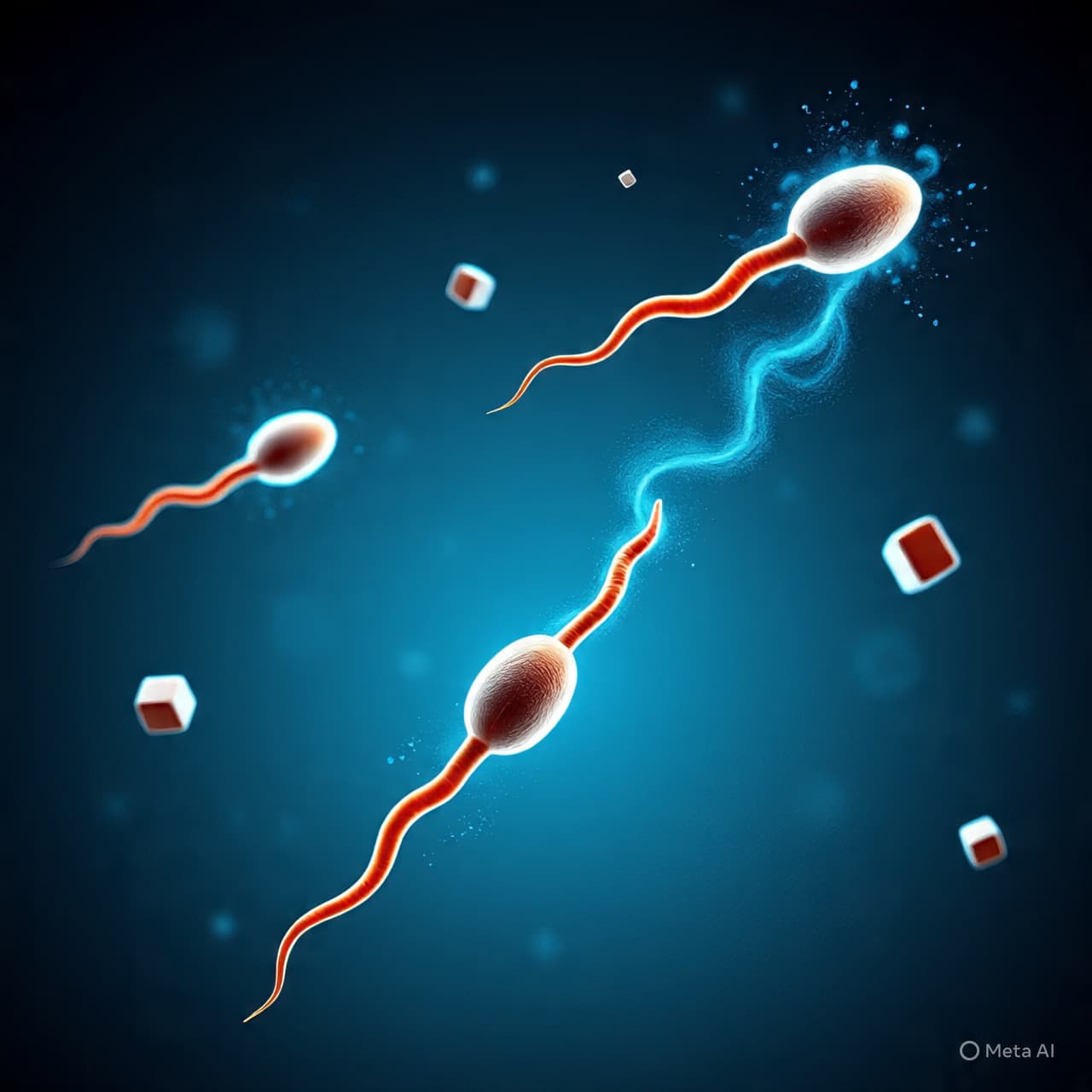
At the cellular level, sperm movement depends on a combination of structure and environment. The flagellum, a whip-like appendage, propels the cell forward, while surrounding conditions influence how effectively that motion translates into forward progress. Under normal gravity, these interactions occur within a known framework. In microgravity, however, that framework shifts, introducing variables that scientists are still working to understand.
The experiment reflects a broader approach to space biology—one that examines not only large systems, but also the smallest components of life. Each observation adds to a growing body of knowledge, helping to map how organisms might adapt to conditions far removed from those on Earth.
There is a quiet precision to this kind of work. It does not rely on dramatic moments, but on careful measurement and repetition, on observing how subtle differences accumulate over time. In tracking the movement of cells through controlled environments, researchers begin to see patterns that may inform future missions.
The idea of sending sperm through an obstacle course may sound unusual, yet it reflects a larger effort to prepare for environments where every aspect of biology may be tested. From radiation to gravity, from fluid dynamics to cellular signaling, each factor plays a role in determining what life can sustain.
As the research continues, it remains focused on understanding rather than prediction. The findings contribute to a gradual unfolding of knowledge, one that may eventually support longer journeys beyond Earth, where life itself must adapt to conditions that are still being explored.
Scientists have conducted experiments testing how sperm cells move through structured environments that simulate space conditions, examining how microgravity affects their movement and function. The research is part of broader efforts to understand biological challenges in space exploration.
AI Image Disclaimer Illustrations were created using AI tools and are not real photographs.
Sources Nature Science BBC News The Guardian National Geographic
Published by Banx Network. This article is part of the Banx decentralized media programme, powered by the BXE token on the XRP Ledger.