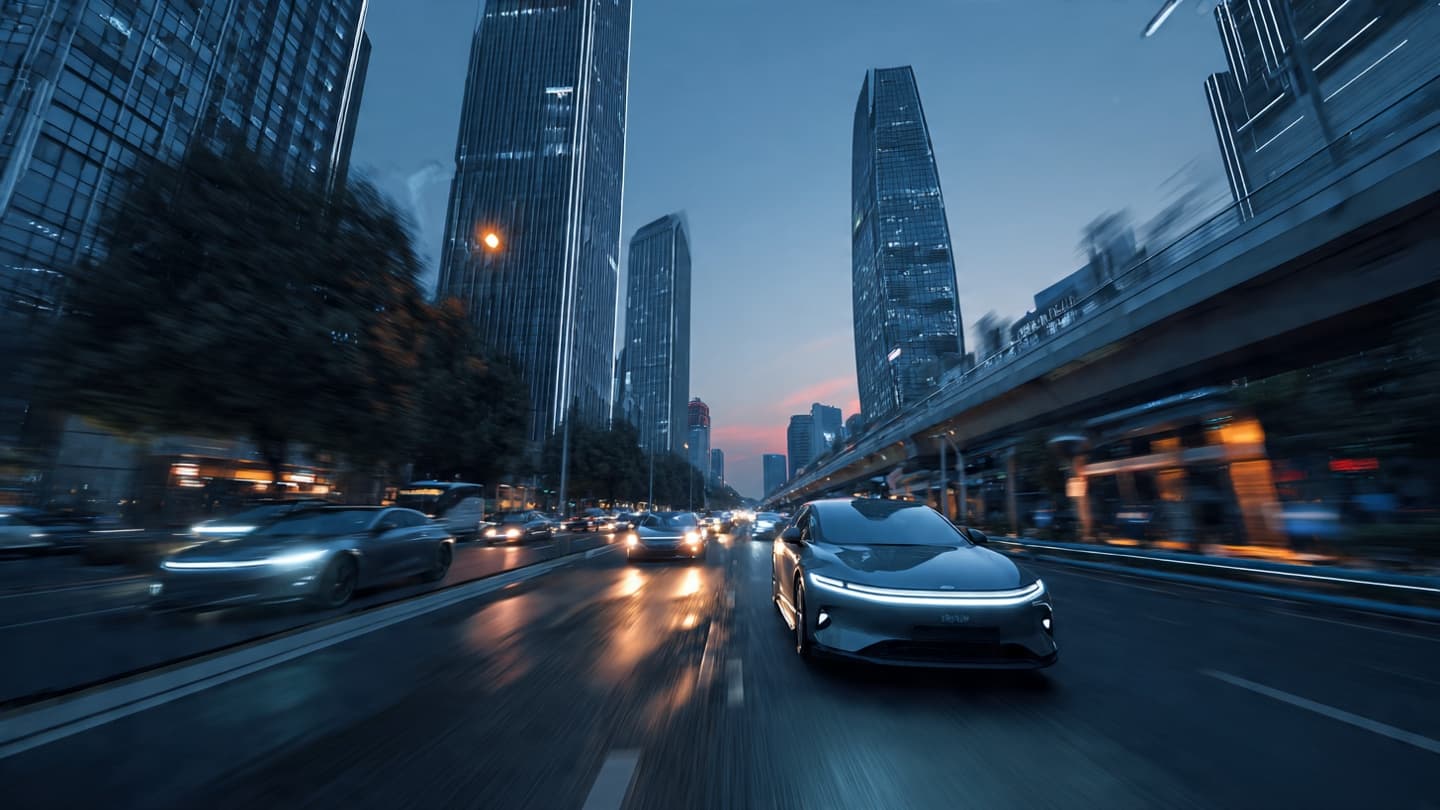
Across China's cities, the sound of transportation is gradually changing. Conventional engines remain everywhere, but electric vehicles are becoming increasingly familiar on urban roads, highways, and delivery routes. Behind that visible change lies one of the world's largest transformations in the automobile industry.
China remains the world's largest market for electric vehicles and a major center for EV production. Domestic manufacturers have expanded rapidly, developing vehicles ranging from compact city cars to premium models and commercial delivery fleets.
Battery technology has become one of the most important parts of this transformation. Chinese manufacturers have invested heavily in lithium-iron-phosphate batteries, fast-charging systems, and increasingly sophisticated battery-management technologies.
The scale of China's manufacturing ecosystem has helped companies reduce costs and accelerate product development. Battery producers, electronic-component manufacturers, software developers, and vehicle companies operate within a deeply connected industrial network.
Competition has consequently become intense. Automakers are introducing new models, improving driving-assistance systems, increasing charging speeds, and adjusting prices to attract consumers. The result is a market where technological changes can arrive quickly.
Electric vehicles are also becoming an important part of China's export strategy. Chinese manufacturers have expanded into markets across Europe, Southeast Asia, Latin America, and other regions, although international trade rules and local regulations can influence how quickly companies expand.
For consumers, the appeal of electric vehicles is shaped by several factors. Lower operating costs, quieter driving, improving range, and expanding charging networks can make EVs increasingly practical for everyday transportation.
The growth of electric mobility is also connected to China's broader energy strategy. Greater electrification of transportation can reduce dependence on petroleum fuels, although the environmental benefits ultimately depend on how electricity is generated and how batteries are produced and recycled.
China's automotive industry is therefore no longer simply producing cars. It is building an ecosystem around batteries, software, charging infrastructure, and connected transportation.
The road ahead will still contain challenges, including market consolidation, intense competition, international trade barriers, and the need to manage battery materials and recycling. But the direction of travel remains unmistakable: electric vehicles are moving from a specialized technology toward an increasingly ordinary part of daily transportation in China.
AI Image Disclaimer: The visuals are AI-generated conceptual representations of China’s electric-vehicle industry and are not photographs of specific facilities or vehicles.
Sources:
Reuters China Association of Automobile Manufacturers Ministry of Industry and Information Technology of China International Energy Agency China Daily
Published by Banx Network. This article is part of the Banx decentralized media programme, powered by the BXE token on the XRP Ledger.