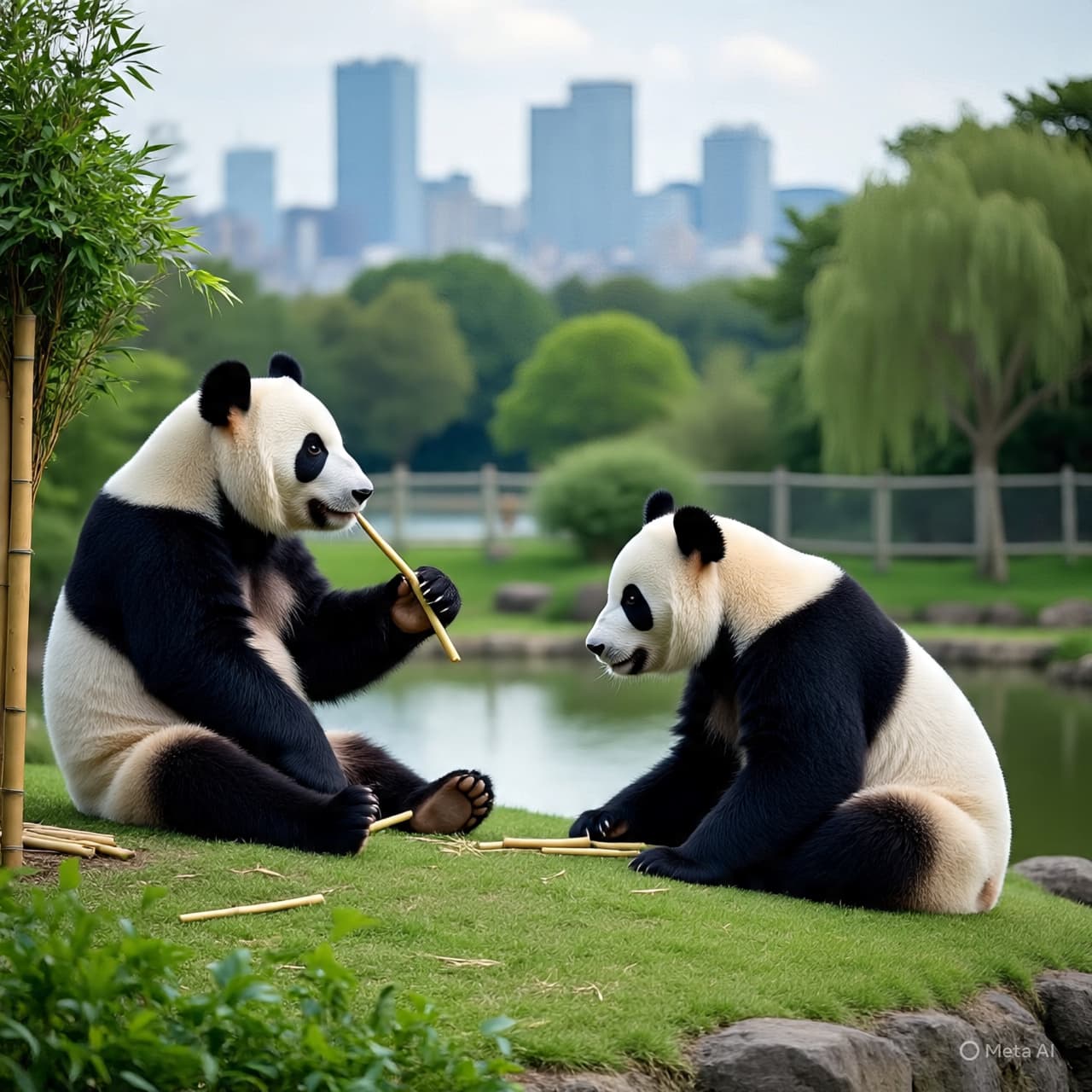
In the quiet hush of winter mornings, sometimes the most unexpected echoes carry the weight of history. At Tokyo’s Ueno Zoo — a place where children once pressed their small palms against glass enclosures and elders lingered beside bamboo groves — silence now seems a little deeper. For decades, the gentle lumber of giant pandas through their leafy enclosures was not just a delight, it was a story woven between two nations, a soft thread stitching together hearts across seas and borders. But as the last of these beloved animals prepared to depart, that thread seemed to fray against the chill of changing times.
On an overcast January afternoon, crowds gathered not for spectacle but for farewell. Tickets for a final glimpse at Xiao Xiao and Lei Lei — two four-year-old pandas who had charmed visitors with their slow munching and playful turns — were coveted like rare blossoms in winter. Some waited in orderly lines long before the gates opened, others brought plush pandas as companions, each person carrying stories of past visits and quiet memories. This moment was at once simple and profound: the closing of a chapter that began more than half a century ago.
Japan’s history with giant pandas stretches back to 1972, when the first pair arrived from China to celebrate the restoration of diplomatic relations. Over the years, the animals became endearing icons — more than zoo attractions, they were living emblems of friendship between Beijing and Tokyo. Through seasons of political change and social renewal, the sight of a panda at play provided comfort, a gentle reminder that ties between societies can sometimes be reflected in shared affection for creatures that know no borders.
But the world around those leafy enclosures has shifted. In recent months, tensions between Japan and China have hardened — stirred by broader geopolitical concerns including territorial issues and security discussions in East Asia. As these discussions grew more strained, so too did the symbolic rhythm of panda diplomacy. Once a gesture of goodwill, that gentle exchange now quietly underscores the complexities of modern international relations.
When the day came for Xiao Xiao and Lei Lei to leave, a truck idled at the gate and voices hushed. There was no fanfare, nor sharp words — just the soft rustle of bamboo leaves and the shared emotion of those who understood that this was, improbably, a point of transition. The pandas were loaded, and amid a cool breeze they began their journey back to China, leaving Japan without pandas for the first time since 1972.
In the faces of onlookers, there was sadness — gentle, reflective, unforced — rather than sharp grievance. Some spoke of hope: perhaps one day the big black and white ambassadors would return. Others simply whispered thanks for the memories. In a time marked by diplomatic recalibrations, this departure felt like a sunset — graceful, evocative of things that were, and quiet in its acceptance of what is.
And yet, as the pandas’ departure fades from headlines, the scene remains rich with layers not only of cultural affection but of shared history — a reminder that even in times of tension, the stories we share with other nations often begin in tenderness and imagination.
AI Image Disclaimer “Visuals are created with AI tools and are not real photographs.”
Sources found: News outlets (5):
ABC News Australia (Australia’s national broadcaster) UPI (United Press International) Reuters (captured in multiple sites) Daily Sabah (Reuters content) Associated Press (AP News)
Published by Banx Network. This article is part of the Banx decentralized media programme, powered by the BXE token on the XRP Ledger.