The service economy often reveals itself through ordinary scenes: a restaurant filling its tables, an office opening its doors, a delivery arriving at a home, or a customer making a digital purchase. Millions of such movements form one of the largest parts of the American economy.
In July, activity across the U.S. services sector continued to expand at a strong pace, according to data reported by Reuters. The figures suggested that demand remained relatively resilient even as businesses continued to manage higher input costs.
Services account for a substantial share of American economic activity, covering industries ranging from hospitality and transportation to finance, technology, healthcare, and professional services. Their performance can therefore provide a broad indication of how businesses and consumers are behaving.
The July figures showed that demand had not disappeared despite uncertainty surrounding employment and other economic indicators. Companies continued receiving new business, while activity remained supported by consumer and corporate spending.
At the same time, costs remained an important consideration. Businesses face expenses associated with labor, materials, transportation, energy, technology, and other inputs. When those costs rise, companies must decide whether to absorb them or pass some of the increase on to customers.
That balance has become increasingly important for service providers. Customers may remain willing to spend, but they can also become more selective when prices rise. Businesses therefore have to maintain demand while protecting margins.
Technology is playing a growing role in this adjustment. Digital ordering, automated customer service, cloud systems, artificial intelligence, and data analytics are becoming part of everyday operations across the service economy.
The resilience of the services sector also contrasts with the weaker July employment report. The U.S. economy lost 23,000 jobs during the month, while the unemployment rate declined to 4.1%. The difference between activity and hiring illustrates how businesses can maintain output without necessarily expanding their workforce quickly.
For now, July's services data suggest that a major part of the American economy continues to move forward. The pace is not without pressure, particularly from costs and a changing labor market, but demand remains an important source of support as summer gradually gives way to the next phase of the economic year.
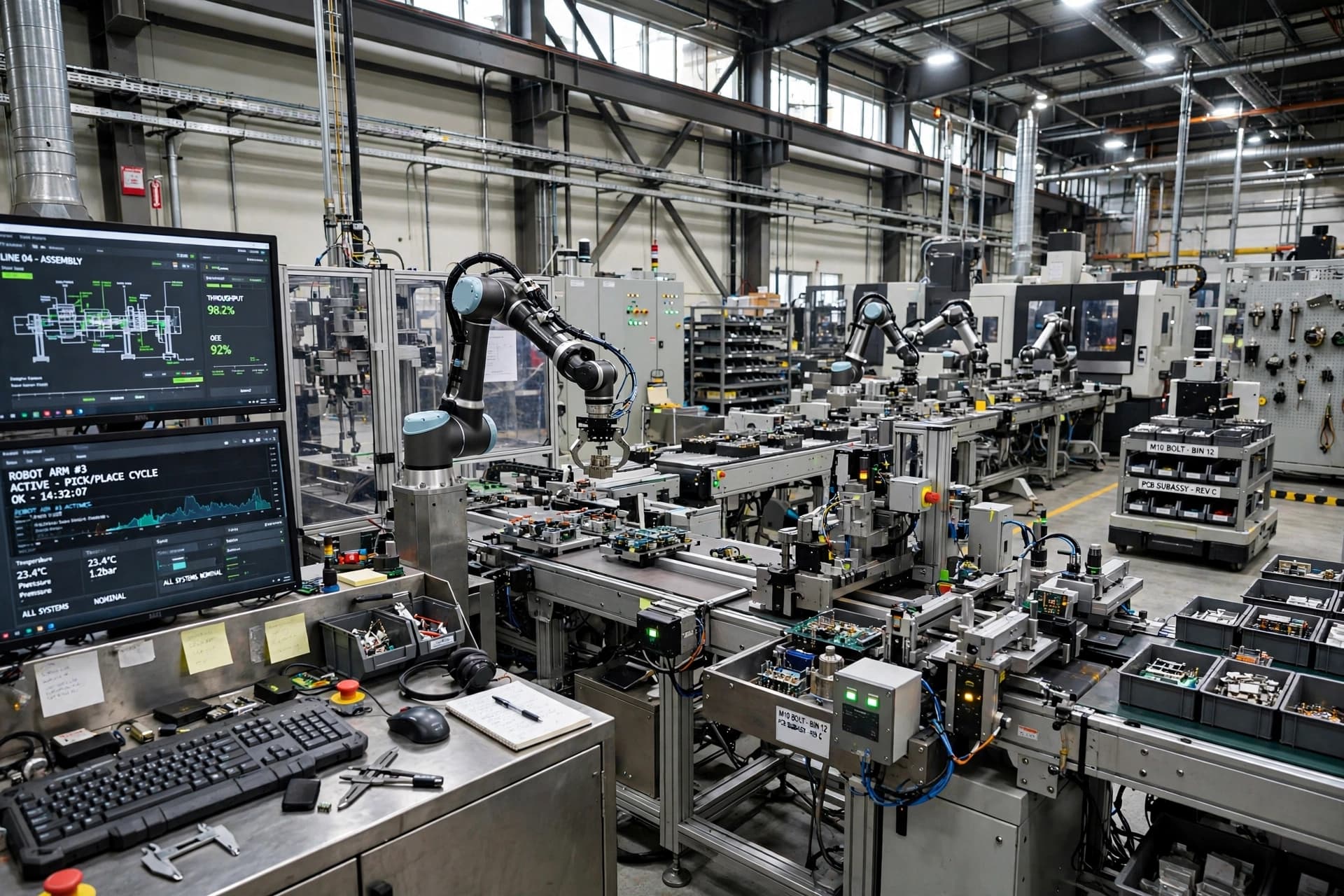
AI Image Disclaimer: The illustrations are AI-generated conceptual visuals created to accompany the article and are not real photographs.
Sources Reuters Institute for Supply Management S&P Global
Published by Banx Network. This article is part of the Banx decentralized media programme, powered by the BXE token on the XRP Ledger.