
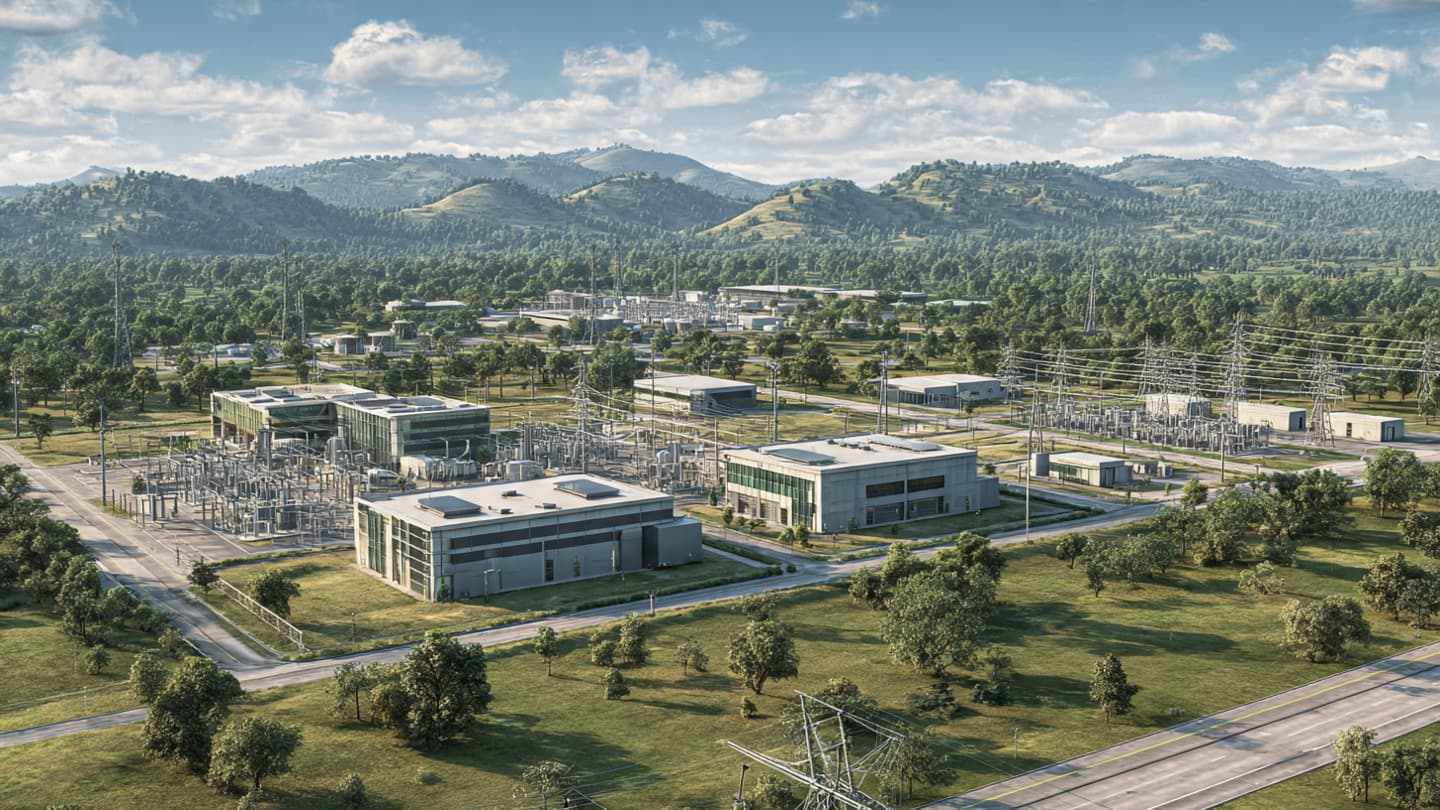
Key Highlights
- AI data centers are rapidly expanding across the U.S., significantly increasing electricity demand.
- The growth of generative AI is driving the need for more powerful computing systems and advanced cooling solutions.
- Utilities are adapting their infrastructure to meet the challenges posed by concentrated energy demands from data centers.
The artificial intelligence revolution is often perceived as a weightless phenomenon, characterized by algorithms seamlessly navigating invisible networks. However, this perception belies a substantial physical reality: the infrastructure that supports AI—comprising buildings, servers, cooling systems, and extensive electrical networks—demands significant energy resources. As AI data centers proliferate across the United States, they are fundamentally altering the relationship between technology and energy.
The rapid expansion of AI capabilities, particularly in generative AI, has intensified the need for robust data centers. These facilities must support increasingly powerful computing systems, which in turn require vast amounts of electricity. The simultaneous use of AI services by millions of users and the processing of large datasets further exacerbate this demand. As a result, data centers are not only consuming substantial electricity but also increasing the density of computing within their facilities. More powerful processors generate additional heat, necessitating advanced cooling systems that consume even more energy.
For electricity providers, this surge in demand presents a significant planning challenge. Power grids must ensure reliable electricity delivery around the clock, while new data centers can create concentrated demand in specific geographic areas. In response, some utilities are proactively planning new generation capacity and enhancing transmission infrastructure. In regions experiencing rapid data center development, companies and regulators are collaborating to ensure that new facilities can connect to the grid without compromising reliability.
The implications of this energy demand are also reshaping the technology industry. AI companies and data center operators are increasingly prioritizing access to electricity when selecting locations for new facilities. A site with ample land may become less appealing if it lacks sufficient power and transmission capacity. This shift in priorities underscores the critical role that energy infrastructure plays in the growth of AI technologies.
Renewable energy sources are becoming integral to this discussion. Solar and wind projects can provide additional generation capacity, while battery storage and other technologies may help manage fluctuations in energy supply and demand. Furthermore, nuclear power is receiving renewed interest from technology companies seeking reliable, low-carbon electricity to support their operations.
However, the transition to a more sustainable energy landscape will take time. Constructing power plants, transmission lines, substations, and large data centers involves extensive planning and construction timelines, often spanning several years. Meanwhile, the demand for AI capabilities is evolving at a rapid pace, creating a race between digital expansion and the physical infrastructure needed to support it. While technology can advance through software updates and new models in a matter of months, the development of electricity infrastructure typically follows a much slower timetable.
Ultimately, America's AI future will hinge not only on advancements in chips and algorithms but also on the availability of power. Behind every digital interaction and automated system lies a continuous stream of electricity, and the growing scale of artificial intelligence is making this connection increasingly visible. As the landscape of AI continues to evolve, the interplay between technology and energy will be a defining factor in shaping the future of both industries.
Published by Banx Network. This article is part of the Banx decentralized media programme, powered by the BXE token on the XRP Ledger.



