There are moments in international affairs when timing becomes its own kind of language—when what is done matters, but when it is done carries a weight just as lasting. In such moments, the difference between early and late is not always measured in hours or days, but in perception, in expectation, in the quiet space between action and reaction.
In recent remarks, former U.S. President Donald Trump described the United Kingdom’s assistance as arriving later than it should have. He suggested that the response, while present, came after a moment that might have called for swifter movement, framing the issue not as absence, but as delay.
The comment introduces a familiar tension within alliances—the balance between coordination and urgency. Partners, even those closely aligned, do not always move in perfect synchrony. Decisions are shaped by domestic considerations, by assessments of risk, and by the processes that guide how and when action is taken. What appears immediate from one vantage point may unfold more gradually from another.
In the case of the United Kingdom, its role has been defined by a combination of strategic alignment with the United States and its own deliberative approach to engagement. The pace of response, as in many such situations, reflects both capability and caution—a weighing of factors that may not always be visible from the outside.
Trump’s remarks, in this context, shift attention to the dimension of speed. They suggest that effectiveness is not only a matter of participation, but of timing—of being present at the moment when action is most needed. It is a perspective that emphasizes responsiveness, framing delay as a missed opportunity rather than a measured choice.
Yet timing itself is rarely straightforward. The conditions that shape decisions are often complex, evolving in ways that resist immediate clarity. To act quickly is to accept a degree of uncertainty; to act later is to respond with more information, but at the risk of appearing hesitant. Between these two approaches lies a space that alliances must continually navigate.
There is also a broader resonance to such remarks. They speak not only to a single instance, but to the ongoing dynamics of partnership—how expectations are formed, how they are met, and how they are perceived when they are not. The relationship between the United States and the United Kingdom, long defined by cooperation, is shaped as much by these moments as by the larger structures that support it.
And so the statement settles into that relationship, not as a definitive judgment, but as part of an ongoing conversation about timing, coordination, and the nature of response.
Former U.S. President Donald Trump said the United Kingdom’s assistance came later than expected, adding that the UK should have acted more quickly. The remarks highlight differing views on the timing of allied responses amid ongoing developments.
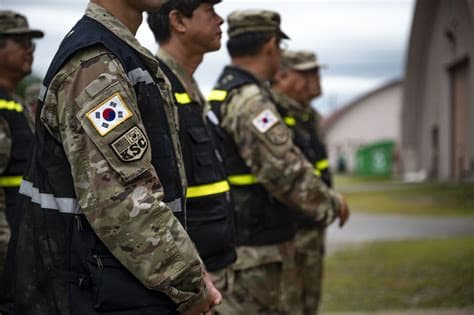
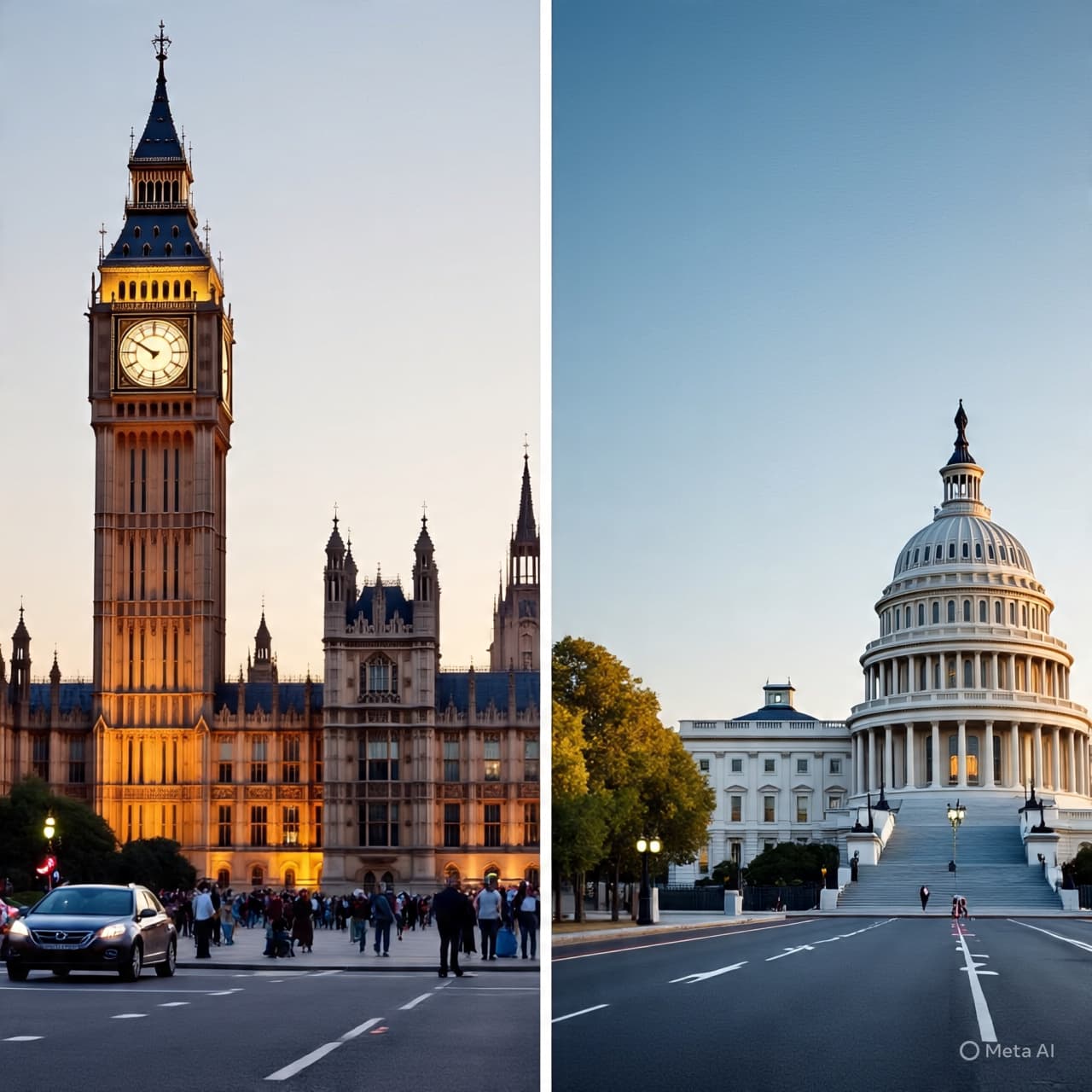
AI Image Disclaimer
These visuals are AI-generated and serve as illustrative representations, not real-world images.
Source Check Reuters Bloomberg BBC The Guardian The Wall Street Journal
Published by Banx Network. This article is part of the Banx decentralized media programme, powered by the BXE token on the XRP Ledger.