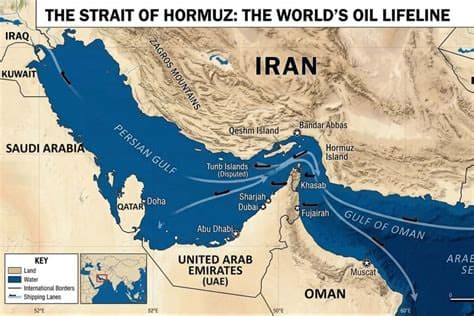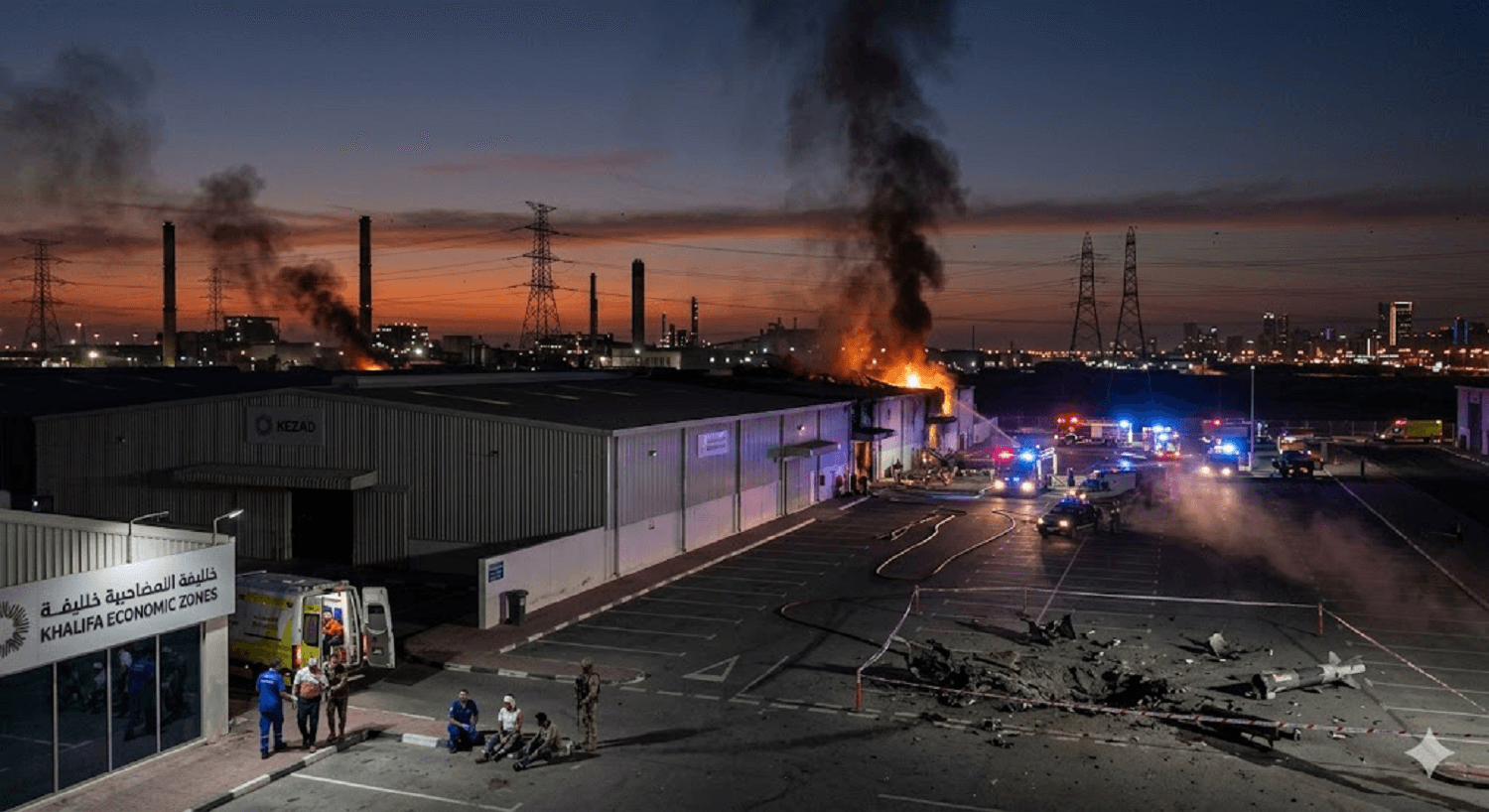
ABU DHABI, United Arab Emirates — The war’s widening dragnet reached the heavily industrial Khalifa Economic Zones Abu Dhabi (KEZAD) early on Saturday of March 28, 2026, as falling debris from a missile interception wounded five people and ignited two significant fires near the strategic hub. The incident, confirmed by the UAE Ministry of Defense, occurred shortly after air defense systems engaged an incoming ballistic missile, reportedly tracked from a southerly vector. While KEZAD remains a critical driver of non-oil trade, this attack brings the risks of the ongoing regional conflict to the doorstep of Abu Dhabi's logistics and manufacturing core.
Sirens were heard across the massive 412-square-kilometer zone just after midnight, followed by multiple explosions as defensive interceptors neutralized the threat. According to the Abu Dhabi Civil Defense, the primary casualty count stands at five, with all injured listed in stable condition and receiving medical care. Simultaneously, emergency crews fought to contain blazes that erupted in two warehouses storing industrial lubricants and raw plastics, where the burning debris made landfall. Witnesses reported thick black smoke billowing from the area, though the fires were contained by dawn.
This targeting of KEZAD is a calculated escalation designed to create maximum economic volatility. As the world’s largest integrated trade, logistics, and industrial zone, KEZAD hosts over 1,500 diverse global companies and represents billions in foreign investment. The proximity of the interception to critical infrastructure, including port facilities and the Emirates Global Aluminum complex, has raised immediate concerns about the vulnerability of key supply chains that sustain the non-hydrocarbon sector. "The intent here isn't just physical damage; it’s the destabilization of investor confidence in a low-risk environment," noted a regional security analyst.
The UAE’s air defenses—which include an integrated network of U.S.-supplied Patriot and THAAD systems—have been on high alert since the "2026 Iran War" began on February 28. This attack follows a string of earlier interceptions over Abu Dhabi and neighboring Dubai throughout March, as the regional security dynamic continues to deteriorate. Military officials emphasize that the interception itself was a technical success, preventing a direct impact, but the "lethality of debris" remains a persistent, unmitigated danger to personnel and infrastructure within the densely populated industrial matrix.
In response, the UAE government has reiterated its commitment to protecting its strategic assets while pushing for regional de-escalation. The attack on KEZAD occurs against a backdrop of global economic tension, with oil prices hovering near $105 per barrel and the direct cost of the U.S. air campaign now exceeding $18 billion. With the shadow of the conflict now routine across the Gulf, the incident at KEZAD is a stark reminder that even a robust defensive shield cannot fully insulate critical economic drivers from the war's inevitable kinetic fallout.
Published by Banx Network. This article is part of the Banx decentralized media programme, powered by the BXE token on the XRP Ledger.