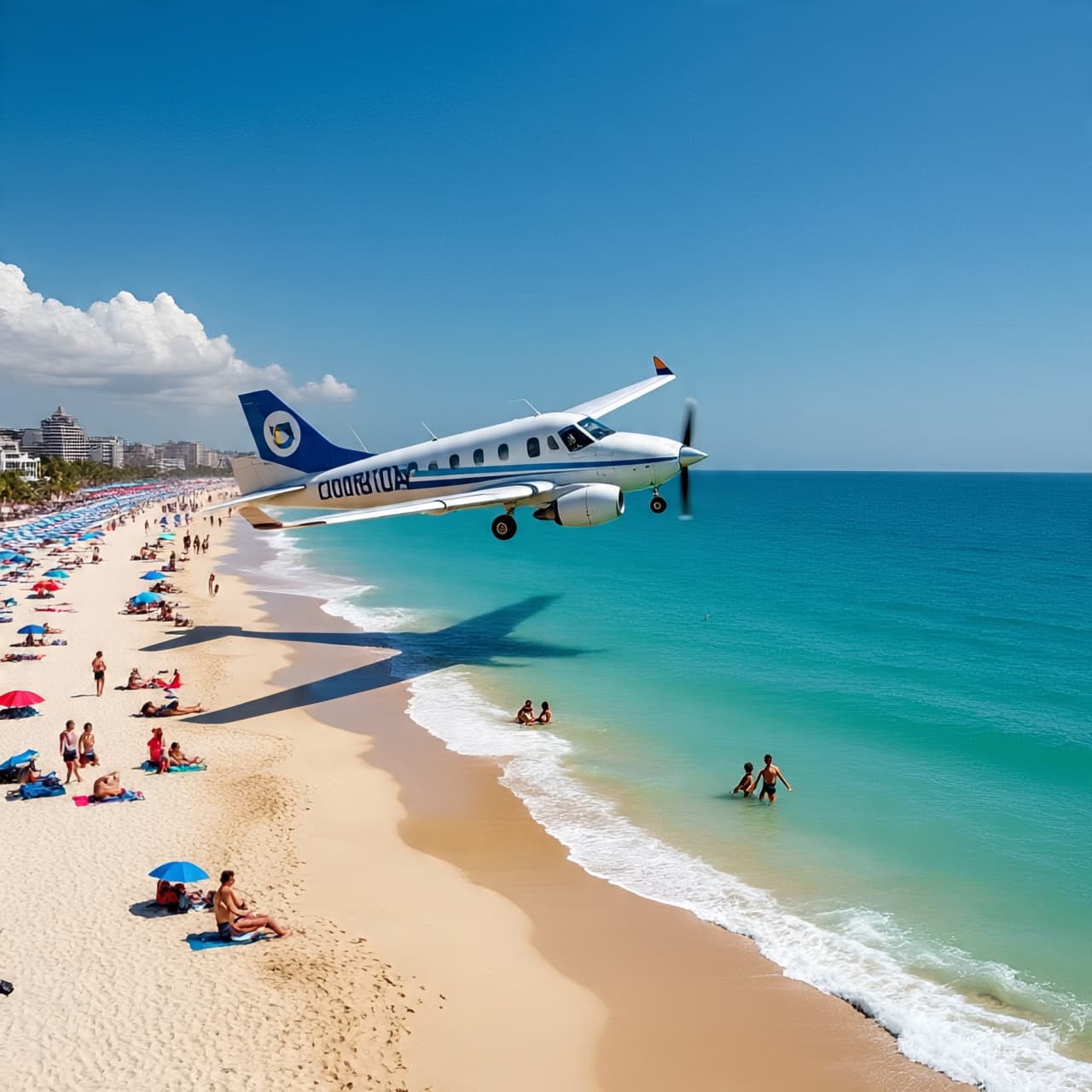
On a sunlit Saturday afternoon, one of Rio de Janeiro’s most beloved shorelines — Copacabana beach — witnessed an abrupt and tragic moment that jolted locals and visitors alike. An ultralight aircraft, towing an advertising banner above the ocean just offshore, suddenly plummeted nose-first into the surf, leaving the pilot dead and prompting a swift response from emergency crews. What had been another vibrant day by the iconic beach swiftly became a somber reminder of how quickly life can change when something goes wrong in the skies above.
The incident occurred at approximately 12:30 p.m. local time, when security footage captured the small plane descending into the waters near Copacabana’s beachfront. Authorities in Rio de Janeiro confirmed that the pilot — the only person aboard — did not survive the crash, and that his body was recovered and sent to a medical examiner’s office for official identification.
Rescue and response teams wasted no time beginning their work. Fire department personnel deployed Jet Skis, inflatable boats, divers, and aerial support to the crash site in the hope of locating additional wreckage or other victims. Sonar equipment was also brought into the effort, underscoring both the urgency of the search and the challenging conditions of conducting operations in open water near a busy beach.
The aircraft involved was identified as a Cessna 170A, owned by an advertising company and engaged in banner-towing at the time of the accident. Banner flights of this type — often seen at beaches or public events — are typically undertaken by small, lightweight aircraft that combine scenic visibility with promotional messaging.
Amid the shock of the moment, the Brazilian Air Force announced that it has opened an investigation into the crash to determine its cause. Authorities will seek to understand whether mechanical failure, human error, weather conditions, or other factors contributed to the plane’s sudden descent into the sea.
For onlookers along Copacabana, the abrupt plunge of the plane into the water was an unsettling sight. Beachgoers and residents alike paused to watch rescue crews work, their attention drawn from the usual rhythms of sunbathing, swimming, and promenade strolls to the serious business of emergency response.
Though ultralight and small aircraft are an occasional fixture in coastal skies, especially for advertising or scenic flights, their presence over crowded or popular beaches is rare enough to amplify the sense of shock when an accident occurs. Authorities have yet to release details about what may have led to this particular crash, but the fact that the investigation is already underway suggests a focus on both aviation safety and public reassurance.
As the investigation unfolds, the beach that saw so much life and leisure will also hold the memory of this sudden loss. In a city known for its vibrant energy and thousands of smiling visitors, the sea off Copacabana’s shore now bears the mark of a tragic event — a moment when the sky’s promise turned to sorrow.
AI Image Disclaimer Visuals are created with AI tools and are not real photographs.
Sources Associated Press The Business Standard Indian Express
Published by Banx Network. This article is part of the Banx decentralized media programme, powered by the BXE token on the XRP Ledger.
.jpg&w=3840&q=75 "Convicted War Criminal Ratko Mladić to Be Buried With Full State Honors")