In the thin morning air above Bolivia’s high plateau, flight has always carried a particular poetry. Planes lift from runways edged by mountains, climbing into a sky that feels close enough to touch. The capital region, ringed by ridges and steep valleys, wakes early—market stalls unfolding, buses groaning into motion, sunlight spilling over adobe and concrete alike. It was into this familiar ascent that a military aircraft rose, bearing an unusual cargo: crates of banknotes destined for distribution across the country.
Not long after departure near the capital, the plane went down.
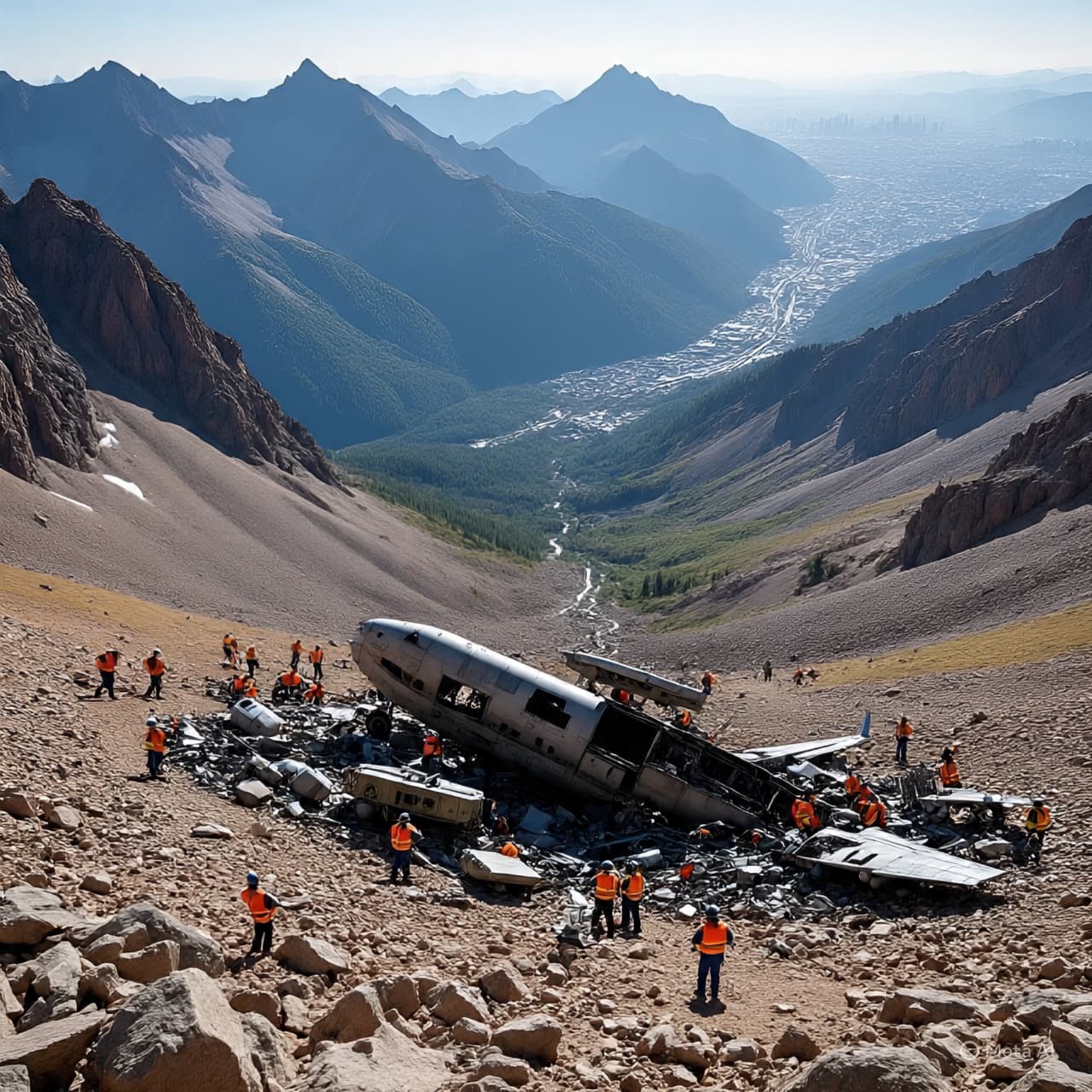
The aircraft, operated by Bolivia’s armed forces to transport currency and personnel, crashed in rugged terrain outside the city. Authorities confirmed that all 20 people aboard were killed. Smoke marked the site against the pale Andean sky, visible from nearby neighborhoods before emergency crews could thread their way across uneven ground.
The mission had been logistical and routine in its own way. In a country where geography can complicate the movement of goods, military aircraft are sometimes used to ferry physical cash to regional branches and remote communities. Though digital payments have expanded in urban centers, banknotes remain essential across much of Bolivia’s landscape, circulating through markets, farms, and small businesses. The flight was part of that quiet machinery of economic continuity.
Initial statements from defense and aviation officials indicated that the crash occurred shortly after takeoff. Investigators have begun reviewing maintenance records, flight data, and weather conditions, seeking to understand whether mechanical failure, environmental factors, or other circumstances contributed to the tragedy. The capital’s high altitude—among the most challenging operational environments for aircraft—adds complexity to any flight, demanding precision from both pilot and machine.
Rescue teams arrived swiftly, though the steep terrain complicated access. Soldiers and emergency personnel secured the perimeter as forensic teams began the careful work of recovery. Officials expressed condolences to the families of the victims, acknowledging the dual weight of national service and sudden loss.
The aircraft’s cargo, though symbolically tied to the country’s financial system, became secondary in the hours that followed. Attention shifted to the lives carried within its metal frame: crew members trained for demanding conditions, support personnel tasked with a practical assignment. In homes across the capital and beyond, news arrived with the quiet finality that follows such events—calls made, doors opened, conversations stilled.
Bolivia’s aviation sector, particularly in highland regions, operates within dramatic geography. The Andes sculpt wind patterns and shape runways that sit at elevations where engines strain and margins narrow. Flights that appear routine on paper often demand steady hands and careful calibration. The crash near the capital has renewed attention on these operational realities, even as officials caution that investigations will take time.
As the day progressed, the capital resumed its rhythm. Traffic flowed along mountain roads. Vendors counted cash beneath canvas awnings. Overhead, other aircraft traced their paths across the same vast sky. Yet beneath the continuity, there lingered a sense of interruption—a reminder that the systems binding a country together, from currency distribution to air transport, depend on fragile alignments.
Authorities have pledged transparency as findings emerge. Military and civil aviation bodies are coordinating their inquiries, and further details are expected in the coming weeks. For now, the crash site stands as a stark clearing in the landscape, marked by debris and guarded silence.
In a nation where distance is measured in elevation and endurance, flight remains indispensable. It connects valleys to capitals, commerce to community. But this particular journey, intended to sustain the quiet exchange of everyday life, ended in stillness. The banknotes it carried will be replaced. The logistical mission will be rescheduled. The absence of twenty lives, however, will settle into memory—felt in households, in barracks, and in the high air above the city where the ascent was cut short.
AI Image Disclaimer Illustrations were created using AI tools and are not real photographs.
Sources Reuters Associated Press BBC News La Razón El Deber
Published by Banx Network. This article is part of the Banx decentralized media programme, powered by the BXE token on the XRP Ledger.