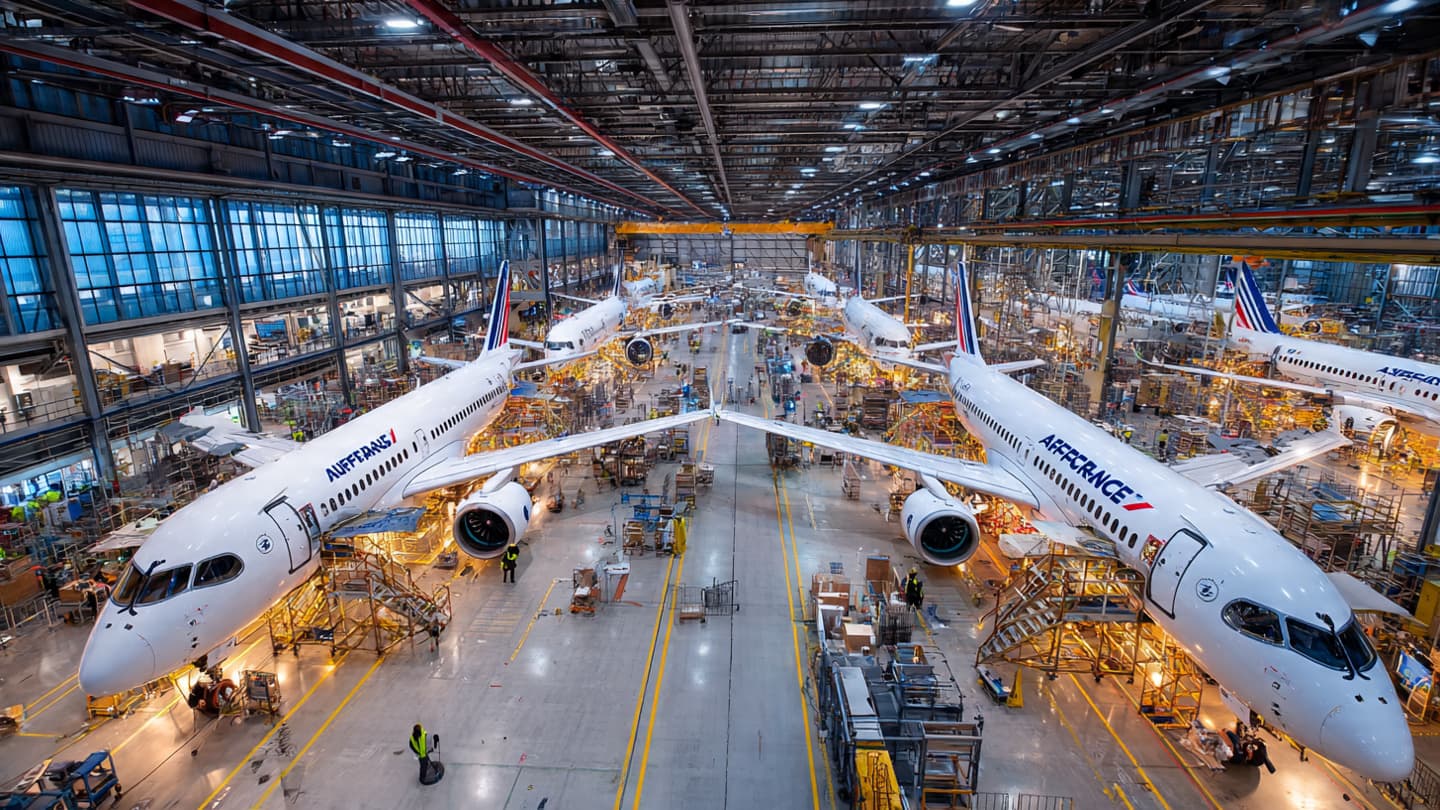
Few industries symbolize ambition and innovation quite like aerospace. It is a sector built upon the idea that boundaries can be crossed, distances shortened, and possibilities expanded. In France, aerospace has long represented both technological excellence and economic strength. Even as global markets navigate uncertainty, the sector continues to demonstrate resilience, supported by sustained demand and long-term industry confidence.
France occupies a prominent position within the global aerospace industry. Aircraft manufacturing, engineering services, advanced research, and supply-chain activities contribute significantly to employment and economic output. The sector’s influence extends well beyond factories and airports, supporting a broad ecosystem of businesses and institutions.
Recent industry indicators suggest that demand for commercial aircraft remains strong. Airlines in various regions continue to modernize fleets, improve operational efficiency, and respond to evolving passenger demand. These trends have supported order books and production plans across major aerospace manufacturers.
The long-term nature of aviation investment provides a degree of stability. Aircraft purchases are often planned years in advance, allowing companies to maintain strategic perspectives even during periods of economic fluctuation. While short-term conditions may influence decisions, industry planning frequently extends far beyond immediate market cycles.
France benefits from a highly skilled workforce and a strong network of research institutions supporting aerospace innovation. Advances in materials, digital systems, and sustainable aviation technologies continue to shape the industry's future direction. Investment in innovation remains a priority despite broader economic uncertainties.
Supply-chain management remains an important consideration. Aerospace manufacturing depends on complex international networks involving thousands of suppliers. Companies continue working to strengthen resilience and improve efficiency across these systems while adapting to changing market conditions.
Sustainability has also become a central theme within the sector. Manufacturers, airlines, and policymakers are exploring technologies designed to reduce emissions and improve environmental performance. Research into alternative fuels and next-generation aircraft concepts continues to attract significant attention.
France’s aerospace industry benefits from strong international partnerships and export opportunities. Global demand allows companies to serve customers across multiple regions, helping diversify revenue streams and strengthen competitiveness.
Industry observers note that aviation remains closely linked to broader economic activity. Business travel, tourism, trade, and logistics all influence long-term demand patterns. Despite occasional fluctuations, many forecasts continue to point toward sustained growth over the coming decades.
As the aerospace sector moves forward, France’s position reflects both tradition and innovation. The industry’s continued resilience suggests that confidence in aviation’s future remains strong. While economic conditions may shift, the ambition to connect people, markets, and opportunities continues to provide momentum for one of France’s most important industries.
AI IMAGE DISCLAIMER
Illustrations were produced with AI and serve as conceptual depictions.
SOURCE CHECK
Reuters Bloomberg Financial Times Les Echos Airbus
Published by Banx Network. This article is part of the Banx decentralized media programme, powered by the BXE token on the XRP Ledger.