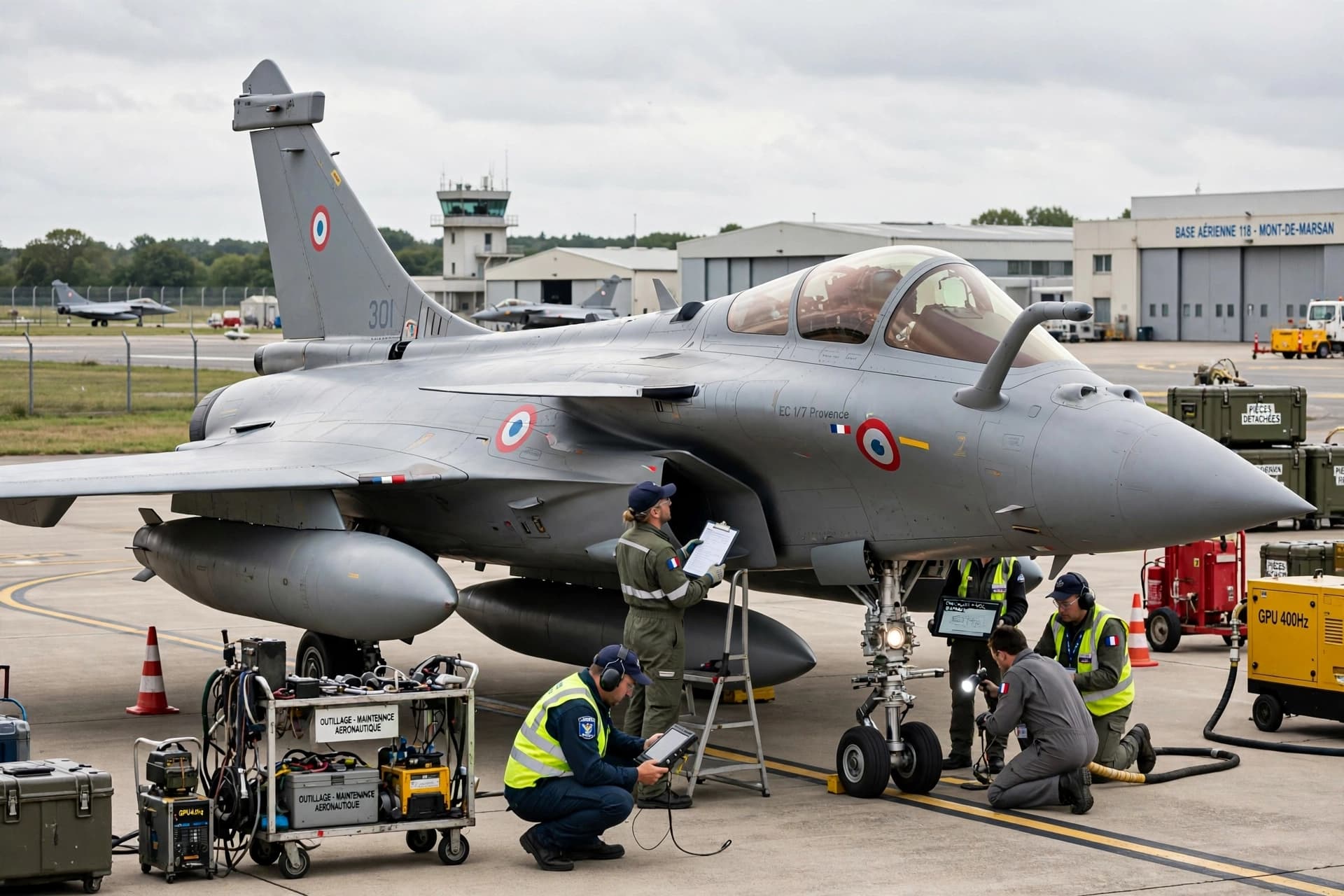
Above the French countryside, the Rafale has spent decades representing a highly engineered combination of aircraft, sensors, software, and human decision-making. Now another layer is being added to that equation: artificial intelligence.
Dassault Aviation said it had successfully flight-tested two new AI algorithms aboard a Rafale fighter aircraft. One algorithm was developed by Dassault engineers, while another came from cooperation with French technology group Thales.
The company did not disclose the specific functions tested during the flights. It did, however, say that the algorithms had reached a level of maturity that could make them candidates for future Rafale upgrades.
The tests are part of a broader effort to explore how AI can support human crews. Rather than describing the technology as replacing pilots, Dassault has framed the work around systems capable of assisting people operating complex aircraft.
Modern fighter aircraft already depend heavily on software. Sensors gather information from the surrounding environment, computers process data, and pilots receive information intended to help them understand rapidly changing situations.
Artificial intelligence could expand those capabilities by allowing systems to identify patterns, process large quantities of information, or assist with decisions more quickly. Exactly how such systems should be used, however, remains an engineering and operational question.
The technology is also being developed in an environment where aircraft increasingly operate alongside unmanned systems. Dassault's tests therefore form part of a wider international effort to understand how crewed aircraft and autonomous or semi-autonomous platforms could work together.
Reuters reported that companies and air forces in several countries are experimenting with AI in aviation. Sweden's Saab, for example, has tested AI capabilities on its Gripen aircraft, while the United States has conducted demonstrations involving AI-enabled fighter technology.
For Dassault, the Rafale provides an existing platform on which new technologies can be evaluated without waiting for an entirely new aircraft to enter service. That creates a bridge between today's aircraft and the systems being considered for future upgrades.
The tests also highlight how artificial intelligence is moving from laboratory demonstrations toward real-world aerospace environments. Flight testing is a more demanding stage than computer simulation because algorithms must operate within the physical, electronic, and human constraints of an actual aircraft.
For now, Dassault has provided limited public information about the precise capabilities tested. What is clear is that AI has become part of the company's technological development work, with the Rafale serving as one of the platforms through which those capabilities are being examined.
AI Image Disclaimer The visuals were generated using AI as conceptual representations and are not photographs of the actual test flights or aircraft systems.
Published by Banx Network. This article is part of the Banx decentralized media programme, powered by the BXE token on the XRP Ledger.

.jpg&w=3840&q=75 "Pope Warns a “Paradise of Machines” Could Undermine Humanity as He Opens France Trip")