From the ground, satellites often appear as small points moving silently across the night sky. Yet behind those distant lights lies an expanding network of sensors, computers, launch systems, and artificial intelligence designed to interpret what is happening on Earth.
The United Arab Emirates has committed $1 billion to a French-linked space AI project involving Franco-American startup Loft Orbital. The investment will support a planned constellation of 50 satellites equipped to process Earth-observation data using artificial intelligence.
Loft Orbital has French roots and maintains operations in Toulouse, one of Europe's important aerospace centers. The company specializes in satellite infrastructure designed to allow customers to deploy instruments and computing capabilities in orbit without developing an entire satellite system from scratch.
The planned satellites will be designed to process information closer to where it is collected. This approach, sometimes referred to as edge computing in space, can reduce the amount of raw information that needs to be transmitted back to Earth.
Instead of sending every image or data stream to a ground station, onboard computing systems can analyze information while the satellite is still in orbit. Important events can then be identified and transmitted more quickly.
The project has identified several possible applications, including detecting fires, monitoring infrastructure, and identifying other events that require rapid analysis. The system could eventually process large quantities of Earth-observation information without waiting for all of it to reach ground-based computers.
French AI company Mistral AI is expected to provide the artificial-intelligence technology, while U.S.-based Nvidia is involved in the computing hardware. The combination brings together satellite engineering, AI software, and specialized computing technology in one project.
The satellites are planned to be assembled in Abu Dhabi, with launches expected primarily through SpaceX. Le Monde reported that future launches using French launch company MaiaSpace are also planned from 2028.
The project is another example of how space technology is changing from a sector focused primarily on communications and scientific observation into a broader computing environment. Satellites can increasingly do more than collect information; they can process that information before sending selected results back to Earth.
For France, the investment also places domestic technology companies inside an international space project with significant financial backing. For the UAE, the program provides another avenue for building technological capabilities in artificial intelligence and satellite observation.
The planned constellation still lies ahead, requiring satellite production, software development, testing, launches, and orbital operations. But the scale of the investment already illustrates how quickly the boundaries between artificial intelligence, aerospace, and Earth observation are beginning to overlap.
High above the planet, the future of computing may not always be inside buildings. Some of it could increasingly happen in orbit, where satellites watch the changing surface of Earth and algorithms decide which pieces of information deserve to travel back down.
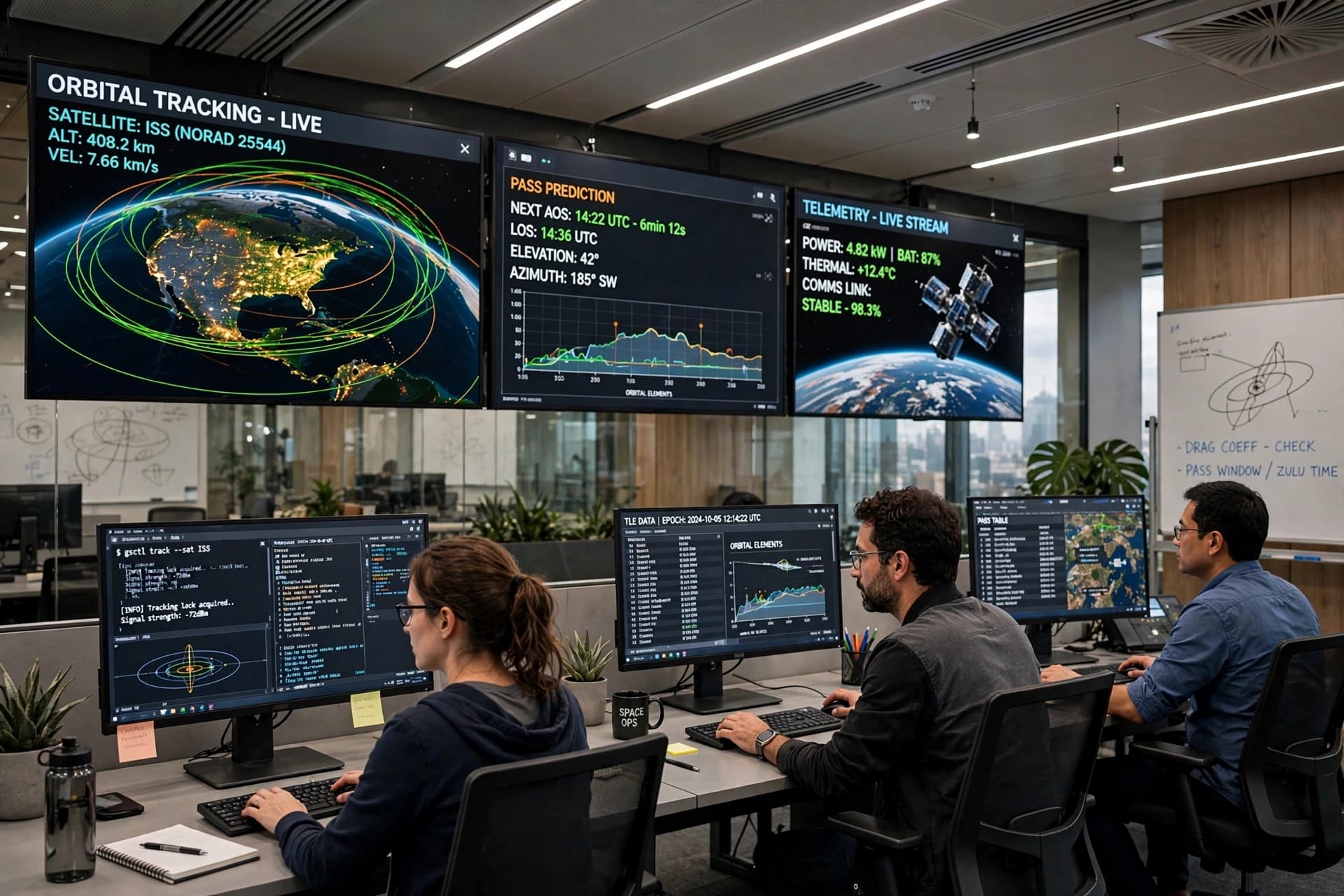
AI Image Disclaimer The accompanying visuals were generated using AI as conceptual representations and are not photographs of the actual satellite constellation or project facilities.
Published by Banx Network. This article is part of the Banx decentralized media programme, powered by the BXE token on the XRP Ledger.