

Key Highlights
- Rare Event:A giant red aurora has been observed in Earth's upper atmosphere.
- Scientific Significance:The phenomenon offers insights into space weather and Earth's magnetic environment.
- Public Fascination:The visual beauty of auroras continues to captivate observers worldwide.
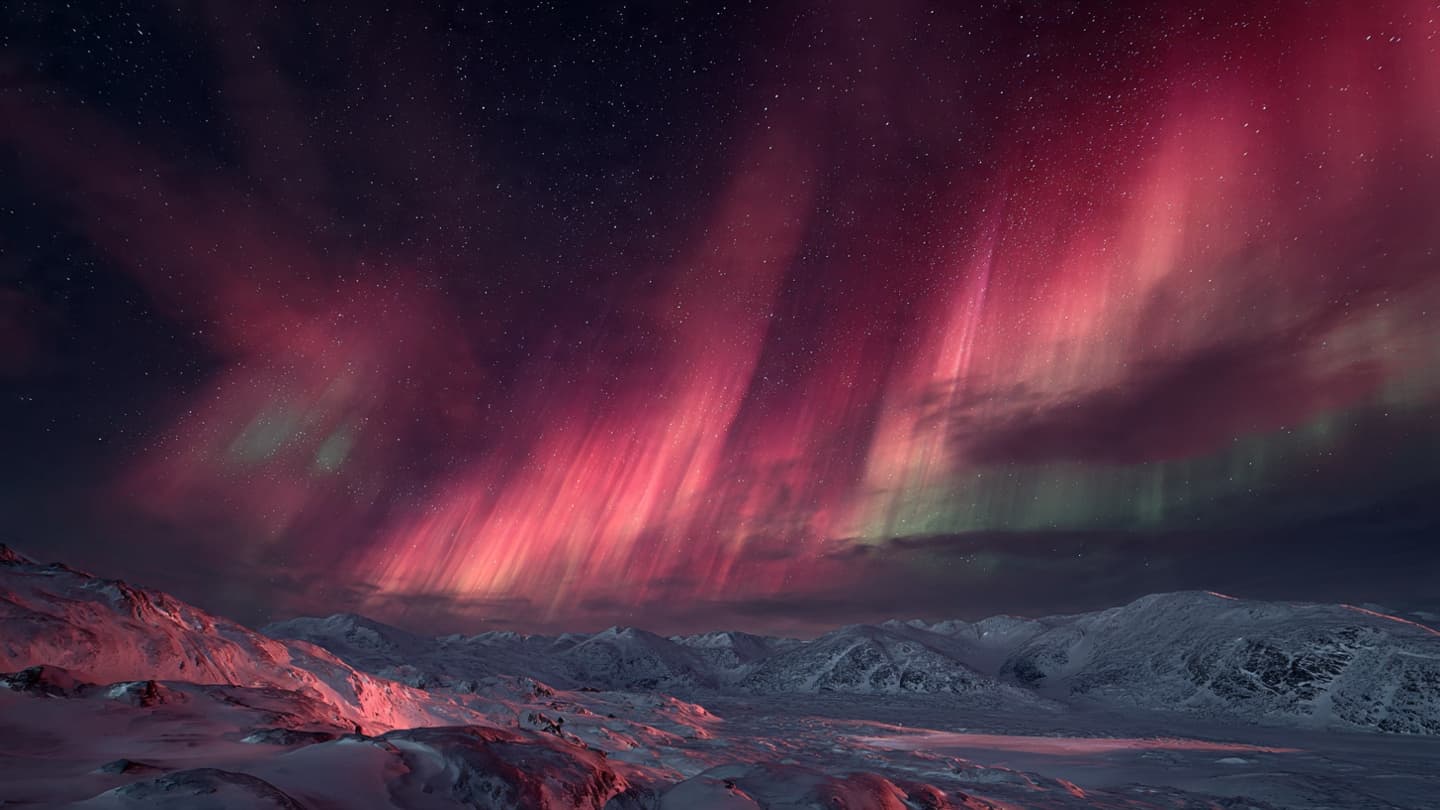
Researchers in Japan have recently reported a remarkable observation of a giant red aurora, an event that has drawn both scientific interest and public fascination. Unlike the more common green and blue auroras typically seen near polar regions, red auroras are rare and occur at much higher altitudes under specific atmospheric conditions. This recent phenomenon has been noted for extending further into the upper atmosphere than many previously documented events, highlighting the dynamic nature of Earth's atmospheric interactions.
Auroras are created when charged particles from the Sun collide with Earth's magnetic field and atmospheric gases. The resulting light displays are usually green or blue, but red auroras occur when oxygen atoms at high altitudes are energized by solar particles, emitting a soft, diffuse red light. This unique formation provides scientists with valuable insights into the interactions between solar activity and Earth's atmosphere, which can have significant implications for satellite systems, radio communications, and electrical infrastructure during geomagnetic storms.
The recent observations were made using advanced imaging equipment and atmospheric monitoring systems, allowing researchers to analyze the structure and behavior of the aurora in unprecedented detail. This technological advancement is crucial as our reliance on stable space-weather conditions grows, particularly for telecommunications networks and aviation operations. Understanding the mechanisms behind these high-altitude red auroras is essential for mitigating the potential impacts of solar activity on modern technology.
Japan has a long-standing commitment to atmospheric and space research, with collaborations involving universities, observatories, and international scientific agencies. The country's investment in advanced observation technologies has enabled researchers to monitor upper-atmosphere events with greater precision than ever before. This dedication to scientific inquiry not only enhances our understanding of atmospheric phenomena but also fosters a deeper appreciation for the intricate interactions occurring in the skies above us.
The public's fascination with auroras is fueled by their extraordinary visual beauty and the scientific complexity behind them. Rare atmospheric events like the giant red aurora inspire global attention, drawing in photographers, travelers, and everyday observers who are captivated by the sky's unpredictable transformations. As scientists continue to study these phenomena, they remind us that Earth's atmosphere is an active and dynamic system, still capable of surprising discoveries even in an age of advanced technology.
In conclusion, the recent observation of a giant red aurora serves as a testament to the ongoing exploration of our planet's atmospheric processes. It highlights the importance of scientific research in understanding the delicate balance of interactions that shape our environment and the beauty that can emerge from these complex systems.
Published by Banx Network. This article is part of the Banx decentralized media programme, powered by the BXE token on the XRP Ledger.




