Above the Earth, distance changes the meaning of ordinary movement. A few steps become carefully calculated motions, every tool has its place, and the thin boundary between a spacecraft and open space becomes part of the working environment. For French astronaut Sophie Adenot, another such journey unfolded during her third spacewalk.
Sophie Adenot completed her third extravehicular activity during a major international space mission, according to reporting by Le Monde and Agence France-Presse. Her latest spacewalk continued a sequence of operations outside the spacecraft in orbit around Earth.
A spacewalk, formally known as an extravehicular activity, requires extensive preparation. Astronauts train for years to operate equipment while wearing spacesuits that provide oxygen, temperature regulation and protection from the vacuum of space.
The environment outside a spacecraft is fundamentally different from conditions inside. There is no atmosphere, temperatures can change dramatically depending on sunlight and shadow, and every movement must be carefully controlled.
For an astronaut, even familiar equipment can behave differently in microgravity. Tools must be secured, body movements are constrained by the spacesuit and communication with mission control remains continuous.
Adenot’s third spacewalk adds to her experience working in that environment. Each completed operation provides another opportunity to carry out maintenance, installation or scientific tasks while operating outside the spacecraft.
Her participation also represents another milestone in France’s long involvement with human spaceflight. French astronauts have taken part in international missions for decades, contributing to scientific and technical work conducted beyond Earth.
The latest spacewalk took place as part of a broader international effort involving astronauts and space agencies from several countries. Modern space missions increasingly depend on cooperation, with different agencies contributing spacecraft, equipment, research and crew members.
Spacewalks remain among the most technically demanding activities in human spaceflight. A successful excursion depends on preparation on Earth as much as the work performed in orbit.
For scientists and engineers, the operations also provide practical opportunities to maintain and improve the infrastructure that supports long-duration human presence in space.
For Adenot, completing another spacewalk adds another chapter to her career in orbit. From Earth, the event may appear as a brief sequence of images and technical updates. In space, it is a carefully rehearsed passage through an environment where every movement carries a different weight.
As the mission continues, her work becomes part of the larger rhythm of human exploration beyond Earth—one spacewalk, one experiment and one carefully measured movement at a time.
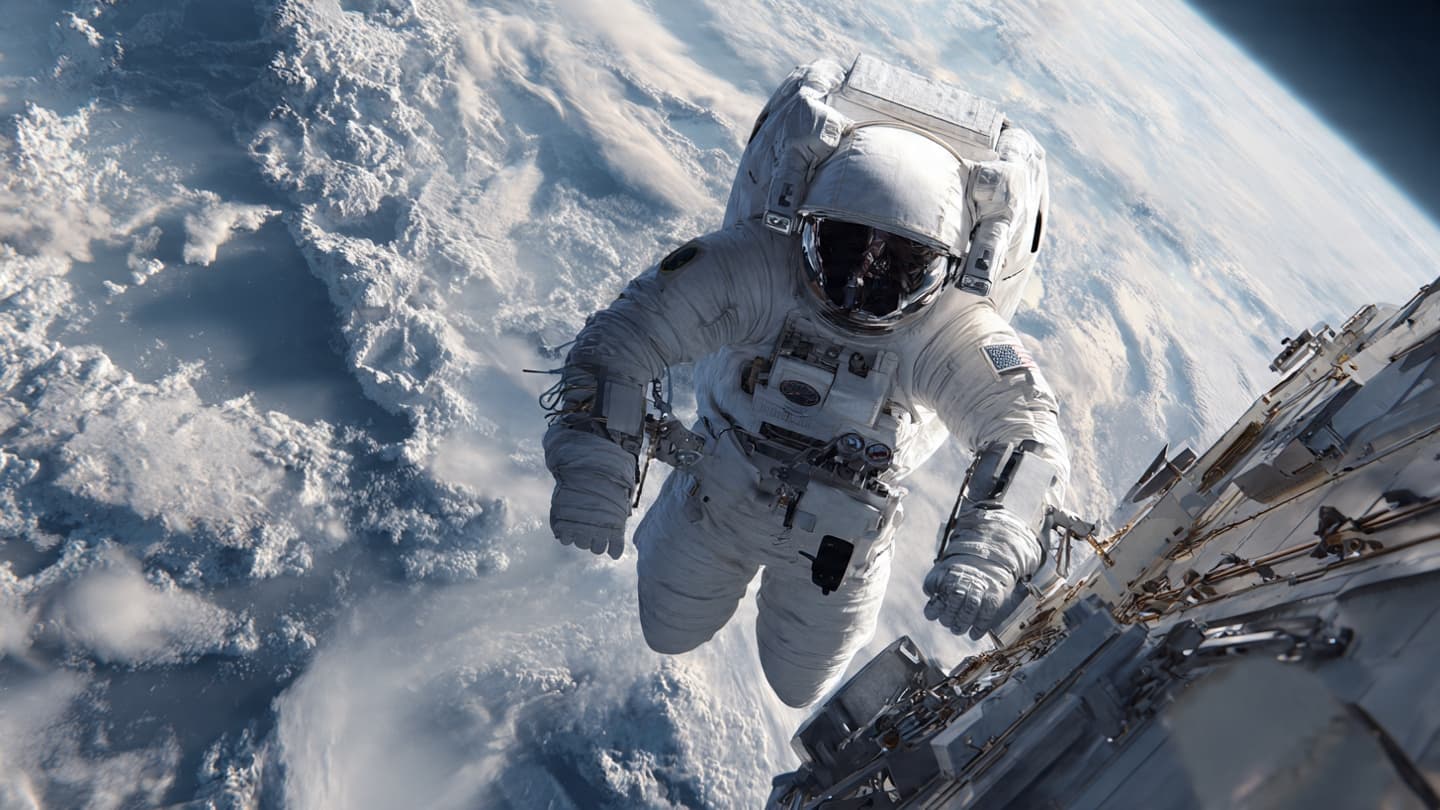
AI Image Disclaimer The spacewalk illustration was generated with artificial intelligence and is intended only as a visual representation. It is not an actual photograph of Sophie Adenot or her mission.
Sources Le Monde Agence France-Presse
Published by Banx Network. This article is part of the Banx decentralized media programme, powered by the BXE token on the XRP Ledger.