
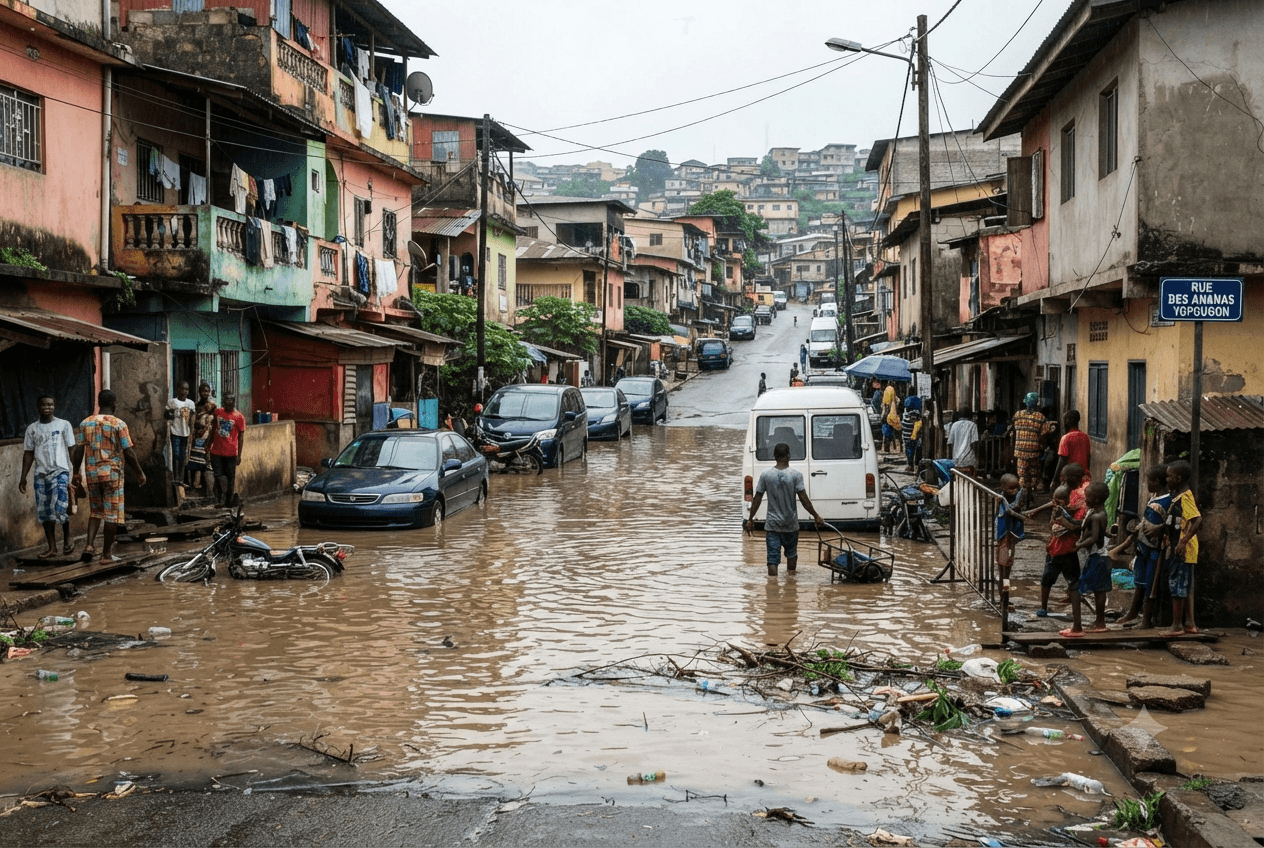
Key Highlights
- Death Toll:59 confirmed fatalities due to flooding in Côte d'Ivoire.
- Affected Areas:Attécoubé, Cocody, Yopougon, and Songon are severely impacted.
- Government Response:Emergency teams are assisting displaced families and clearing debris.
Abidjan, Côte d’Ivoire—The death toll from seasonal flooding in Côte d’Ivoire reached 59 on July 20, 2026, following a series of landslides and flash floods. The rainy season, which began in mid-May, has brought record-breaking precipitation to the Abidjan district. Government spokesperson Amadou Coulibaly confirmed the fatalities during a recent council of ministers meeting, describing the toll as exceptionally high for this stage of the season.
The commune of Attécoubé has suffered the most, with nearly 20 deaths recorded in the Mossikro neighborhood alone. Other severely affected areas include Cocody, Yopougon, and Songon. Authorities report that some residents returned to precarious areas that were previously cleared for safety. These unplanned settlements have proven particularly vulnerable to the recent landslides, exacerbating the disaster's impact.
Rainfall projections for the season indicate that cumulative precipitation could reach 1,500 millimeters in coastal regions. The events of late June were the deadliest to date, causing massive structural damage and displacing thousands of residents. Emergency teams are still working to clear debris and assist displaced families in the hardest-hit zones. The humanitarian impact has forced the Red Cross to initiate disaster response mechanisms to provide aid and support.
The government continues to enforce eviction policies in high-risk zones, though these efforts are often met with resistance from residents. Officials maintain that those who complied with relocation orders have avoided fatalities, highlighting the importance of adhering to safety measures. Meanwhile, essential infrastructure, including major roads, remains disrupted across the economic capital. The drainage systems in several municipalities are currently overwhelmed by the intensity of the downpours, leading to further complications.
Public frustration is growing as the frequency of these disasters increases year after year. While 2025 saw moderate rainfall, the 2026 season has already proven significantly more dangerous. Officials warn that the danger is not over as the rainy season continues through September. The state is conducting ongoing assessments to determine the scale of destroyed homes and the needs of affected families, aiming to provide timely assistance as the situation evolves.
Published by Banx Network. This article is part of the Banx decentralized media programme, powered by the BXE token on the XRP Ledger.



