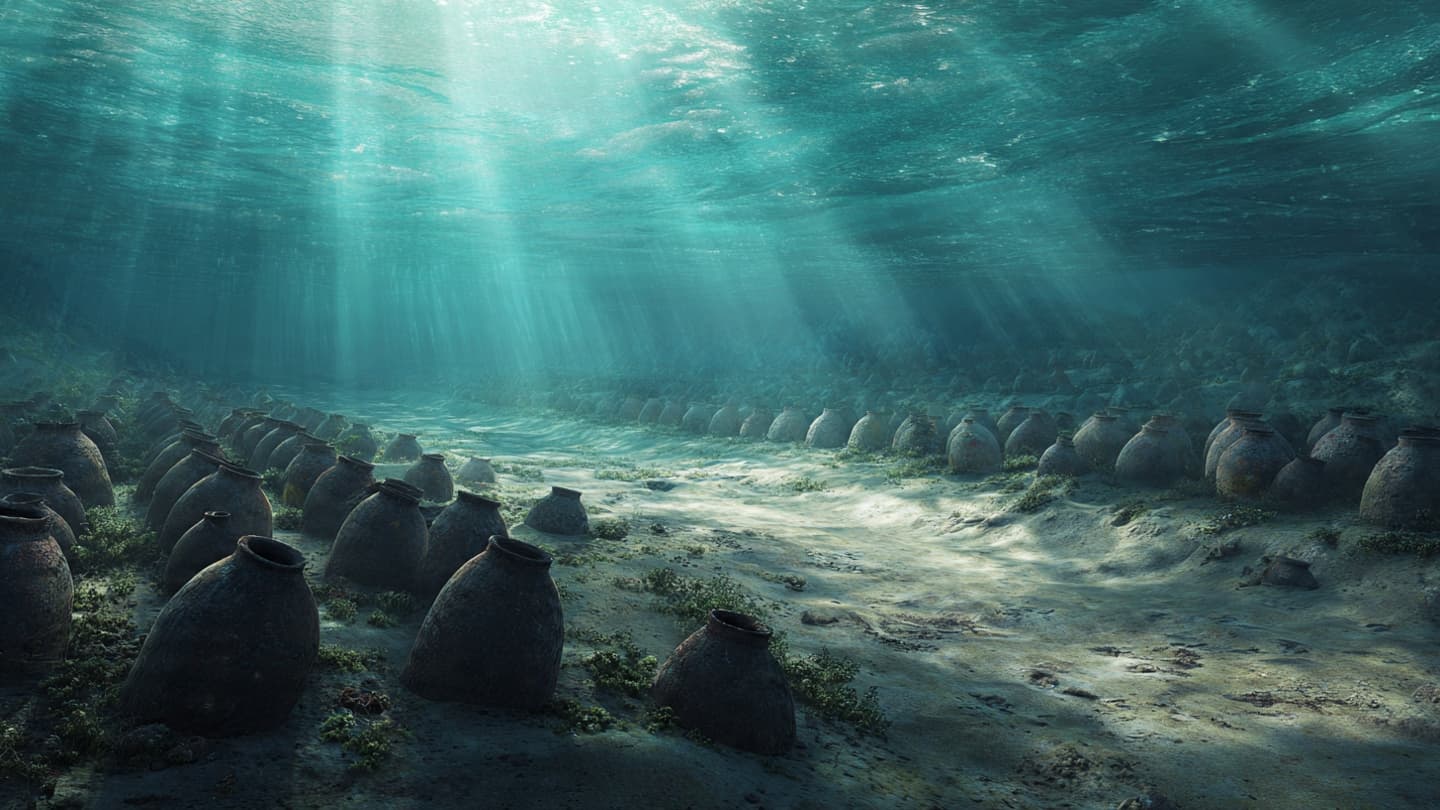
Beneath the turquoise waters of the Mediterranean, history sleeps in silent repose. Recently, divers off the coast of Sicily uncovered a time capsule from the ancient world: a Roman shipwreck laden with hundreds of amphorae. This discovery, dating back over two thousand years, offers a tangible link to the maritime trade routes that once connected empires. It invites us to imagine the lives of sailors and merchants who navigated these seas, carrying goods that fueled economies and cultures. The ocean, often seen as a barrier, becomes a bridge to the past.
The wreck, located near Mazara del Vallo, contains Dressel 1A amphorae, large clay jars used to transport wine, olive oil, and other commodities. Their preservation is remarkable, thanks to the stable conditions of the deep sea. Each jar tells a story of production, commerce, and consumption in the Roman era. Archaeologists are carefully documenting the site, ensuring that every detail is recorded for future study. This meticulous work preserves the integrity of the find.
For historians, the discovery provides insights into Roman economic practices. The type and origin of the amphorae can reveal trade partners and popular goods of the time. It helps reconstruct the supply chains that sustained cities and armies. Such information enriches our understanding of ancient globalization, showing how interconnected the world was even millennia ago.
Local communities in Sicily have expressed pride in the find, viewing it as part of their cultural heritage. Museums and educational programs are already planning exhibits to share the story with the public. Engaging people with their history fosters a sense of identity and continuity. It reminds us that we are part of a long human journey.
The technology used in the discovery, including remote-operated vehicles and 3D mapping, highlights the advancement of underwater archaeology. These tools allow researchers to explore sites that were previously inaccessible. They enable non-invasive study, protecting the wreck while gathering data. This blend of tradition and innovation drives the field forward.
As analysis continues, more secrets may emerge. Chemical residues inside the amphorae could identify specific contents, while wood samples might reveal the ship’s construction techniques. Each finding adds a piece to the puzzle of Roman life. The wreck is not just a collection of objects but a window into a lost world.
The discovery of a Roman shipwreck with hundreds of amphorae off Sicily offers valuable insights into ancient trade and maritime history. As archaeologists study the site, the hope is for greater understanding of the Roman economy. The find celebrates the rich cultural heritage of the Mediterranean.
AI Image Disclaimer: The images provided are AI-generated to visually represent the archaeological and historical aspects of the story.
Sources: CBS News Arkeonews Euronews
Published by Banx Network. This article is part of the Banx decentralized media programme, powered by the BXE token on the XRP Ledger.