Sometimes the sky offers its notices quietly, long before most of us think to look up. A change in solar wind, a ripple in Earth’s magnetic field, and suddenly the night sky begins preparing a performance far from its usual stage. This week, an upgraded Northern Lights alert carries that gentle sense of anticipation, suggesting that auroras may wander farther south than they typically do, brushing skies over places unaccustomed to their glow.
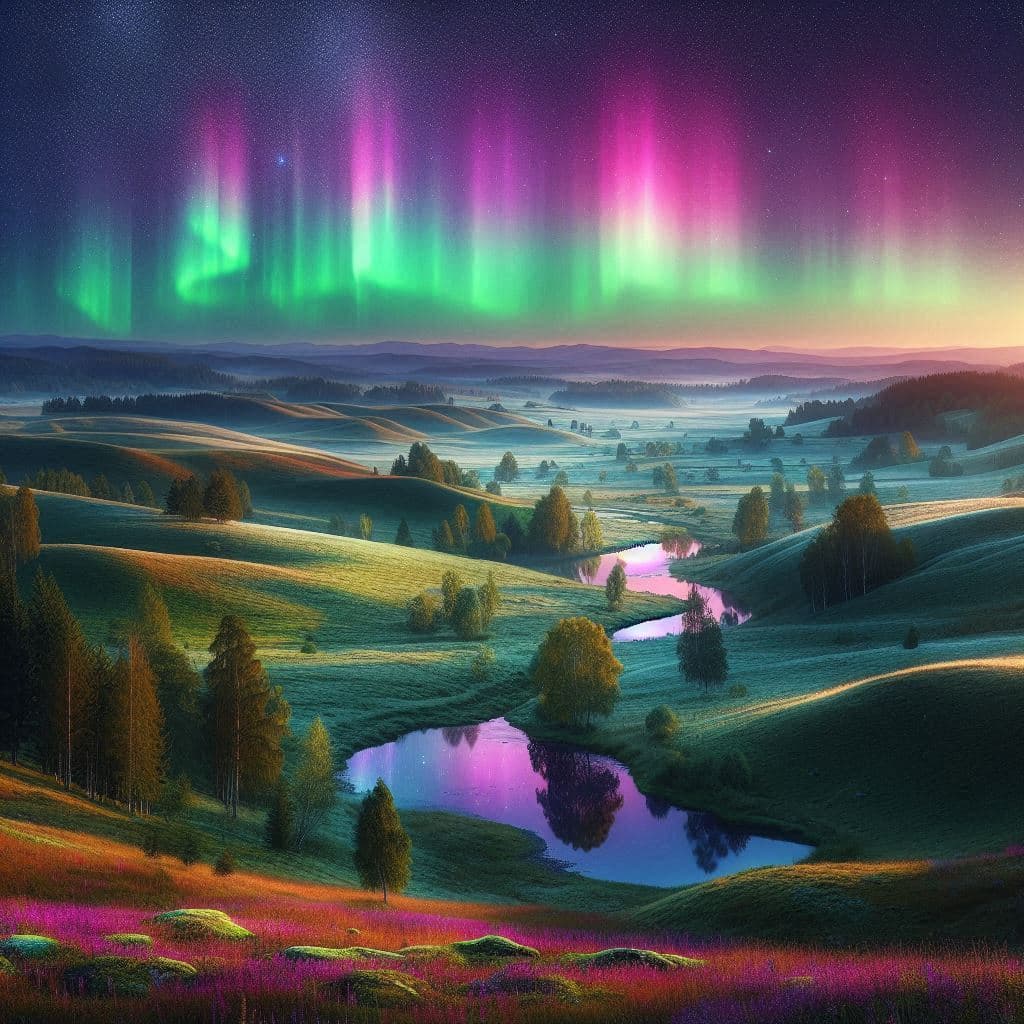
Auroras are born from distance and patience. Charged particles leave the Sun, travel across millions of miles, and finally meet Earth’s magnetic shield, where they are guided toward the poles and transformed into light. Most nights, this dance stays close to the Arctic. But when solar activity intensifies, the auroral oval expands, and the boundary between the ordinary night sky and something rarer begins to blur.
According to updated forecasts, as many as 21 U.S. states could have a chance to see the Northern Lights on Thursday. This expanded visibility is tied to heightened geomagnetic conditions, driven by recent solar activity that has strengthened interactions with Earth’s magnetosphere. The colors may remain subtle for many viewers, appearing as pale greens or soft arcs rather than vivid curtains, but even a faint aurora can leave a lasting impression.
For those within the projected viewing zone, timing and patience matter. Clear skies, low light pollution, and hours closer to midnight improve the odds. Auroras are not punctual, and forecasts describe possibility rather than promise. Still, the knowledge that the sky may briefly rearrange itself is often enough to draw people outdoors, standing quietly beneath stars and expectation.
As Thursday approaches, space weather agencies continue to refine their outlooks, adjusting predictions as new solar data arrives. The alert does not guarantee a spectacle, but it marks a meaningful shift in conditions. For one night, at least, the Northern Lights may choose to travel, offering a wider audience a glimpse of a phenomenon shaped by forces far beyond Earth.
AI Image Disclaimer Graphics are AI-generated and intended for representation, not reality.
Sources NOAA Space Weather Prediction Center NASA Space.com BBC News The Washington Post
Published by Banx Network. This article is part of the Banx decentralized media programme, powered by the BXE token on the XRP Ledger.